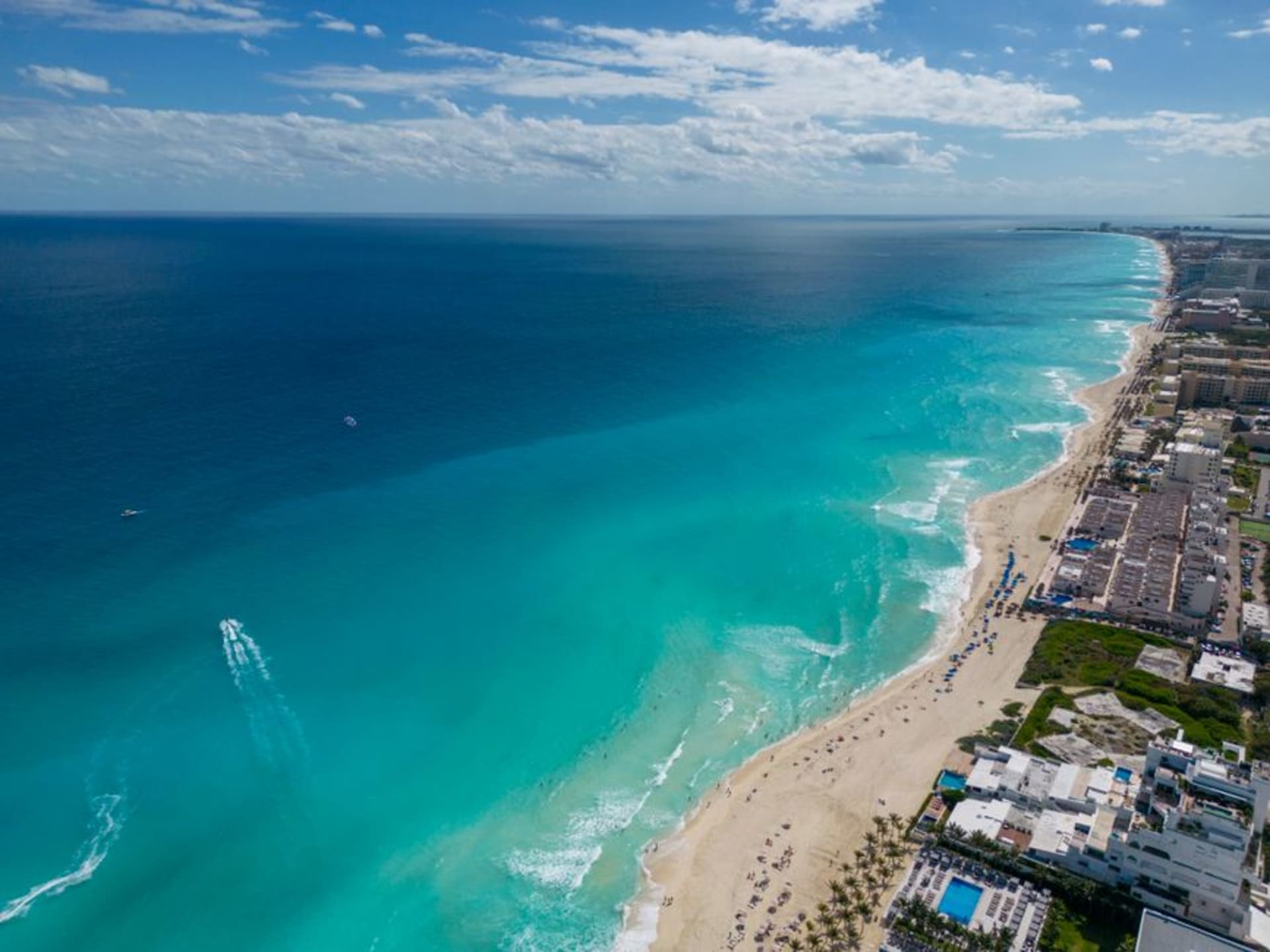
Cancun
"The taxi driver from the airport asked where I was staying. 'Downtown Cancun,' I said. He went quiet for a moment, then looked at me in the mirror: 'But why?'"
The taxi driver from the airport asked where I was staying. I said downtown. He went quiet for a moment, then looked at me in the rearview mirror with genuine concern. I told him I wanted to see the city — the actual city. He shrugged with the particular patience of someone who has heard this before and knows how it resolves, then merged onto the highway. We passed the exit for Boulevard Kukulcán. I watched the hotel towers slide past in the side mirror and felt, for the first time in this airport surrounded by airport, like I might actually be going somewhere.
The City That Built Itself
Cancun did not evolve. It was decided — in 1974, by a federal planning exercise that modeled optimal resort locations along the Mexican coast and landed on a narrow barrier island in Quintana Roo with almost no existing population. What followed was one of the stranger urban experiments in the Americas: a purpose-built city that in fifty years grew to a million residents, most of them from elsewhere in Mexico, most of them here to service an industry that was never designed with them in mind. The centro — the grid behind Avenida Tulum, away from the lagoon — is where they live. Walking it on a Tuesday morning felt less like tourism and more like trespassing on someone else’s ordinary life: mechanics eating tortas de cochinita by the roadside, women sorting vegetables outside Mercado 23, reggaetón bleeding from a tire repair shop. The architecture is functional and occasionally graceless. None of it is performing for visitors. That, for a place of this scale, is genuinely unusual.
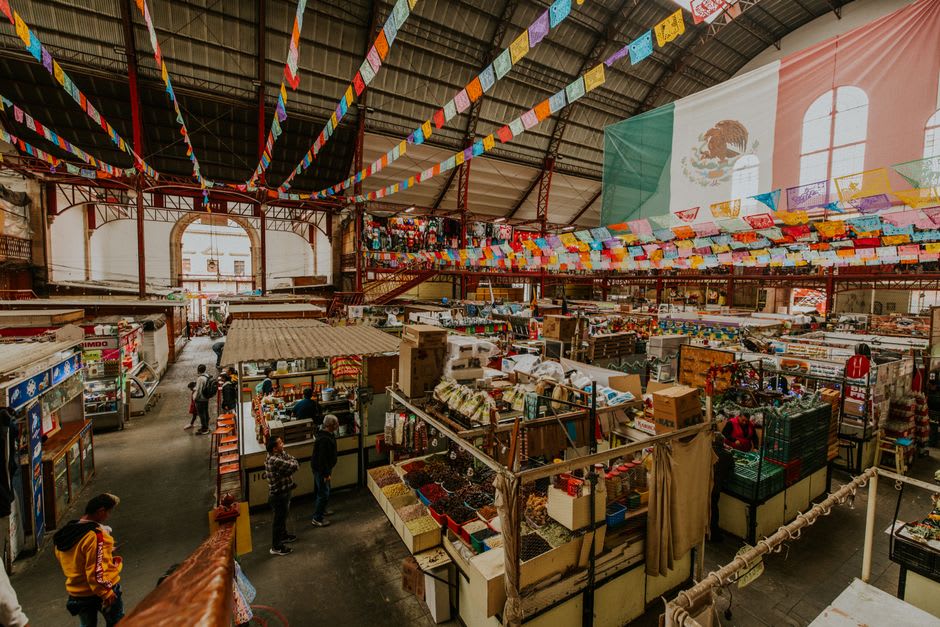
Mercado 28 at Noon
I spent a long lunch at Mercado 28, which functions as Cancun’s culinary center of gravity for anyone not eating in the hotel zone. The comedores run on Yucatecan logic: poc chuc — pork marinated in sour orange and grilled until the edges char — arrives with a stack of handmade tortillas and a bowl of pickled red onions so acidic they make your eyes water pleasantly. I ordered a coctel de camarón from a stall near the entrance and ate it standing up, the plastic cup sweating in the heat, the shrimp large and cold and dressed in enough lime to feel medicinal. Mercado 23, smaller and less aimed at day-trippers, has better prices and a fruit section worth the detour. I bought a mamey there for eight pesos and ate it on the walk back, juice running down my wrist, doing nothing to stop it.
The Lagoon from the Right Shore
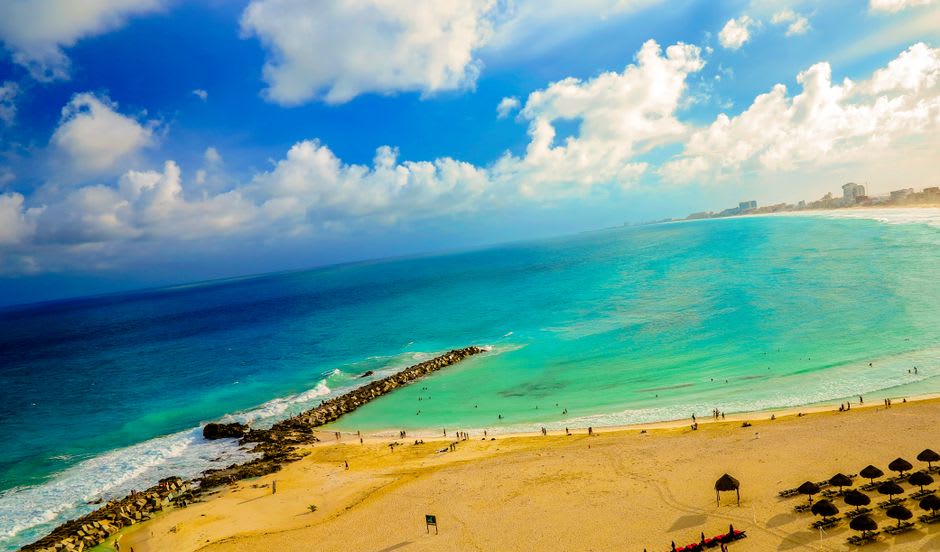
Most visitors see Laguna Nichupté from the hotel zone side, which means they see it framed by jetski rentals and a swim-up bar. From the centro side — along the stretch of Avenida Bonampak that runs toward the water, or from the quieter park near the ferry docks — the lagoon reads differently: calmer, mangrove-edged, a body of water that existed long before the barrier island got its blueprint. In the late afternoon, pelicans work the shallows in their unhurried, slightly prehistoric way. I sat on a concrete ledge for forty minutes watching them and nobody told me to buy anything. For Cancun, that counts as extraordinary restraint.
Getting There
Cancun International Airport (CUN) connects directly to most Mexican cities and to Paris, Madrid, and dozens of North American hubs. ADO buses run to Playa del Carmen in an hour, Tulum in ninety minutes, and Mérida in four hours. The best season for the centro is shoulder — May or November — when the hotel zone empties slightly and the city breathes. Afternoons bring heavy rain in summer; evenings cool faster than you expect.