I heard the howler monkeys before I saw anything. That low, oceanic groan rolling through the dark at five in the morning, somewhere between a lion and a tide — it shook the walls of our cabin near the Panchan neighborhood and made Lia pull the sheet over her head. I got up, made coffee on the small gas burner, and stood on the step listening to the forest announce itself.
That sound is Palenque’s real welcome. The ruins come later.
Into the Mist
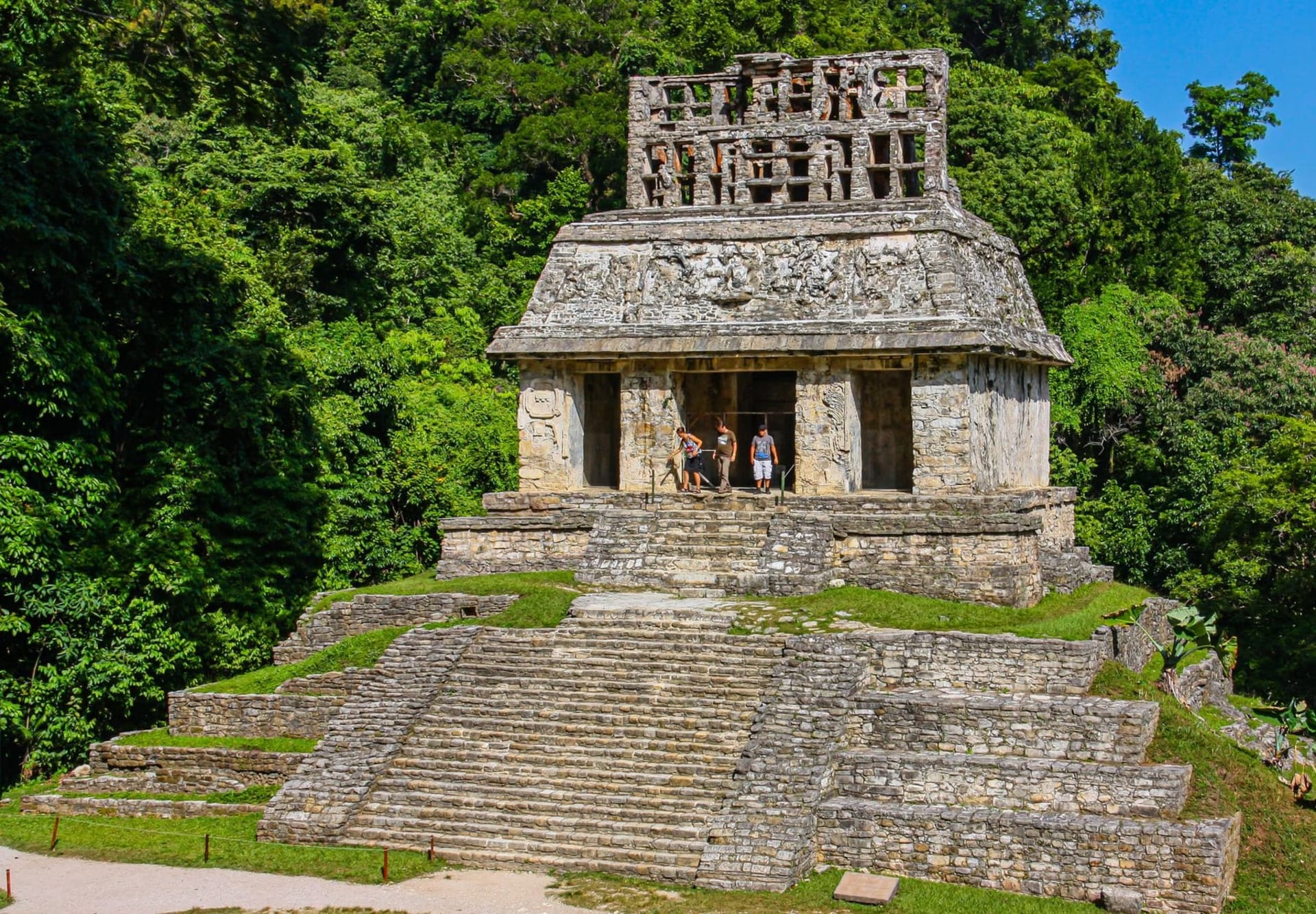
We arrived at the archaeological site when it opened, before the tour groups, while the fog still clung to the upper platforms of the Temple of the Inscriptions. The jungle smells different at that hour — humid and mineral, something fungal underneath, the sweetness of flowers you can’t locate. The path from the entrance winds upward through ceiba and fig trees so tall they close off the sky, and then suddenly the stone erupts from the green and you’re standing in front of something that has no business surviving.
The Palace, with its four-story tower — unique in all of Mesoamerican architecture — catches the first hard light around eight. I sat on a low wall eating a tamarind candy bought from a woman outside the gates and just looked at it for a while. There is a patience to Palenque that I haven’t felt at other sites. It doesn’t perform for you.
The River Below
The detail no one warned me about: the Otulúm river runs through the ruins themselves. You hear it before you find it — white water cutting through limestone channels beneath the temples, cold and fast, almost absurdly alive. We followed a side path down to it and stood ankle-deep while a family of coatis picked through the undergrowth on the opposite bank. Lia said it felt like the ruins were built around the river on purpose, like the water was the whole point. She might be right. The archaeologists say the Mayans channeled and enclosed it deliberately — the sound of moving water audible from inside the temples.
That small hydraulic fact undid something in my understanding of the place. It stopped being a ruin and became a city again.
Eating in Town
Back in the town of Palenque, on Avenida Juárez, we ate at a lunch counter: tasajo with black beans, yellow rice, handmade tortillas that arrived wrapped in a cloth. The tasajo here is drier, smokier than in Oaxaca — closer to jerky, eaten in strips with salsa verde. A large glass of agua de jamaica cost twelve pesos. Nobody was in a hurry.
When to go: The dry season runs November through April, when the trails are passable and the morning mist burns off by mid-morning. Avoid the height of rainy season in July and August, when paths flood and visibility in the jungle drops to almost nothing.