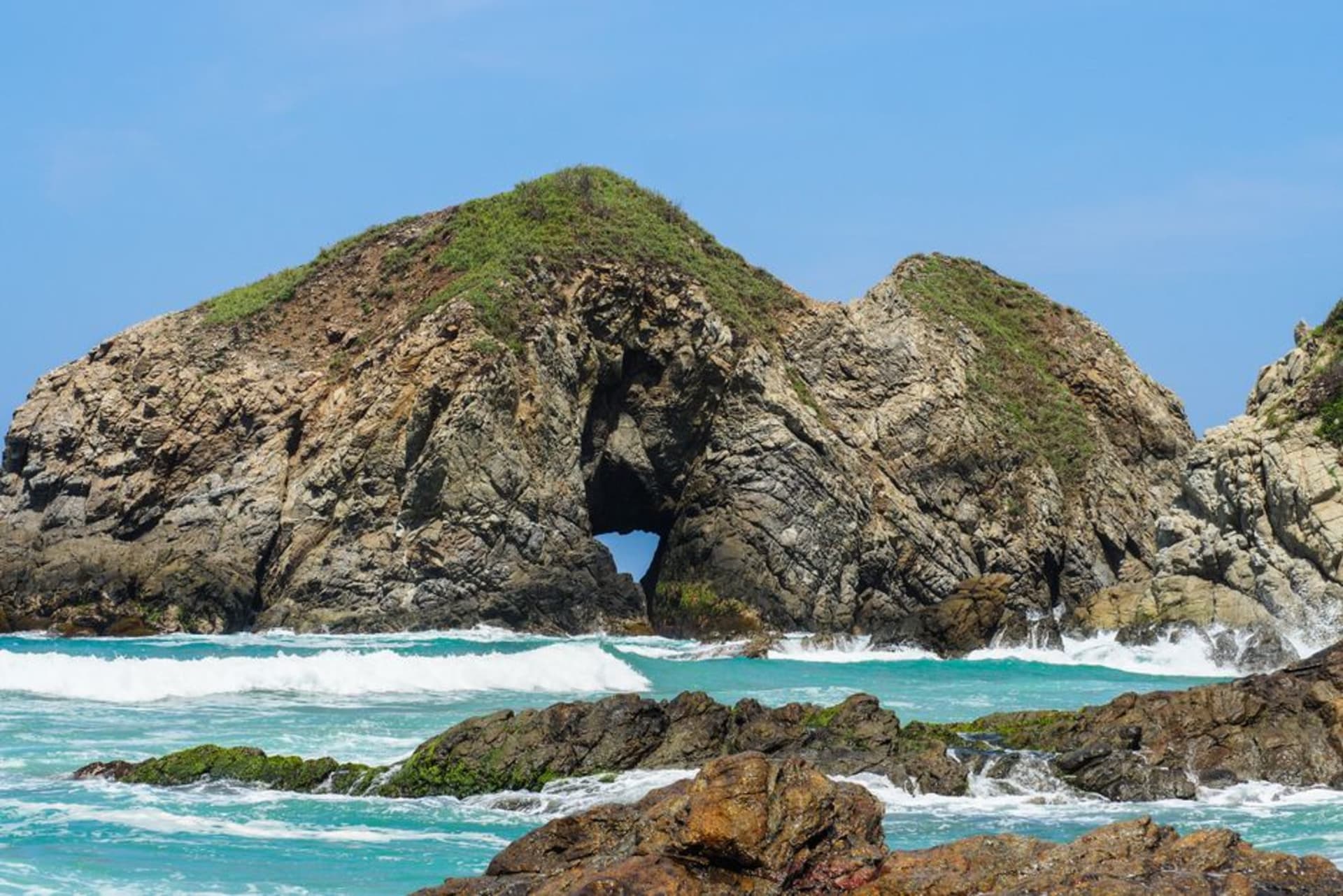
Zipolite
"Zipolite does not try to charm you — it just lets you be, which turns out to be enough."
The first time I drove down to Zipolite from Puerto Escondido, I stayed exactly two hours. I walked the length of the beach, ordered a beer at a palapa bar, watched the skull-and-crossbones flag snap in the wind above the shore, and drove home convinced I understood the place. I did not. It took four more visits before I sat still long enough to notice what Zipolite is actually doing — which is nothing, deliberately, with great conviction. I live sixty-four kilometers away and I still underestimated it every time.
The Beach That Warns You
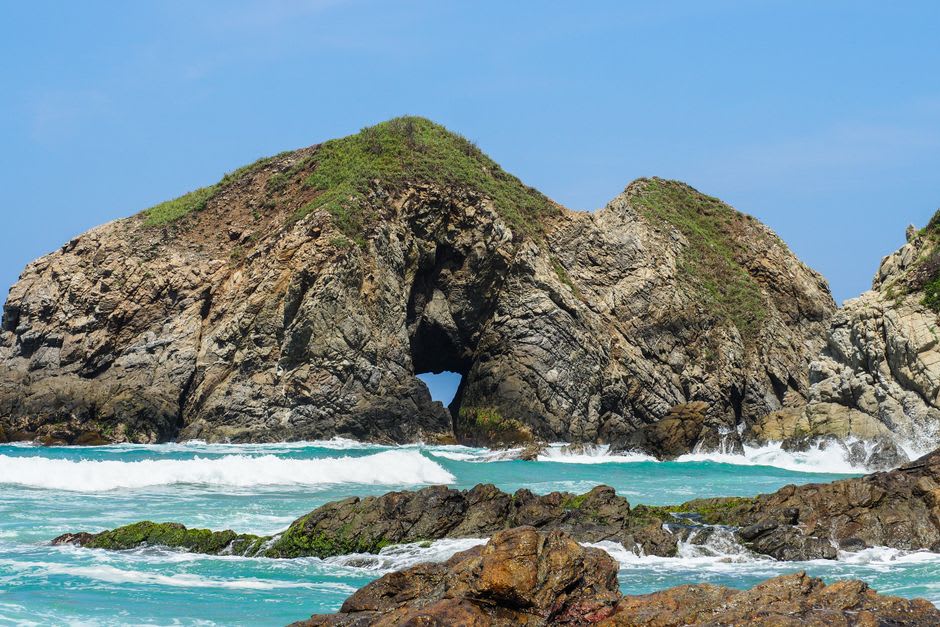
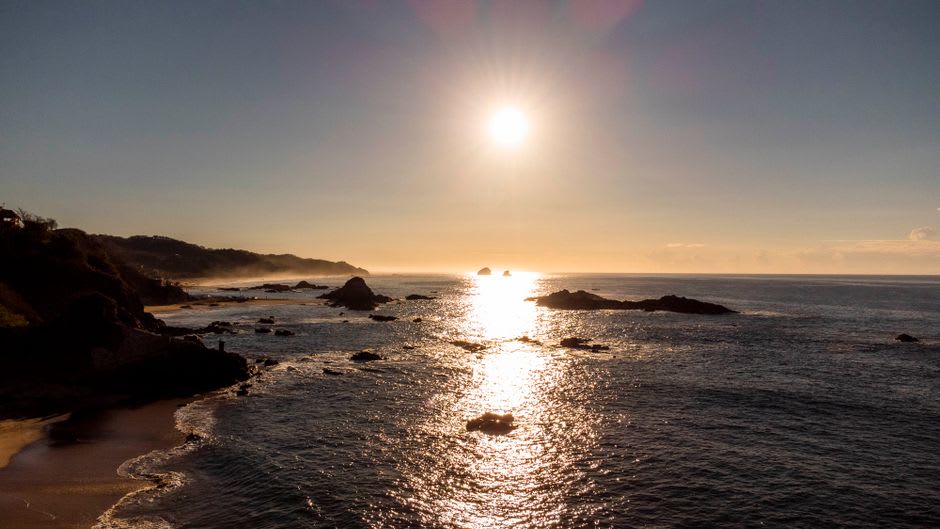
There is a reason Zipolite flies the pirate flag. The riptide here is not metaphorical — it has drowned people, and the red warning banners go up regularly along the more exposed stretches. The eastern end near the rocks runs calmer, which is where most swimmers gather; the western stretch, Playa del Amor, is where you lie in the sun and do not go in the water. But the danger is part of the place’s fundamental honesty. Zipolite does not pretend to be something it is not. The waves crash with real weight, the sand is dark volcanic coarse, and the nudism — Mexico’s only legal nudist beach, a designation that solidified through practice long before any paperwork — stops being remarkable after about twenty minutes. What persists is something harder to name: the light on the water at four in the afternoon, the way the palapa roofs throw long shadows, the strange collective permission everyone seems to carry just by being here.
What People Actually Do Here
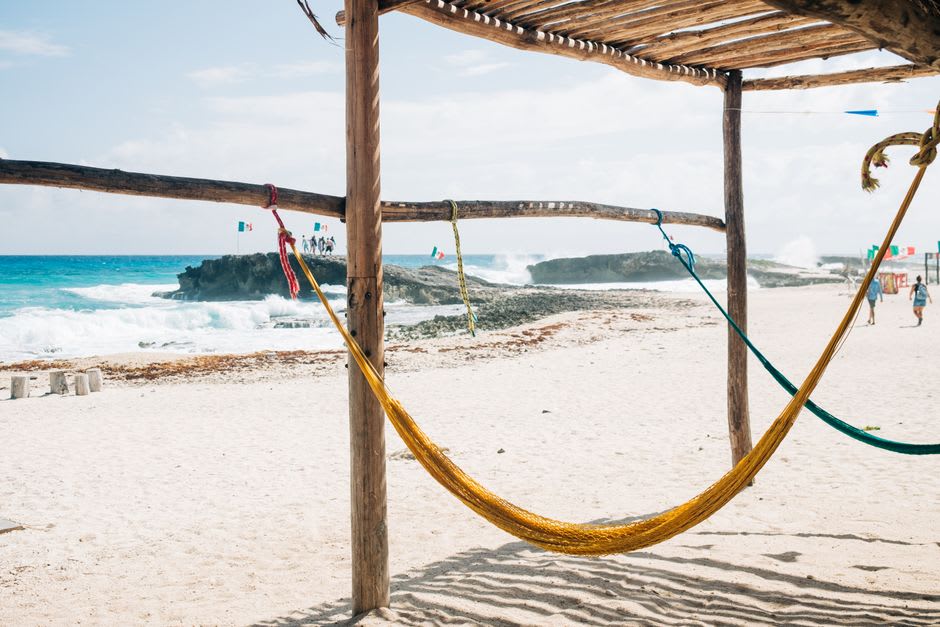
Most of the day is spent horizontal. The hammock bars along the beach are not a marketing concept — they are the actual furniture, and your meal arrives while you are already swinging. The place I return to most is a small kitchen near the middle of the beach, no sign, concrete floor, that does fresh tuna tostadas with habanero and a cold Modelo for a price that would embarrass most Puerto Escondido beach bars. Zipolite has been drawing Mexican hippies, international travelers, and a significant LGBTQ+ community since the early 1970s, and that history is still legible in the town’s unhurried generosity. At the western end, Lo Cósmico sits on the cliff above the water — a bar and gathering point where you watch the sun go down over the Pacific with a mezcal in hand, not as a performance but as the most sensible use of a Tuesday evening I can think of. The Shambala commune on the hill above has been operating since those same early years, renting simple bungalows and running a small vegetarian restaurant that still feels like 1974 in the best possible way.
A Few Things Worth Knowing
Zipolite is not interested in convenience, and that is the correct approach. There is no air conditioning in most places worth staying, and the better question is always where to eat breakfast. The answer, as far as I can tell, is the corner at the main street junction where a woman sets up blue plastic chairs and sells enfrijoladas with epazote starting around eight in the morning. I have never caught her name. I have been back many times. The town has pharmacies, a handful of markets, and everything closes early enough that you start thinking in terms of daylight — which, after a few days, feels like the right unit of time.
Getting There
Zipolite is 64 kilometers west of Puerto Escondido — roughly ninety minutes on Highway 200, then a short turn south toward the coast at Pochutla. Colectivos run between Puerto Escondido and Pochutla throughout the day; from Pochutla you catch another colectivo or a taxi down to the beach. If you are driving, the road ends at the sand, and parking is informal but never a problem.