
Doctor Arroyo
"The drive takes the better part of a day and there is nothing obvious waiting at the end of it, which is the only honest reason to go."
The road south from Linares empties out fast. Scrub and limestone and rancho gates set back from the highway, and then Doctor Arroyo appears on the plateau — 1,700 meters, high desert light, a town of maybe fifteen thousand people who never needed anyone to discover them. I arrived on a Thursday, which is not market day, which meant the main plaza had the unhurried quality of a place that had already finished its business for the week. Two men played dominoes beside the kiosk. The Parroquia de San Mateo Apóstol stood cream-colored and enormous against the open sky, and I stood looking at it longer than I’d expected to.
A Market Built on Piloncillo and Chile
Sunday is when Doctor Arroyo makes sense. The weekly tianguis spreads out from the streets around the plaza and spills into the adjacent lots, and what it sells tells you everything about the regional economy: cones of piloncillo stacked like brown pyramids, dried chiles in shades from amber to nearly black, herbs tied in bundles whose names I had to ask about three times before I got them right. This is a production town, not a tourist one. The piloncillo that ends up pressed into mole negro in kitchens across the country probably passed through somewhere like this first — processed, packed, and sold by families who have been doing exactly this for generations. I bought a kilo of guajillo and a cone of piloncillo from a woman who told me the cane came from the valley below and that the grinding was done on her own property. There are no handicraft stalls aimed at visitors, no amber-beaded jewelry, no painted Catrinas. There is nothing aimed at visitors, which is the clearest indication that the market is the real thing.
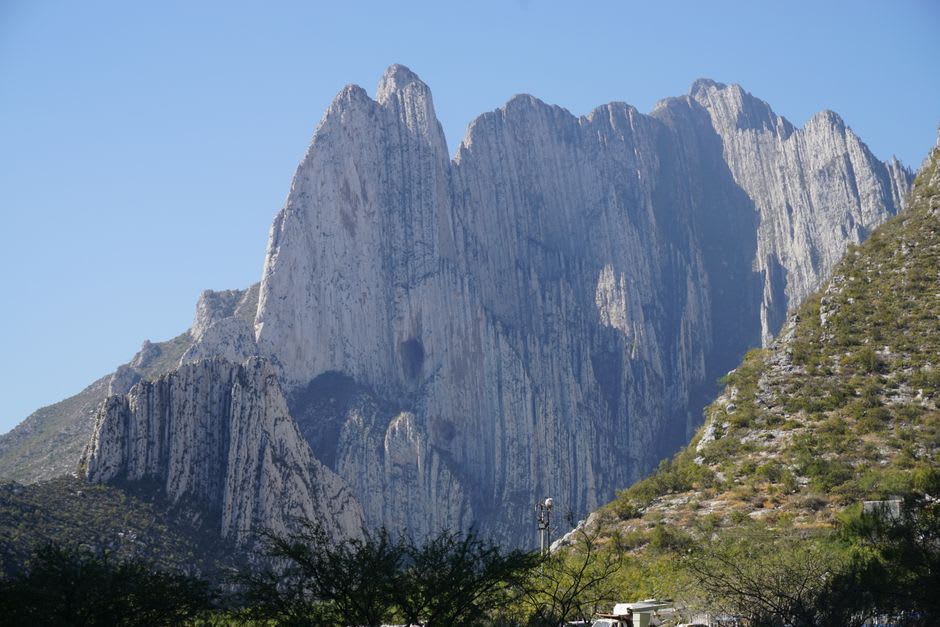
The Church That Fills Its Corner
The Parroquia de San Mateo Apóstol is the architectural fact of Doctor Arroyo — a baroque facade assembled across roughly two centuries in the slow-build Catholic tradition of colonial borderlands where money and labor came unevenly. What strikes me about it is not the ornamentation, which is restrained by Oaxacan standards, but the proportional confidence: the building fills its end of the plaza the way it was always meant to, without apology. Inside, the light enters sideways through narrow windows and hits the retablos at an angle that makes the gilded surfaces look functional rather than decorative. I went in twice — once Thursday afternoon when a woman was sweeping the nave with a long-handled brush, and once Sunday morning just before the market noise reached the doors. Both times felt equally correct. The quiet in there has nothing theatrical about it.
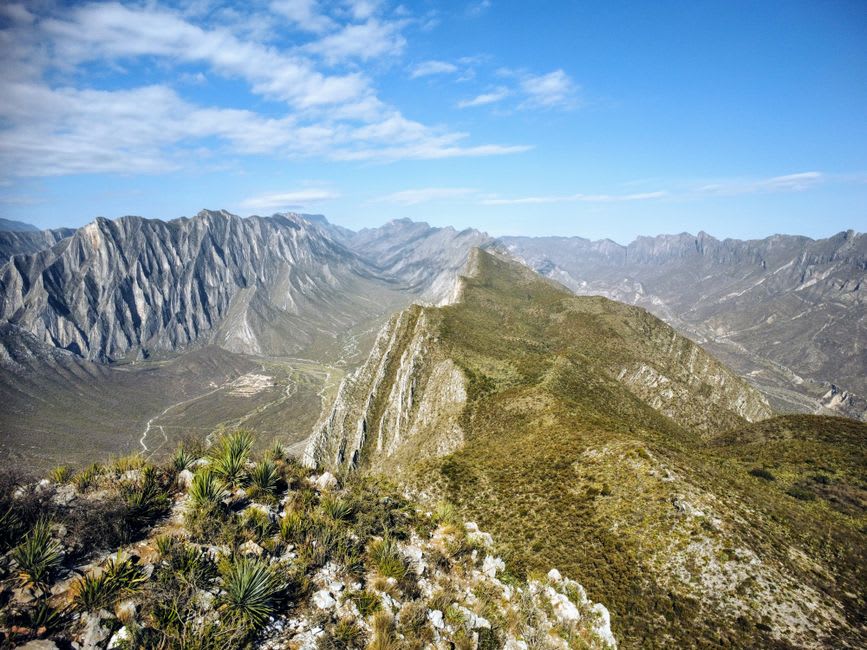
Machacado and Pan de Piloncillo
The food in Doctor Arroyo is norteño without apology. Machacado — dried, pounded beef reconstituted with egg and chile — appears at breakfast in several comedores around the plaza, including the one on Calle Hidalgo just east of the church that opens early and closes when it feels like it. Cabrito al pastor is on the menu at a few spots; it arrives in portions that assume you have not eaten since Monterrey, which is often true. There is a panadería on the north side of the market where they make a heavy pan de piloncillo that tastes exactly as sincere as it sounds. I ate it standing at the counter with a café de olla and did not feel the need to move for a while.
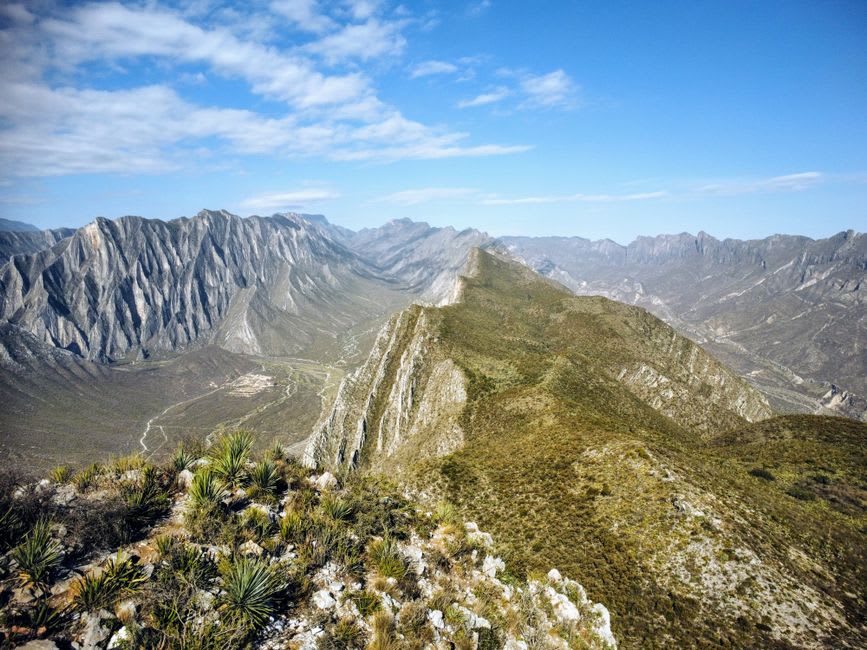
Getting There
Doctor Arroyo is roughly 300 kilometers south of Monterrey via federal highway 58 — four hours by car, longer on the occasional bus that routes through Linares or Matehuala. There is no airport and no rail. October through February offers the most reliable weather; summer brings plateau storms that can make secondary roads slow and unpredictable. Accommodation runs to a handful of casas de huéspedes near the plaza — adequate and nothing more.