Ahuacatlán
"I went up for an hour and ended up walking the lava field until the light went flat, wondering how a place this geologically dramatic stays this thoroughly ignored."
I stopped in Ahuacatlán on a Wednesday by accident — I’d pulled off the Tepic–Guadalajara highway looking for somewhere to eat that wasn’t a Pemex counter — and found the weekly market already in full swing around the main plaza. Vendors were selling chiles secos, herbs I couldn’t name, and something labeled mezcal de olla from an unmarked bottle near the church steps. Above all of it, Volcán Ceboruco sat on the skyline like a parenthesis the landscape had never bothered to close. I ate birria de chivo standing up, watching the volcano, and decided the drive to Guadalajara could wait a few hours.
The Lava Field That Refuses to Age
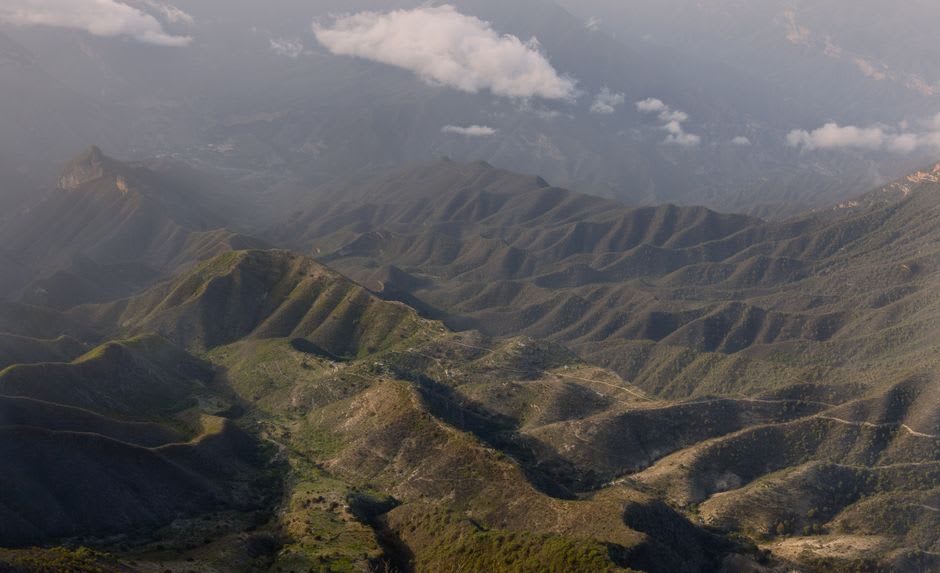
The malpais of Ceboruco is the thing you don’t forget. The volcano last erupted in 1870 — recent enough that the lava field on its lower slopes still looks almost fresh, black and deeply fractured, with only the first-generation colonization of scrub copal and sparse grasses that volcanic rock accumulates over decades rather than millennia. You can drive a rough dirt road partway up from town, then walk out into it — onto it, really, because the surface is uneven and sharp in ways that make you watch your feet constantly. I went in the late afternoon, when the shadows were long across the broken rock and the contrast between the dark stone and the yellowed sierra grass at the field’s edges was something I kept trying to photograph without success. Nobody else was there. A sign at the trailhead listed visiting hours and a nominal entrance fee; both appeared to function as suggestions. I stayed until the light went flat and the shapes of the rock dissolved into each other.
The Wednesday Logic
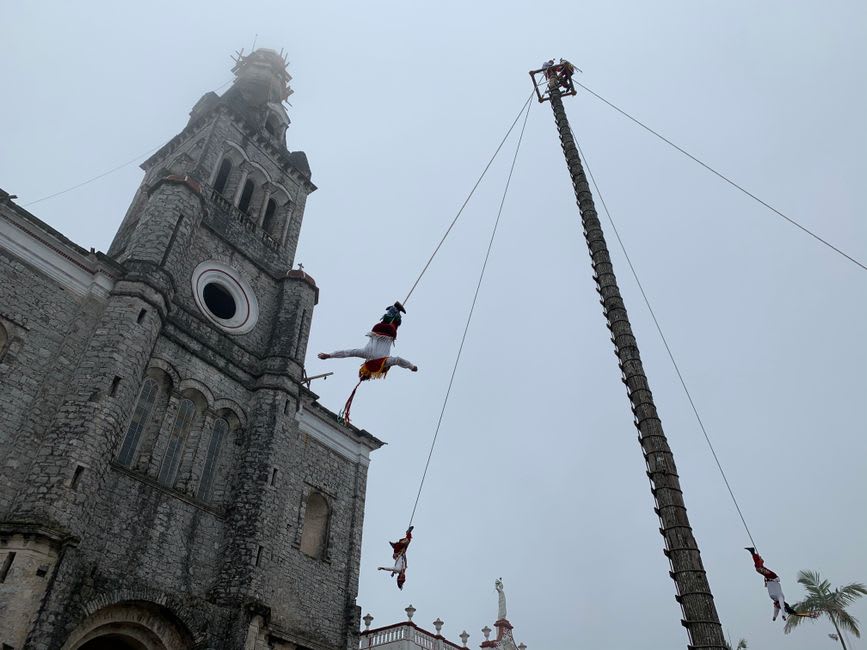
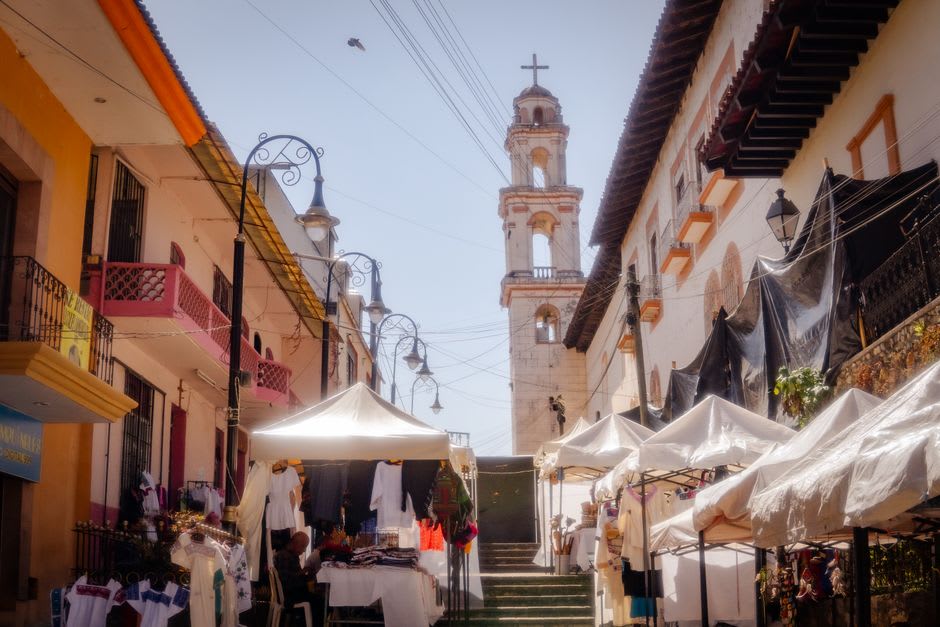
The tianguis that pulled me off the highway turns out to be the organizational principle of the town’s week. By eight in the morning the square around the Templo de Santiago Apóstol is already dense — vegetables from the sierra, dried goods from the bajío, and a row of women selling atole de guayaba from clay pots that I stood beside longer than was strictly necessary. The birria de chivo I ate came from a woman who sets up near the corner of Hidalgo and Morelos and has, I gathered from the regulars crowded around her tables, been doing so for most of her adult life. Order it in consommé rather than dry — you want the broth. In the hills surrounding town, mezcal is distilled in small family operations that don’t advertise; the bottles circulate locally and the price is set by whoever you’re talking to. The market vendors are your best introduction: ask for mezcal de la sierra and you’ll be pointed somewhere specific.
The Church and Three Centuries of Unfinished Business
The facade of the Templo de Santiago Apóstol took approximately three centuries to complete, and you can see the seams where one era handed off to the next — baroque ornament layering over earlier stonework, details that look simultaneously 17th and 18th century because they are. It faces the main plaza without ceremony, which is the right way to encounter it: unhurried, from across the square, in the mid-morning light before the heat has fully arrived. Inside, colonial altarpieces are intact and no one is managing your visit. There is also a small mirador at the edge of town on the Guadalajara road — a pull-off that frames Ceboruco against the valley floor with a directness that the lava field approach, for all its drama, doesn’t quite offer.
Getting There
Ahuacatlán sits about 60 kilometers southeast of Tepic on Federal Highway 15, the main Tepic–Guadalajara corridor. From Tepic, roughly an hour by car or by colectivo from the central terminal. The dry season — November through April — keeps the dirt road toward the malpais passable. Wednesday is the only day worth planning around if the market matters to you; the town quiets considerably the rest of the week.