Ocuituco
"I came for a fountain and stayed for the cold that comes off the volcano at five o'clock."
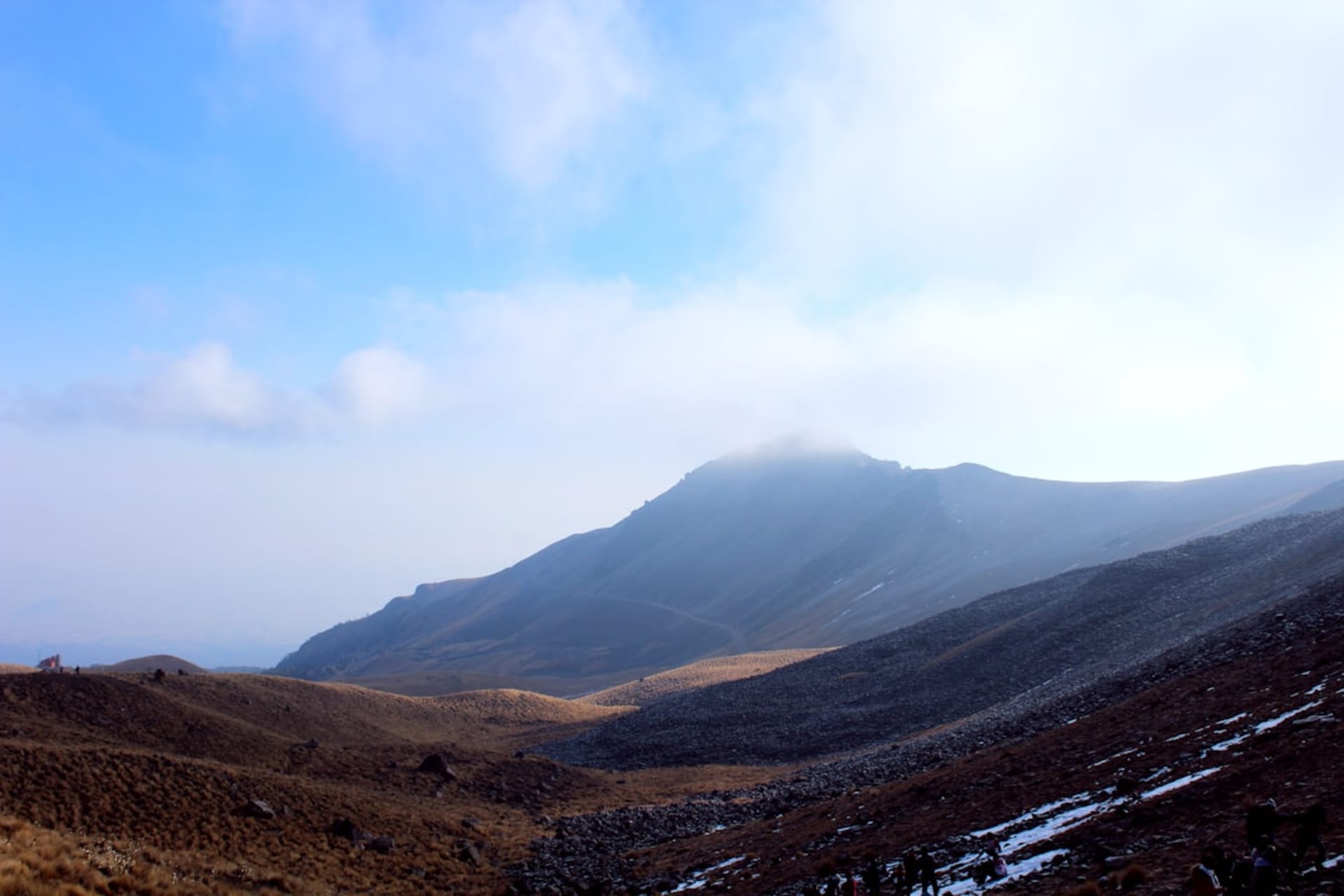
I drove up to Ocuituco on a Sunday because a friend in Cuautla told me there was a fountain there worth the detour, and I am the kind of person who will drive an hour for a fountain. The road climbs steadily out of the warm sugarcane country of central Morelos and into a different climate entirely — the vegetation thickens, the light goes soft, and somewhere around the last curve you realize you are on the actual body of Popocatépetl, on the green apron of skirt that the volcano wears above the valley. By the time I parked near the plaza I needed the jacket I had thrown in the back of the car out of habit and had not expected to use.
The Ex-Convent and Its Fountain
The reason to come is the ex-convent of Santiago Apóstol, one of the earliest Augustinian foundations in this part of Mexico, begun in the 1530s when the friars were pushing up onto the volcano’s slopes to reach the Nahua communities living there. It is a heavy, sober building — fortress more than church, with the thick walls and small windows of a structure built by people who were not entirely sure of their welcome. The interior is austere in the way these early monasteries are, all cool stone and worn steps, and on the afternoon I visited it was almost empty.
In the cloister stands the thing I had driven up for: a stone fountain, carved in the sixteenth century, said to be among the oldest in the Americas. It is not large or showy. What makes it worth the drive is its age and its survival — the sense that friars and Nahua converts drank from it five hundred years ago in the same cold air I was standing in.
Orchards and Cold Air
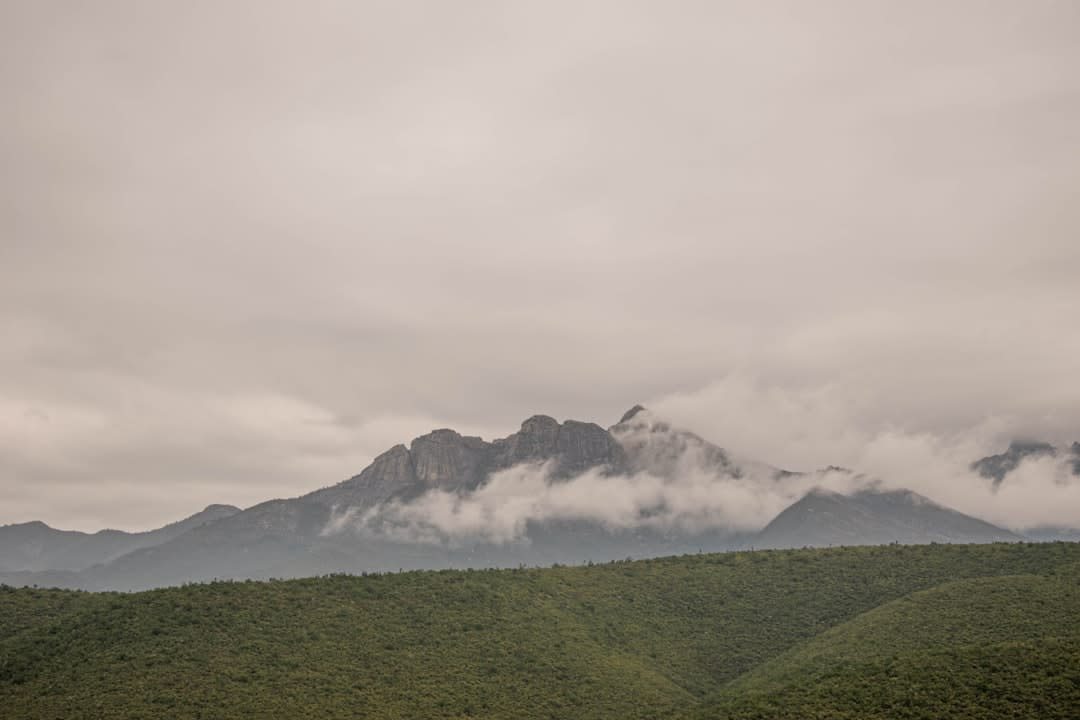
Ocuituco is fruit country. The slopes around the town are planted in orchards — the cooler elevation suits trees that would sulk down in the valley heat — and on the roads out of the plaza you pass stacked crates and roadside stands selling whatever is in season. I bought a bag of small tart plums from a woman who weighed them on a hand scale and told me, when I asked, that the good ones came from the higher plots closer to the trees.
What stays with me about Ocuituco is not any single thing but the temperature of the place. There is a particular pleasure, in a country most foreigners think of as uniformly hot, in standing on a volcano’s flank at midday and feeling genuinely cold. The air here has weight and cleanliness to it, and by late afternoon it comes down off the summit in a way you can feel on the back of your neck.
The Plaza and the Quiet
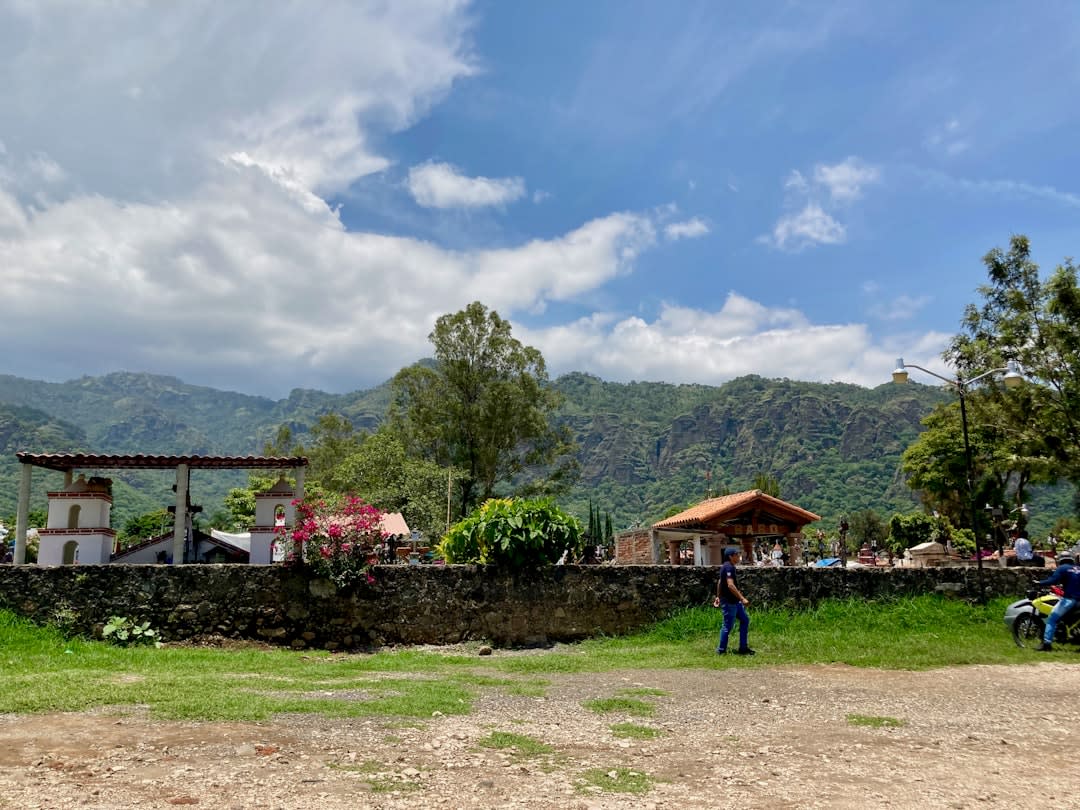
The town itself is small and unhurried, arranged around a plaza that on my Sunday held a handful of families, a man selling elotes, and a dog asleep in the exact center of the paving as though he owned it. There is nothing engineered for visitors here — no Pueblo Mágico signage, no craft market, no boutique anything. It is a working mountain town that happens to have an extraordinary old building at its heart.
I sat for a while on a bench near the church with a paper cone of the plums, watching the light move across the volcano’s slope, and understood why my friend had sent me. Some places are worth an hour’s drive not because they contain a great deal but because they contain a specific and unrepeatable quiet.
Getting There
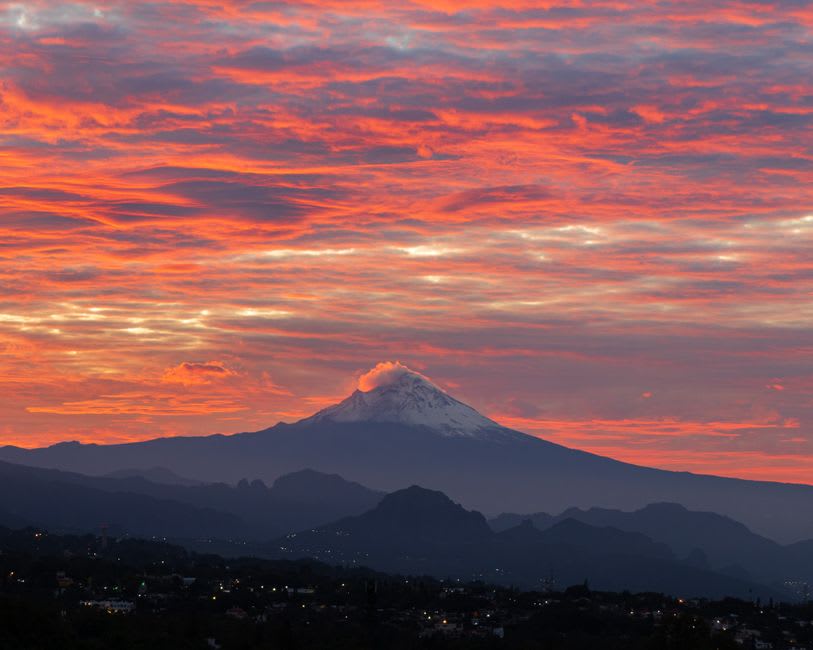
Ocuituco sits in eastern Morelos on the lower slopes of Popocatépetl, most easily reached by car from Cuautla — about forty minutes, climbing steadily the whole way. From Cuernavaca or Mexico City, route yourself through Cuautla first. Colectivos run up from Cuautla for those without a car, though they are infrequent and you will want to check the last return of the day before you commit to the afternoon.
Bring a layer regardless of the season; the town is high enough that the air turns cold by late afternoon, and it can cloud over quickly when weather comes off the volcano. Combine it easily with nearby Zacualpan or the road up toward Hueyapan if you want to make a full day of the eastern slopes.