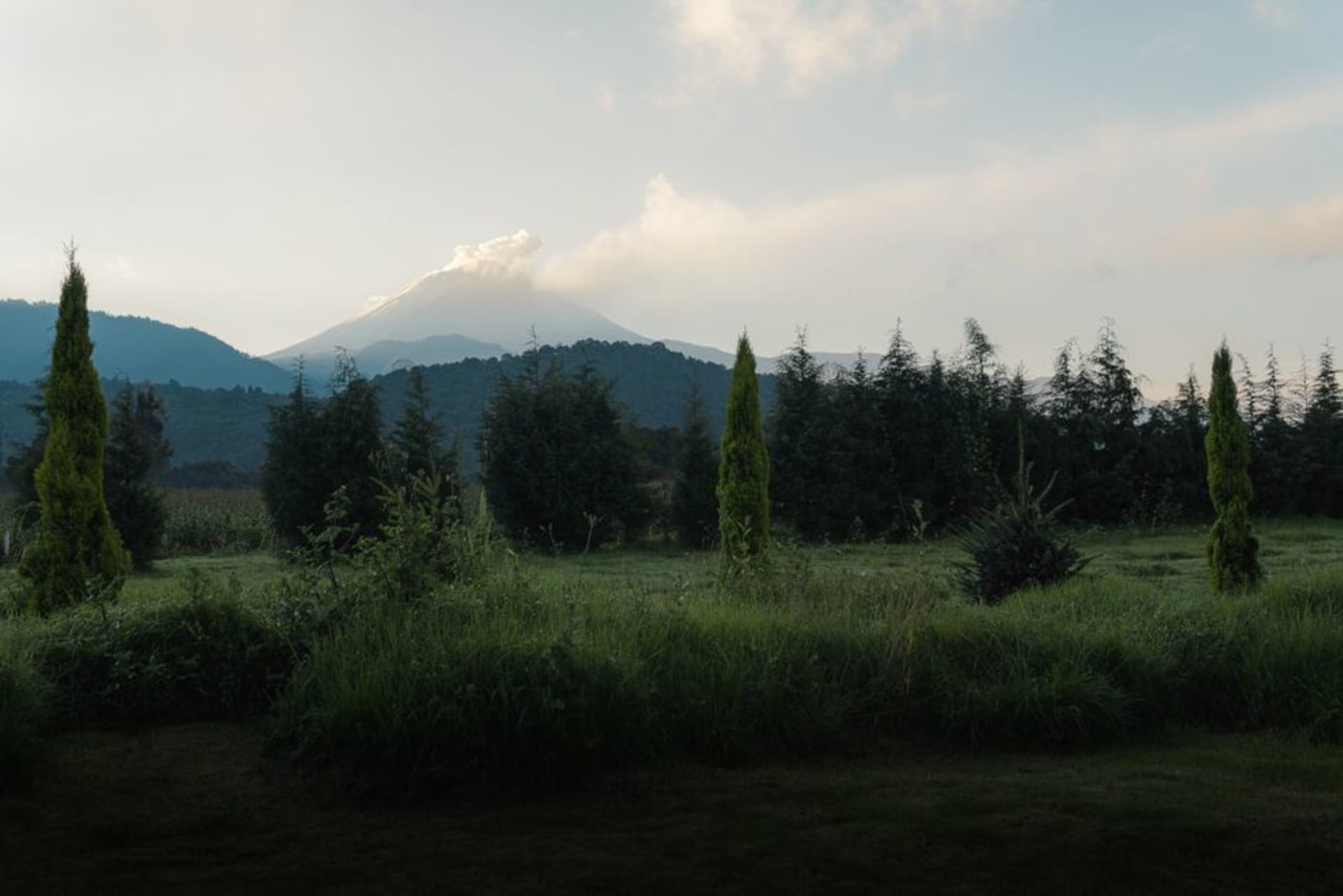
The fog found me before the village did. I had climbed the road above Ocuituco, up onto the higher, colder slopes of Popocatépetl, and somewhere in the last few kilometers the world went white and soft and the temperature dropped again. Hueyapan appears out of that mist the way mountain villages do — a scatter of stone houses on a steep green slope, woodsmoke somewhere, the sound of a rooster you cannot see. It is a Nahua pueblo, one of the oldest continuously inhabited places on this side of the volcano, and even now the language you hear on the street as often as Spanish is Náhuatl.
The Wool and the Looms
Hueyapan is a weaving town, and the weaving is the reason people who know Morelos send you up here. The wool comes from sheep on the surrounding slopes, and the most striking pieces use no dye at all — the browns, greys, and creams are the natural colors of the animals, carded and spun and worked on backstrap and pedal looms into blankets, gabanes, and the heavy sweaters you are grateful for the moment you step out into the mountain air.
I spent a good hour in a workshop where a woman worked a backstrap loom tied to a post, the tension held by her own body leaning back against the strap. She showed me a blanket in three shades of undyed brown and, when I assumed it was dyed, corrected me with visible patience: that was the sheep, not the pot. The pieces that do use color take it from local plants and cochineal. I bought a gabán I have worn most winters since.
Temazcal and the Cold Green Forest
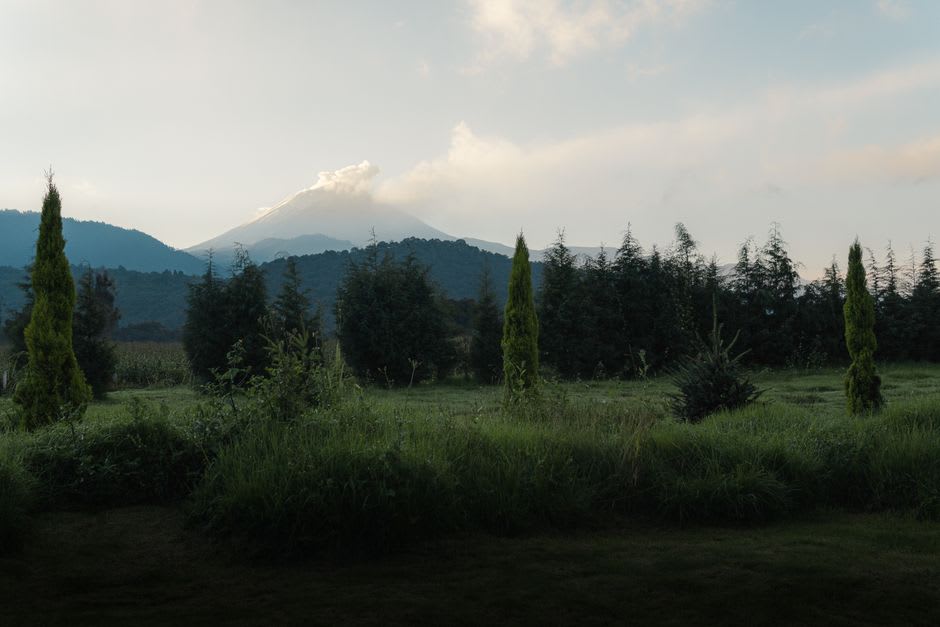
Up here the forest is real forest — pine and oak wrapped in moisture, apple and other fruit trees planted around the houses, everything a deep saturated green because the cloud sits on the slope so much of the year. It is the kind of cold, wet, aromatic landscape that most visitors do not associate with Morelos, or with Mexico at all, and it is one of the reasons I keep going back.
Hueyapan is also a place to take a temazcal seriously. The pre-Hispanic sweat lodge is not a tourist novelty here but a living practice, and several families offer it in the traditional way — a low domed structure heated with volcanic stones, herbs thrown on the rocks, the heat building until the cold outside becomes unimaginable. Coming out of a temazcal into the mountain chill at dusk, wrapped in one of the local wool blankets, is among the more complete physical experiences I have had in this country.
The Village Itself
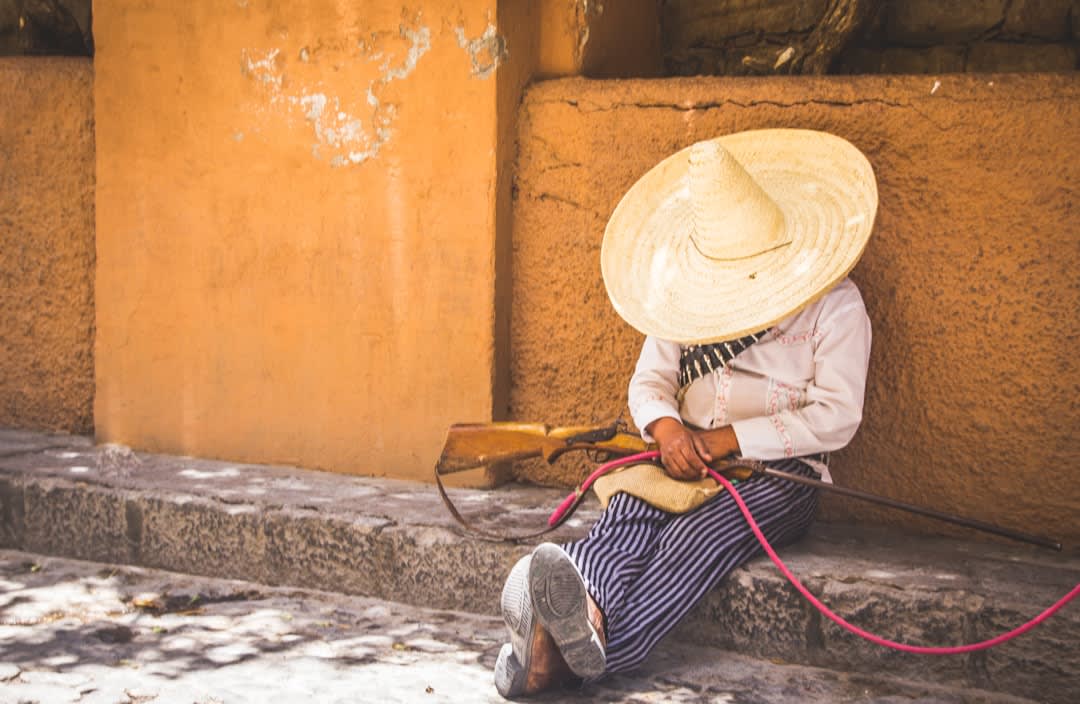
Hueyapan earned its Pueblo Mágico designation, but it wears it lightly — there is no polished center engineered for weekenders, just steep stone lanes, a church, small comedores where the food is simple and hot, and the constant background presence of a community that has been here far longer than the label. Eat what is put in front of you; on cold days that tends to mean something with mushrooms gathered from the forest, or a bowl of something broth-heavy that steams in the chill.
Walk the upper lanes if the cloud lifts. On a clear window you get the volcano itself, enormous and close, and below you the whole eastern edge of Morelos falling away toward the warm country. Those windows do not last long. Most of the time it is just the mist, the woodsmoke, and the sound of a loom through an open door.
Getting There
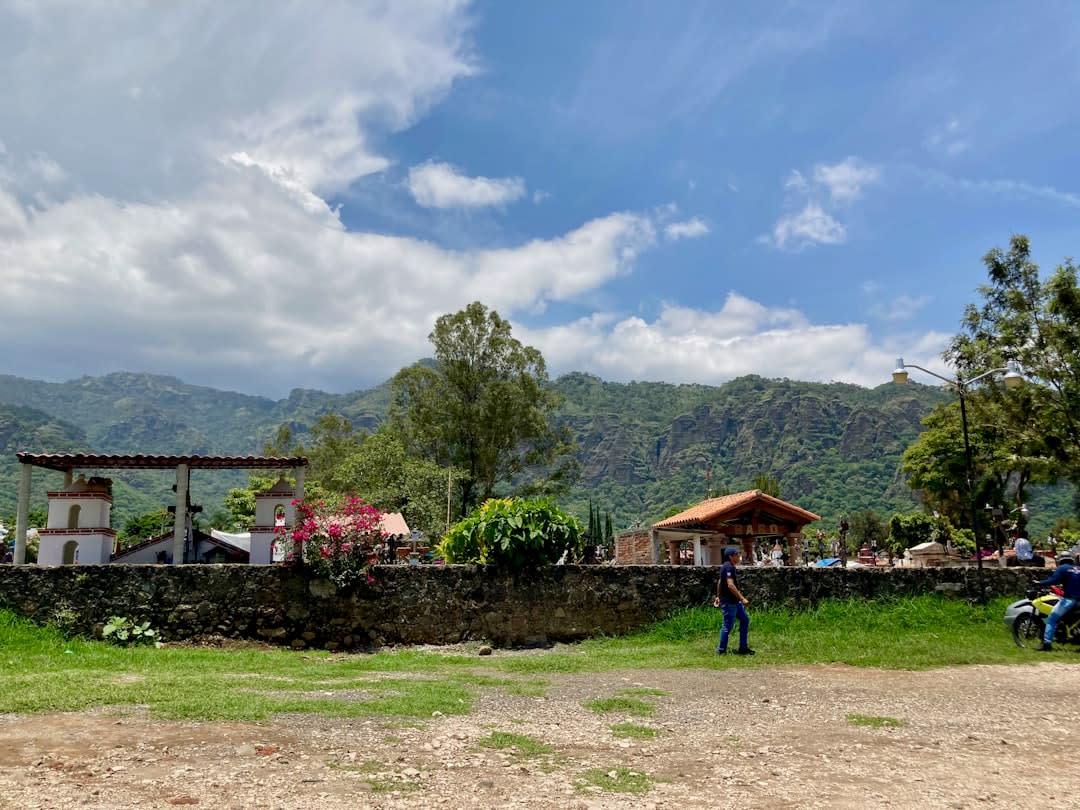
Hueyapan sits high on the Popocatépetl slopes in eastern Morelos, above Ocuituco and reached by the mountain road that climbs from Cuautla through the smaller volcano towns. By car it is roughly an hour from Cuautla, the last stretch steep and winding; drive it in daylight and with fuel in the tank, as services thin out as you climb. Colectivos run up from Cuautla but are slow and infrequent, so check the return times before you head up.
This is genuinely cold, high, cloud-wrapped country — bring warm layers in any season and rain protection in the summer months, when the slope is often socked in. Pair it with Ocuituco lower down for a full day on the eastern flank of the volcano.