Maravatío
"A town too handsome to be as overlooked as it is. The stone knows it, even if the guidebooks don't."
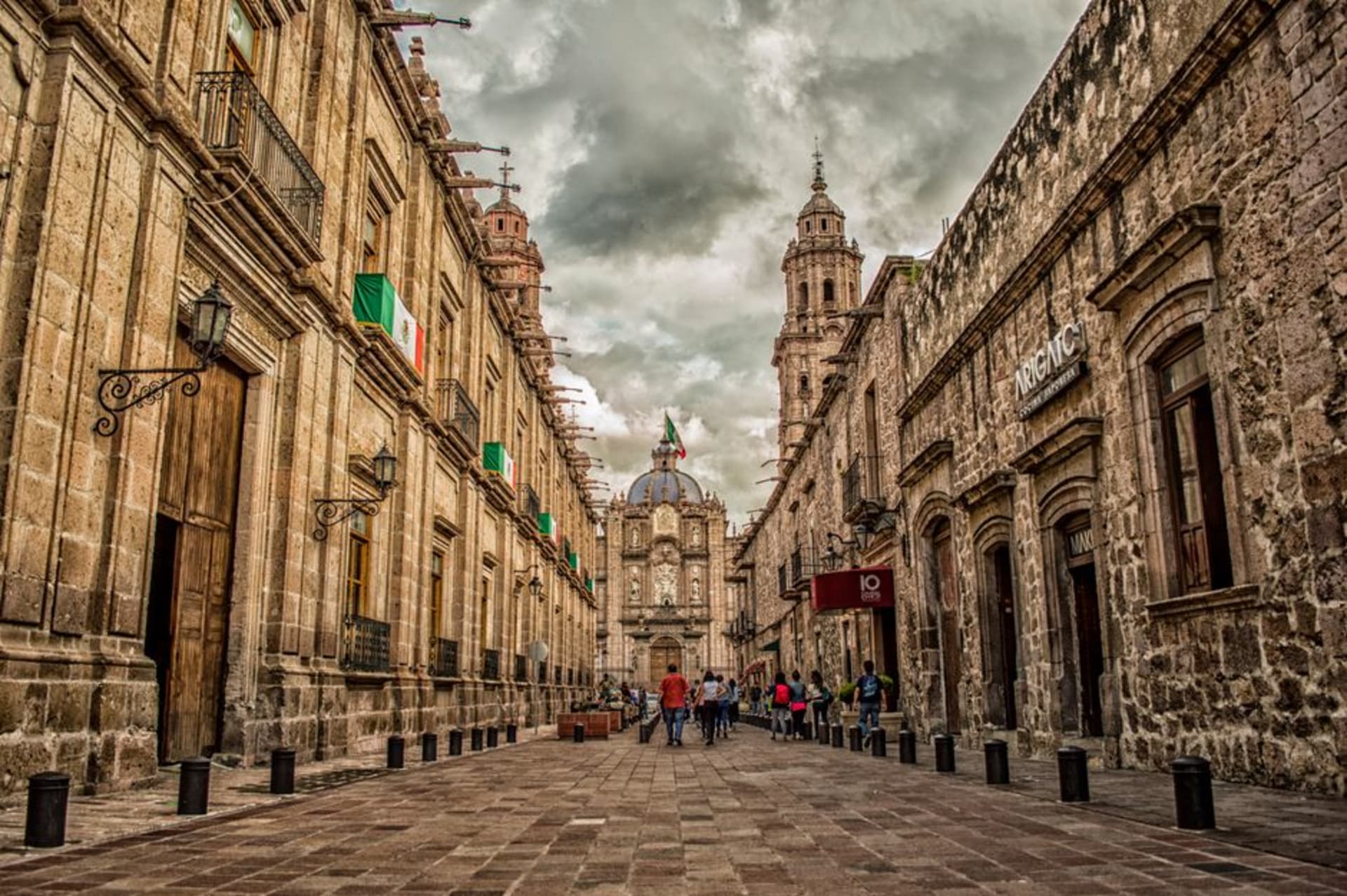
I found Maravatío the way you find most of the good places — by accident, on the way to somewhere more famous. I was driving up toward the monarch-butterfly sanctuaries and needed a coffee and a stretch of the legs, and the sign for Maravatío came up so I took it. Twenty minutes later I was standing in a plaza that stopped me short: baroque stonework, arcades throwing cool shadows, a church facade carved with a confidence that felt out of proportion to the sleepy town around it. I did not get my quick coffee and leave. I got a room.
A Plaza Worth the Detour
The heart of Maravatío is its plaza, and it’s one of the more graceful I’ve come across in provincial Michoacán. The arcades run along the sides, shading the walk in front of the shops and cafés, and in the center the laurel trees are clipped into tidy green cushions where old men sit through the long afternoons. There’s a fountain, a bandstand, the whole familiar grammar of a Mexican town square — but here it’s held together with a real sense of proportion, as if the town had once had money and taste and had spent both on its center.
I sat there through a whole afternoon with a coffee and then a beer, doing nothing, which is the correct way to use a plaza like this. Shoeshine men, kids on bikes, a couple getting their wedding photos taken by the fountain. The light came in low and gold under the arcades toward evening. Nobody was in a hurry, and after an hour or two, neither was I.
The Churches
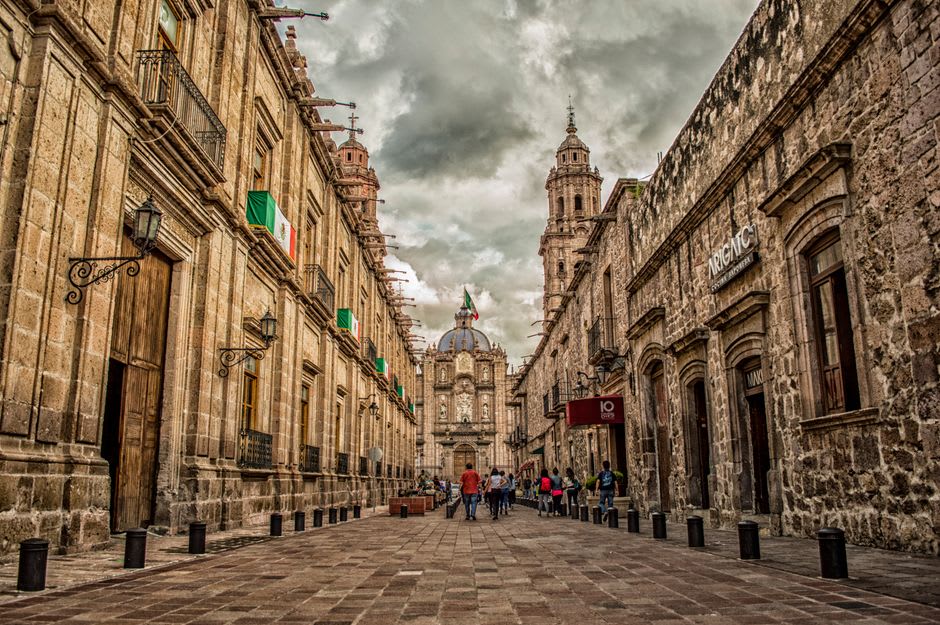
Maravatío has more fine baroque stonework than a town this size has any right to. The main parish church anchors the center, its facade carved in the pink-and-ochre stone of the region, and there are others scattered through the streets — solid, dignified, the products of a colonial prosperity built on the farming country all around. I’m not especially religious, but I have a weakness for this kind of provincial baroque, the way local carvers took the grand European vocabulary and made something warmer and stranger out of it.
I ducked into one of them to get out of the midday sun and stayed for the cool and the quiet. A woman was arranging flowers at the altar; the light came down through the high windows in solid columns of dust. There’s a particular hush inside these old Michoacán churches, thick stone walls holding the heat out, and I sat in a back pew for a while doing nothing in particular. Outside, the town went on with its unremarkable, agreeable day.
Farming Country and the Butterfly Road
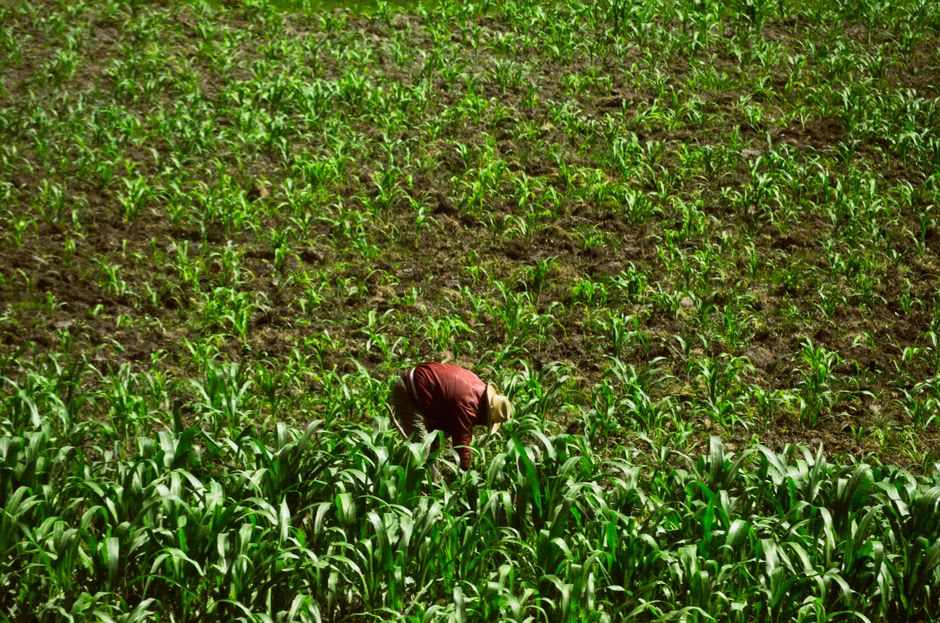
Around Maravatío the land opens into farming country — fields and low hills, the ordinary productive landscape of northeastern Michoacán. It’s not dramatic scenery, but it has its own steady charm, especially in the light of early morning when the mist sits in the low ground and the fields are wet with dew. This is agricultural Mexico at its most unassuming, and the town’s rhythm follows it: the market busy in the mornings, the plaza filling in the evenings, the days turning over without much fuss.
Maravatío also makes a smart, underrated base for the monarch-butterfly region. The sanctuaries around Angangueo and Ocampo are within reach for a day trip, and coming back to a handsome colonial town in the evening beats returning to a functional roadside stop. Most people blow straight through here on their way to the butterflies. I’d argue for staying a night, sitting in that plaza, and letting a genuinely lovely provincial town do its quiet work on you.
Getting There
Maravatío is in northeastern Michoacán, close to the Estado de México border. By car it’s about 1.5 to 2 hours from Morelia and roughly 3 hours from Mexico City via Toluca and the highway toward Michoacán. It sits near the main road up to the monarch-butterfly sanctuaries, so it’s an easy and pleasant stop if you’re heading to Angangueo or Ocampo. Buses connect Maravatío with Morelia, Toluca, and Mexico City through the day. With a car you can use it as a base for the butterfly country and the farming towns around it; without one, the town itself is compact and entirely walkable.