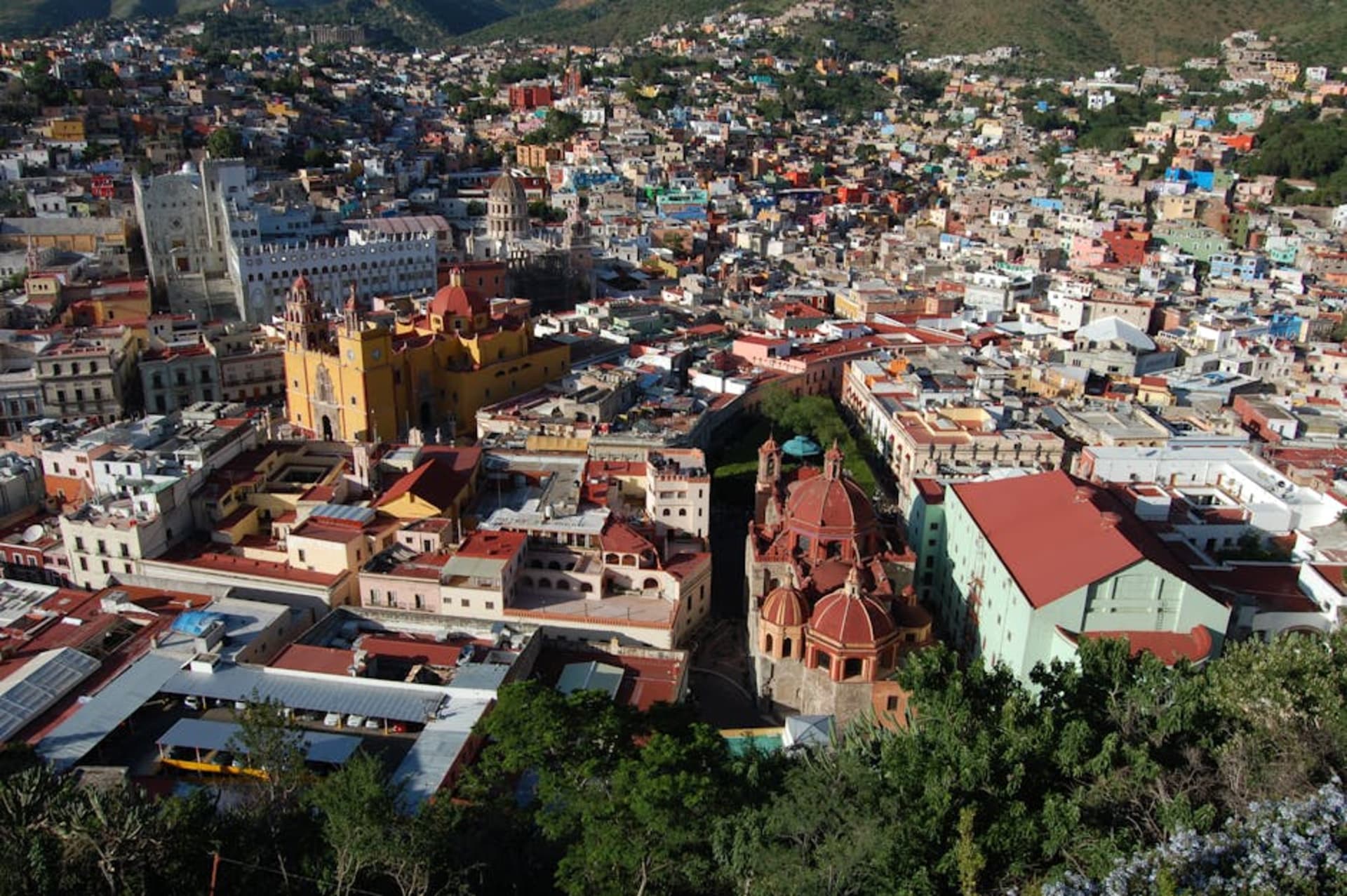
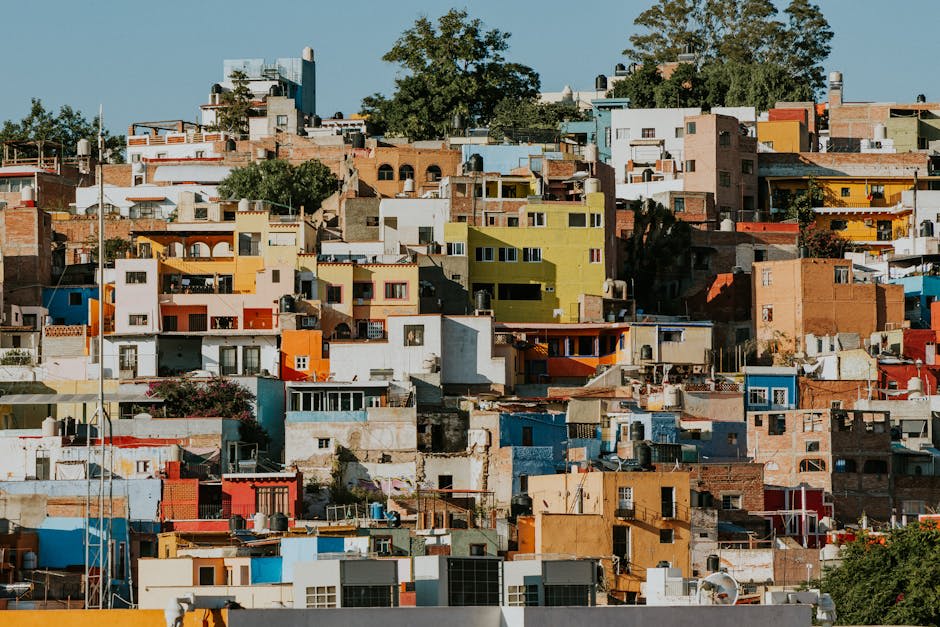
Guanajuato is what happens when you build a colonial silver-mining city inside a ravine and then let four centuries of colour and chaos accumulate. The houses climb the hillsides in layers of pink, yellow, ochre, and green. The streets — many of them former riverbeds, now tunnels — wind underground before spitting you out into a plaza you did not expect. The university students fill the callejones at night, singing estudiantinas in medieval costume. The whole city feels like a stage set that someone forgot to strike, and then people moved in.
I first visited on a road trip from Mexico City with friends, expecting to stay two nights. We stayed five. Guanajuato has that quality — it is small enough to walk in a morning but deep enough to hold you for a week. The Jardín de la Unión, the central plaza, is one of the most pleasant public spaces in Mexico: shaded by laurel trees, ringed by cafés, with a constant low hum of conversation and music that starts around noon and does not stop until well after midnight.
What I Remember
The Callejón del Beso — the Alley of the Kiss — is the most photographed spot in the city, and I will admit the legend is charming: two balconies so close that lovers from feuding families could kiss across the gap. The reality is a narrow alley jammed with tourists. Go at 7am or skip it. The city has better alleys without the crowd.
The Alhóndiga de Granaditas is a grain warehouse that became the site of one of the defining battles of Mexican independence. The murals inside, by José Chávez Morado, are extraordinary. The museum is one of the best regional history museums in the country. Most visitors skip it for the mummy museum — their loss.
The Museo de las Momias is exactly what it sounds like: naturally mummified bodies exhumed from the local cemetery, displayed in glass cases. It is macabre, fascinating, and very Mexican in its relationship with death. Not for everyone. I found it compelling.
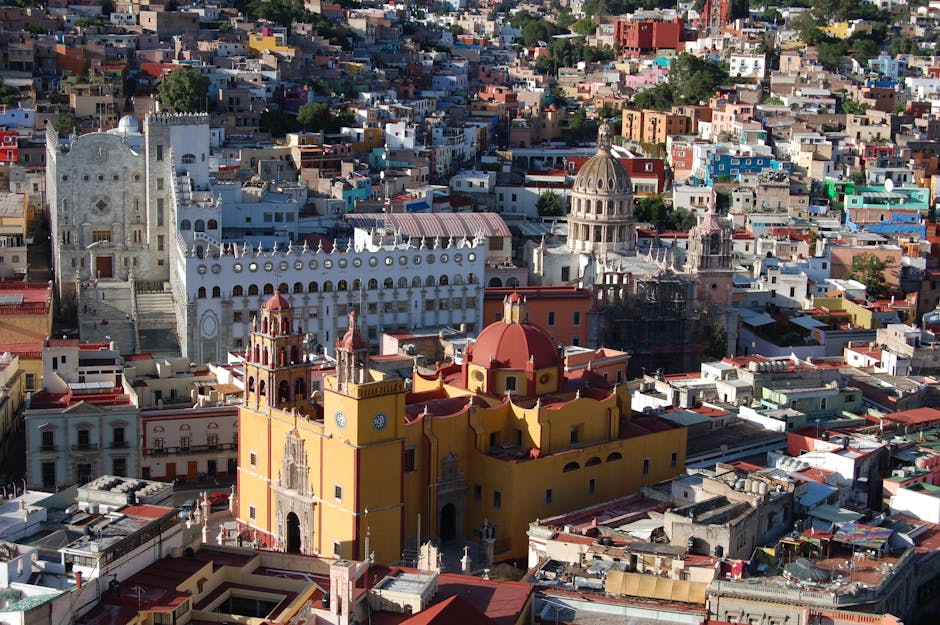
The Pipila monument above the city gives you the view — the full colour palette of the city laid out below, the Basílica in the centre, the mountains behind. Walk up at sunset. The light is exceptional.
Eating and Drinking
The street food here is Central Mexican highland cooking at its best. Enchiladas mineras — tortillas dipped in guajillo sauce, filled with cheese, topped with potatoes and carrots — are the local specialty. Find them at the Mercado Hidalgo, a Porfirian iron-and-glass market hall that is one of the most beautiful market buildings in the country.
The café scene is strong, driven by the university crowd. Café Tal on the Jardín is my usual spot — good espresso, a terrace, and the kind of people-watching that makes you feel like you are in a novel. The mezcal bars along the callejones are small, dimly lit, and serious about their spirits.
The Festival Internacional Cervantino, held every October, transforms the city into a performing-arts festival that draws theatre, dance, and music from across the Spanish-speaking world. If your dates align, go. The city at festival time is electric.
When to go: October to April. The Cervantino in October is the highlight. Summers are rainy but the city is quieter and cheaper. The altitude (2,000 metres) keeps temperatures moderate year-round — bring a jacket for evenings.