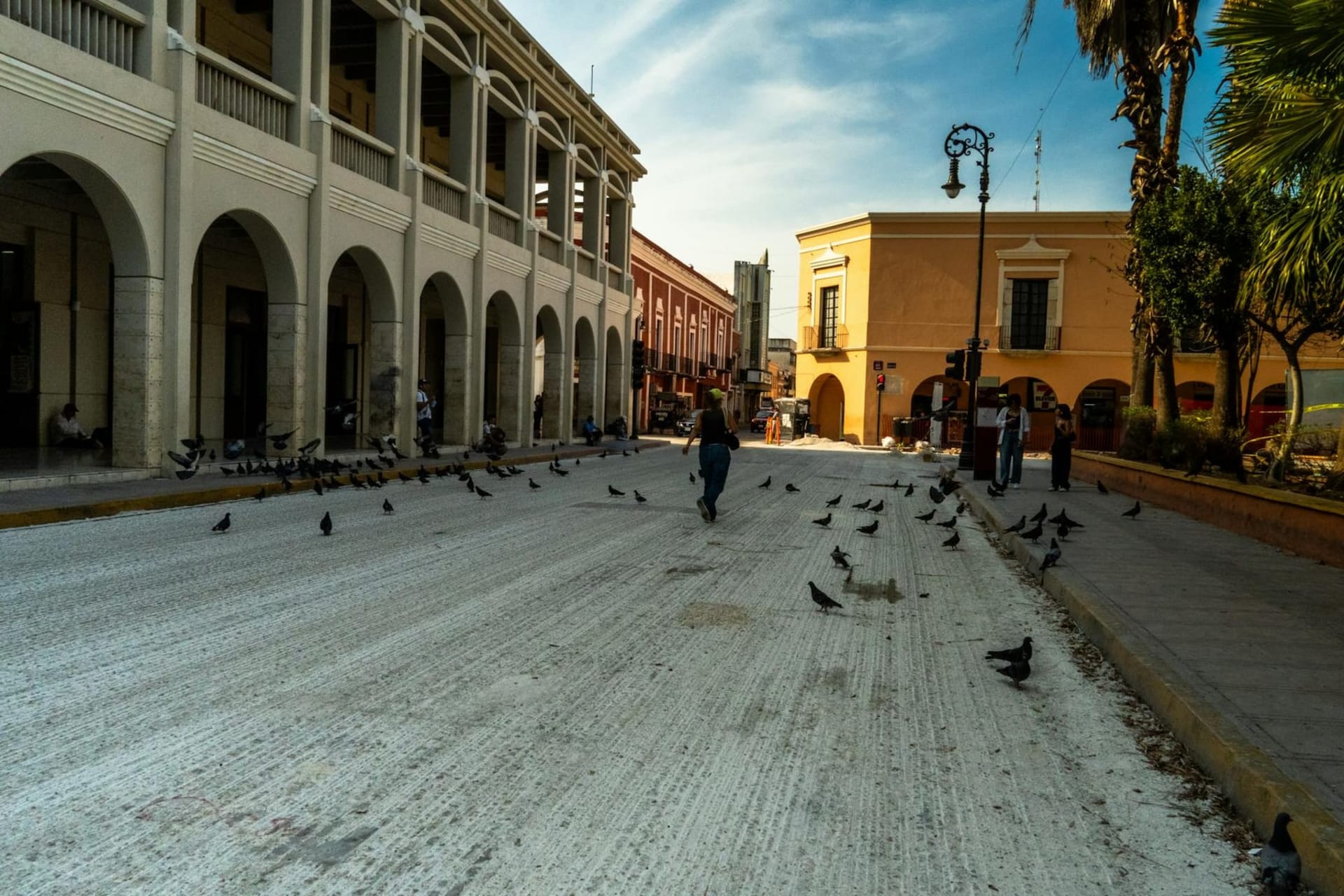
I arrived in Merida on an overnight bus from Campeche, stepping off onto Calle 70 just as the street sweepers were finishing their rounds and the first marquesitas carts were rattling into position on the corners of the Plaza Grande. The city was already awake. It is always already awake.
The Weight of the Grid
Merida operates on a colonial grid so logical it feels like an argument — even numbers running north-south, odd running east-west, all of them counting outward from the zócalo like the city is trying to account for itself. I spent the first morning just walking it, letting the arithmetic of the streets settle into my body. The Casa de Montejo faces the cathedral across the square, its plateresque facade carved with conquistadors resting their boots on the heads of the defeated, a detail so blunt it stops you mid-stride. The limestone that gives the city its name — Ciudad Blanca — absorbs the early light and throws it back a shade warmer, almost golden, before the heat arrives and turns everything flat and white and relentless.
Eating Before Thinking
Lia found the food market on Calle 56 before I did, which was not surprising. By the time I caught up with her she was halfway through a bowl of sopa de lima — the Yucatecan version, with its shredded chicken and fried tortilla strips and that particular sourness that comes from the native lima fruit, not quite lime, closer to something you don’t have a word for yet. We ate huevos motuleños at a counter stall so narrow our shoulders touched the walls, the eggs buried under black beans and ham and a tomato sauce bright enough to wake you faster than the coffee. Then panuchos from a woman who pressed them to order on a comal so seasoned it looked archaeological. Three meals before ten in the morning. The city had made its intentions clear.
The Unexpected Quiet of Sunday
The surprise came on a Sunday evening on Paseo de Montejo, the wide boulevard the henequen boom built to prove Merida could compete with Paris. I had expected the paseo to feel theatrical, performative. Instead I found families on rented bikes, a brass band playing danzón in front of the Palacio Canton, old couples dancing on the closed-off street with the practiced indifference of people who have been doing this for forty years and intend to do it for forty more. There was no audience and no performance. It was just the city, using itself.
When to go: October through February offers the most forgiving temperatures, with dry skies and evenings cool enough to walk without dissolving. Avoid Semana Santa and late July unless you want to share Merida with everyone who has also read that Merida is wonderful.