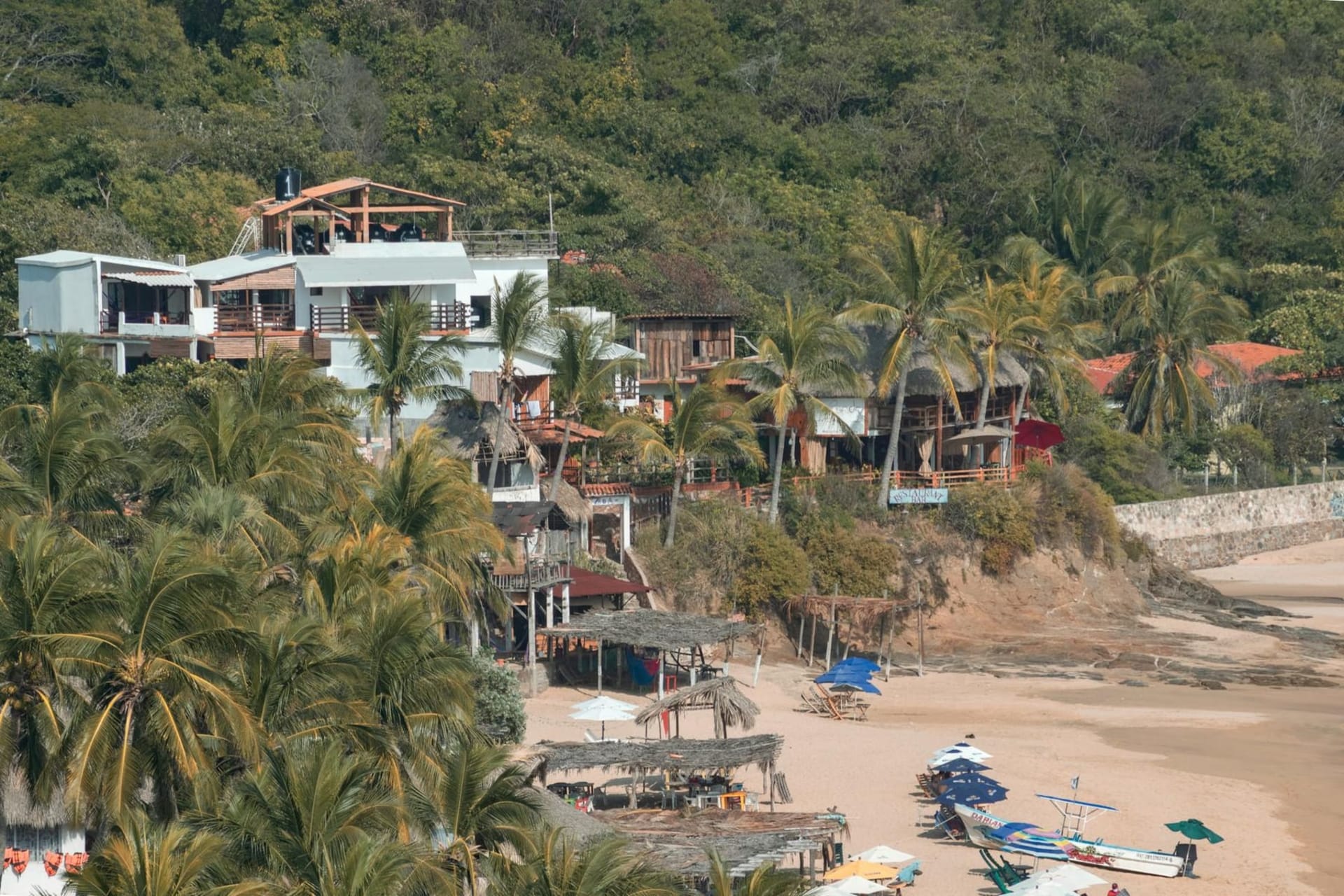
I first heard about Mazunte from a woman selling tlayudas out of a handcart in Pochutla. She described it the way people describe a secret they’ve half-decided to give away: with pride and a little reluctance. An hour later, the collectivo dropped us at the edge of a dirt road and the Pacific was suddenly right there, enormous and gray-green, smelling of salt and rotting kelp and something almost sweet underneath.
The Weight of What It Used to Be
Mazunte was, until 1990, the site of Mexico’s last legal sea turtle slaughterhouse. The whole village organized its economy around it — the flesh, the eggs, the oil, the leather. Then the government banned the killing, the processing plant closed, and Mazunte had nothing. That collapse is not ancient history. Some of the people running the tiendas and renting hammock space today lived through it. You feel it in the way locals talk about the turtles now, with the particular tenderness of people who owe something.
The Body Shop, of all companies, arrived in the early nineties with a cosmetics cooperative model. The cooperative became Cosméticos Naturales, and the cooperative became Mazunte’s second life. Walking Calle Principal past the low-slung production building, I could smell lavender and copal and something citrusy I couldn’t name drifting out through the open ventilation slats.
What Surprised Me
Lia found the turtle sanctuary before I did — the Centro Mexicano de la Tortuga, tucked at the eastern end of the bay road. I expected a tourist operation with laminated signs. What I found instead was a working research station full of tanks where researchers monitor hatching populations, with minimal concession to spectacle. A biologist named Rodrigo, clearly there to work rather than to perform, stopped to explain the difference between olive ridley and leatherback nesting behaviors with the impatience of someone interrupted mid-thought. That impatience felt like honesty. I left believing the turtles were genuinely being watched over.
The Evenings, Specifically
At dusk the main beach clears of vendors and fills with an odd silence. The surf at Playa Mazunte is not for swimming — the undertow is punishing — but standing at the waterline while the light goes coral and then flat, watching the pelicans work the break in formation, I felt the particular relief of being somewhere that hasn’t bothered to optimize itself for visitors. We ate grilled fish at a table in the sand near the western rocks, the kind of meal that costs almost nothing and tastes entirely of where you are.
When to go: November through March offers dry, clear days with manageable heat. July and August bring rain, humidity, and sea conditions that can make the beaches genuinely dangerous — beautiful but not forgiving.