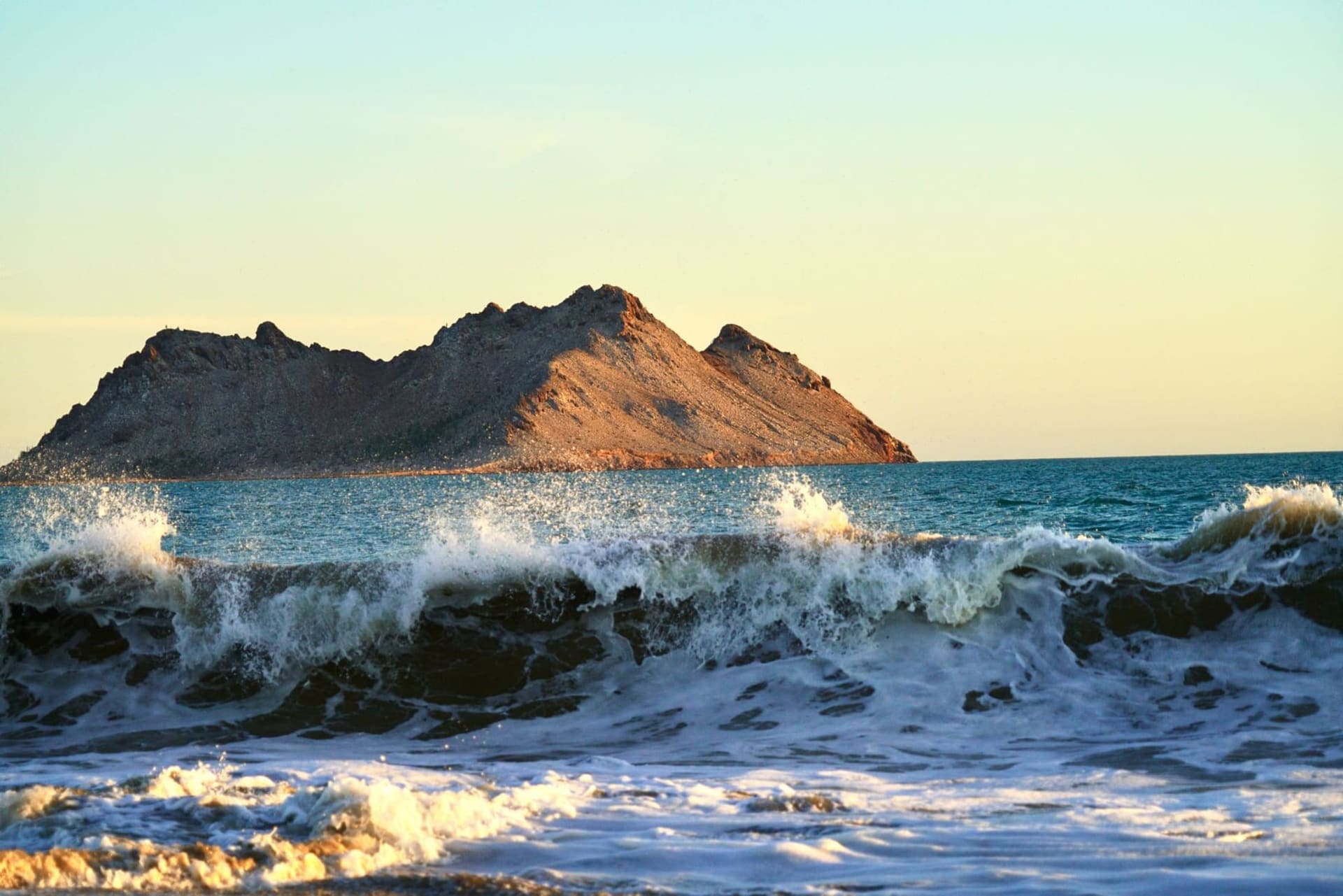
Loreto Baja
"Loreto keeps the pace of the mission era — which, it turns out, suits whale-watching perfectly."
There is a single traffic light in Loreto’s historic center. I noticed it on our second morning when it turned red and nobody stopped — not out of impatience, but because the intersection was empty and everyone had somewhere quiet to be. That felt like the town explaining itself.
The Mission and the Malecon
Misión de Nuestra Señora de Loreto sits at the top of Salvatierra street, stone-gray and absolute, the oldest standing mission in all of the Californias. Founded in 1697, it predates every version of California that Americans tend to think about. I stood inside on a Tuesday afternoon with dust in the light and a single candle burning and felt the particular stillness of a building that has been prayed in continuously for three centuries. The museum attached to it has silver chalices and illustrated manuscripts and almost no visitors. We had it entirely to ourselves.
From the mission it is a four-minute walk to the malecon — the sea-facing promenade along the Paseo Lopez Mateos — where pelicans sit on the bollards without moving and the water shifts between green and improbable blue depending on the hour. The smell is salt and something faintly iodine, the kind of coast smell that feels medicinal in a good way.
Whales at Breakfast Distance
We hired a panga from the marina before sunrise on our third day — Lia had done the research, found a local outfit rather than the packaged tours — and motored out into the Bahia de Loreto as the light turned orange over the Sierra de la Giganta. The guide cut the engine. We waited maybe twelve minutes. Then a blue whale surfaced forty meters off the bow, exhaled a column of vapor that caught the low sun, and slid back under without drama, as if showing us was a minor obligation it had agreed to fulfill.
What surprised me was the silence after. No one spoke. The guide looked at us to see if we were satisfied and we both just nodded. Sometimes the right response to something enormous is to say nothing at all.
Eating on Calle Francisco Madero
Back in town, the restaurants on and around Calle Francisco Madero serve fish tacos with a cabbage slaw that has a lime hit sharp enough to make your eyes water pleasantly. I ate the same taco from the same window three times. The agua de tamarindo at the corner market near the plaza is poured from a clay pot and costs twelve pesos. I thought about that taco for weeks after we left.
When to go: January through March is whale season in the Sea of Cortez, with blue and fin whales most reliably spotted in the Bahia de Loreto. November and early December offer warm days, empty streets, and none of the whale-season crowds.