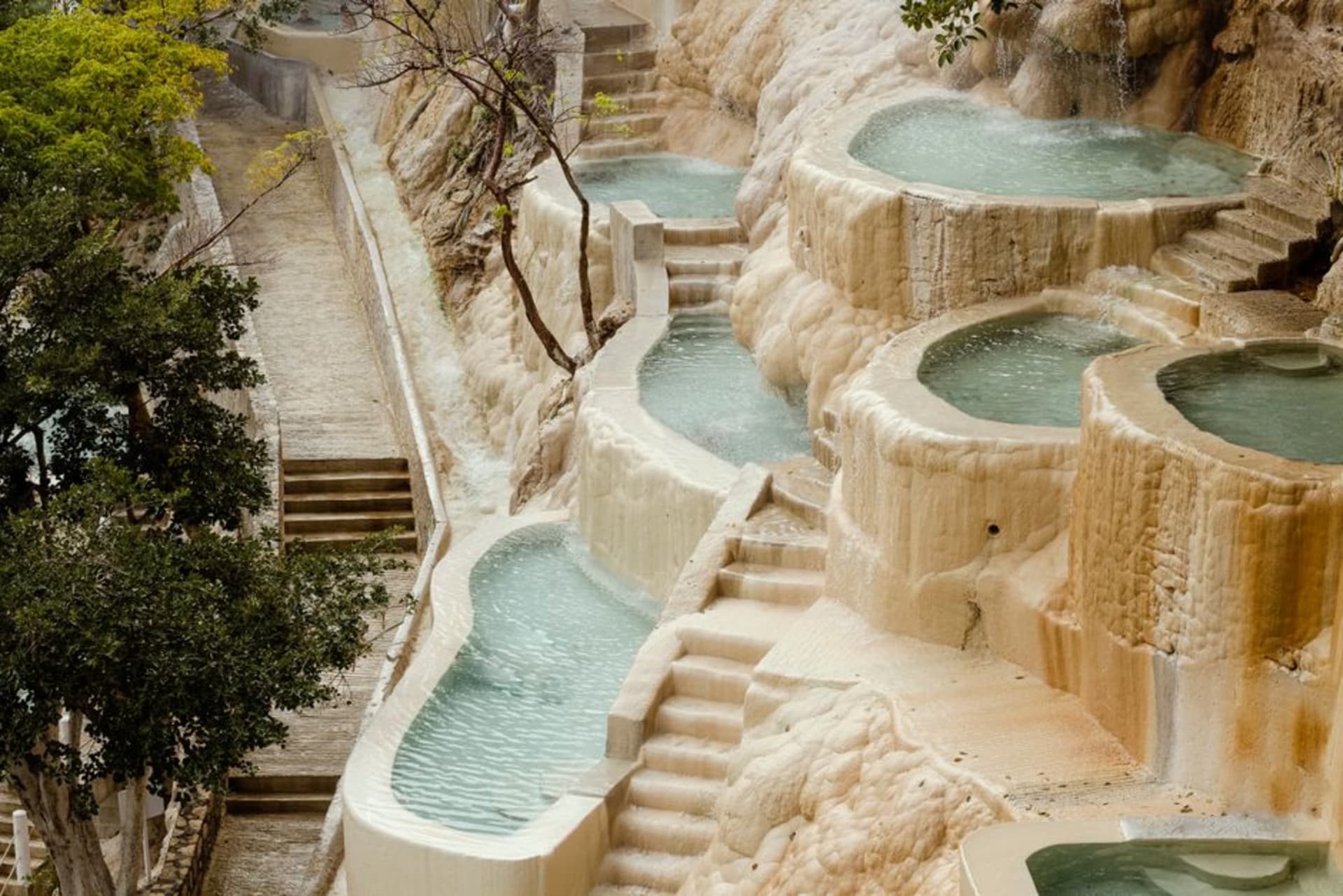
Grutas de Tolantongo
"The water is the color of a swimming pool in a dream. The canyon walls drip and glow."
I had a bus ticket back to Mexico City for the following morning. I did not take that bus. Grutas de Tolantongo has a way of rearranging itineraries — the canyon is narrow and steep-walled, the thermal pools are a blue that looks chemically enhanced and is entirely natural, and the whole place operates at a frequency that makes departure feel like an act of aggression against your own senses. I booked the overnight cabin about an hour after arriving, standing there still dripping, and felt no regret about it.
What the Cave Holds
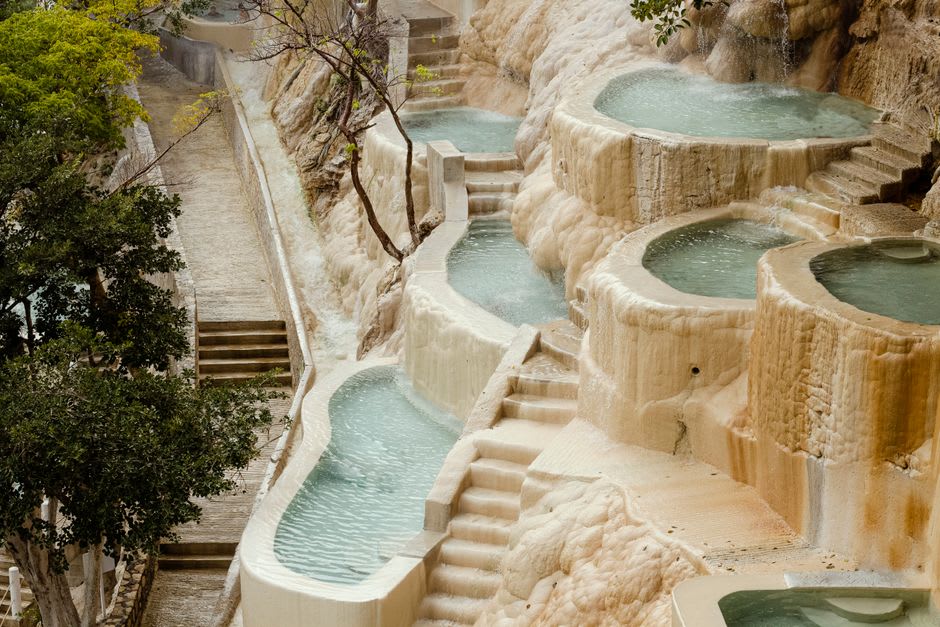
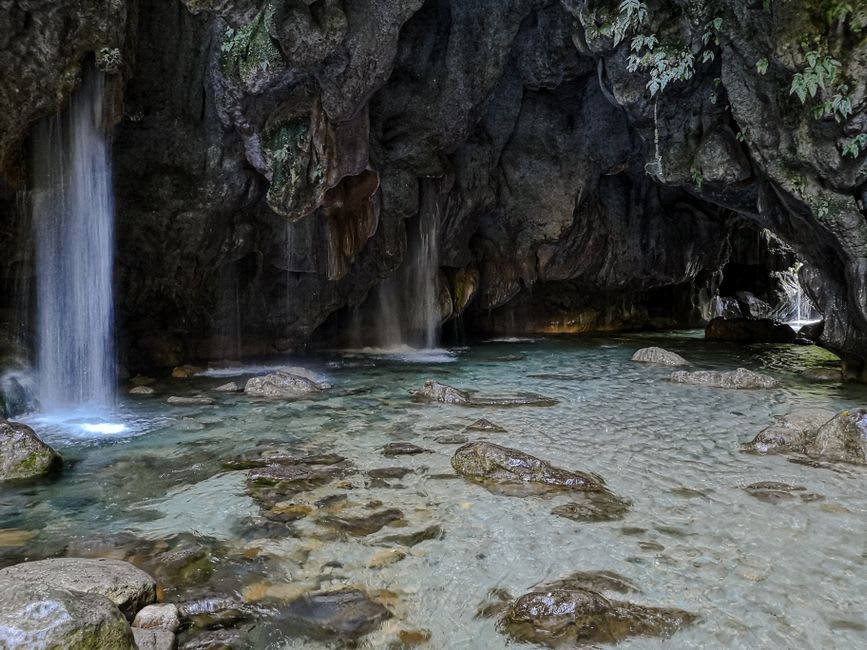
The Gruta itself is the source of everything here — a thermal river that emerges from inside the mountain at around 38°C and pours down the canyon face in a series of tiered pools, each one a slightly different shade of turquoise depending on depth and the angle of the light. To reach the origin you wade into the cave mouth, hands against the mineral-slicked walls, the air heavy with sulfur and steam, the water chest-deep in places and hot enough that your body forgets it has other concerns. Upstream the temperature climbs to the edge of tolerance. The pools outside catch it as it cools, descending the cliff in terraces — some waist-deep, some barely knee-deep — and the color shifts from a pale jade at the top to something closer to powder blue by mid-afternoon. I arrived at seven on a Saturday morning and had the upper pools to myself for nearly forty minutes. By nine, I understood why people sleep here.
The River, the Light, the Afternoon
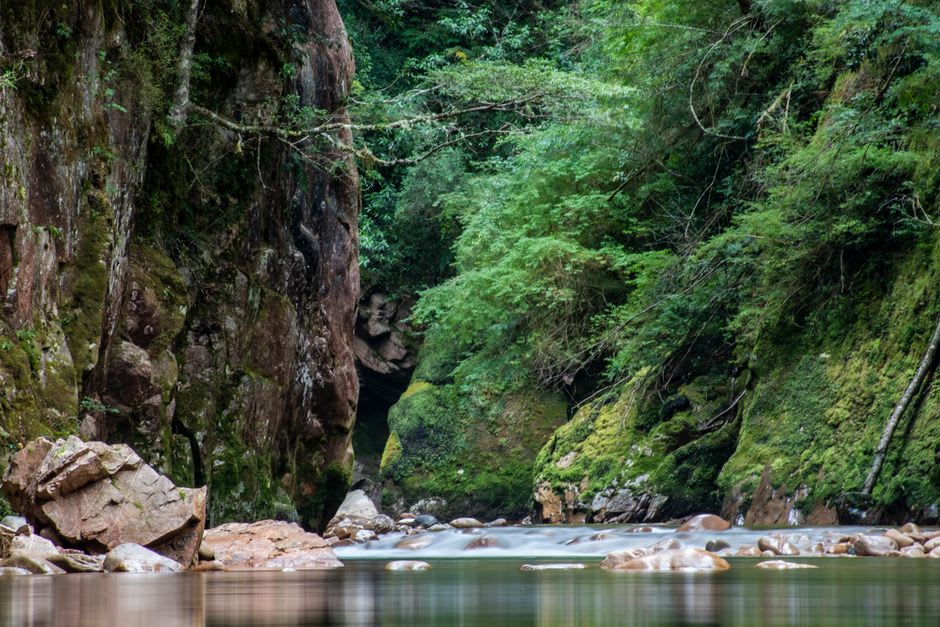
Below the pools, the Tolantongo River runs cold through the base of the gorge — not refreshingly cool, but mountain cold, the kind that shocks the breath out of you in a single step. Moving between the thermal pools above and the river below takes about thirty seconds of walking and a complete recalibration of what your body was doing. I tried the river once, stayed four minutes, and climbed back up to the pools without apology. What I kept returning to was the canyon itself: the walls are close and striated in greens and deep ochres from mineral deposits and wet moss, and the light filters down in shifting angles as the sun crosses overhead. In the late afternoon it drops low into the gorge and catches the steam rising off the pools, turning everything briefly gold. I sat in one pool for close to two hours. That is not something I normally do.
On Timing and Other Preparations
Come on a weekday. Entry runs on timed slots now — book online at the official Grutas de Tolantongo site at least a few days ahead, and further in advance for any weekend between March and August when the entire metropolitan area of Mexico City seems to converge on this canyon. The overnight cabins are basic and absolutely worth it for the 6am access before the day crowds arrive; they book out weeks ahead for Saturdays. Bring food from Ixmiquilpan, the nearest town about 45 minutes away — the on-site comedor is functional but not a reason to visit. Leave anything you care about keeping dry in the cabin before entering the cave. The mineral water will stain light-colored clothing a faint yellow if you stay long enough. I noticed this on the bus back. It seemed like a reasonable trade.
Getting There
From Mexico City’s Terminal del Norte, buses run to Ixmiquilpan in roughly 2.5 to 3 hours (Omnibus de México and similar carriers). From Ixmiquilpan, shared combis run to the canyon entrance throughout the day; the road is paved but narrow and slow. Entry is now time-slotted — book tickets and overnight cabins at the official site well before arriving, especially for weekends.