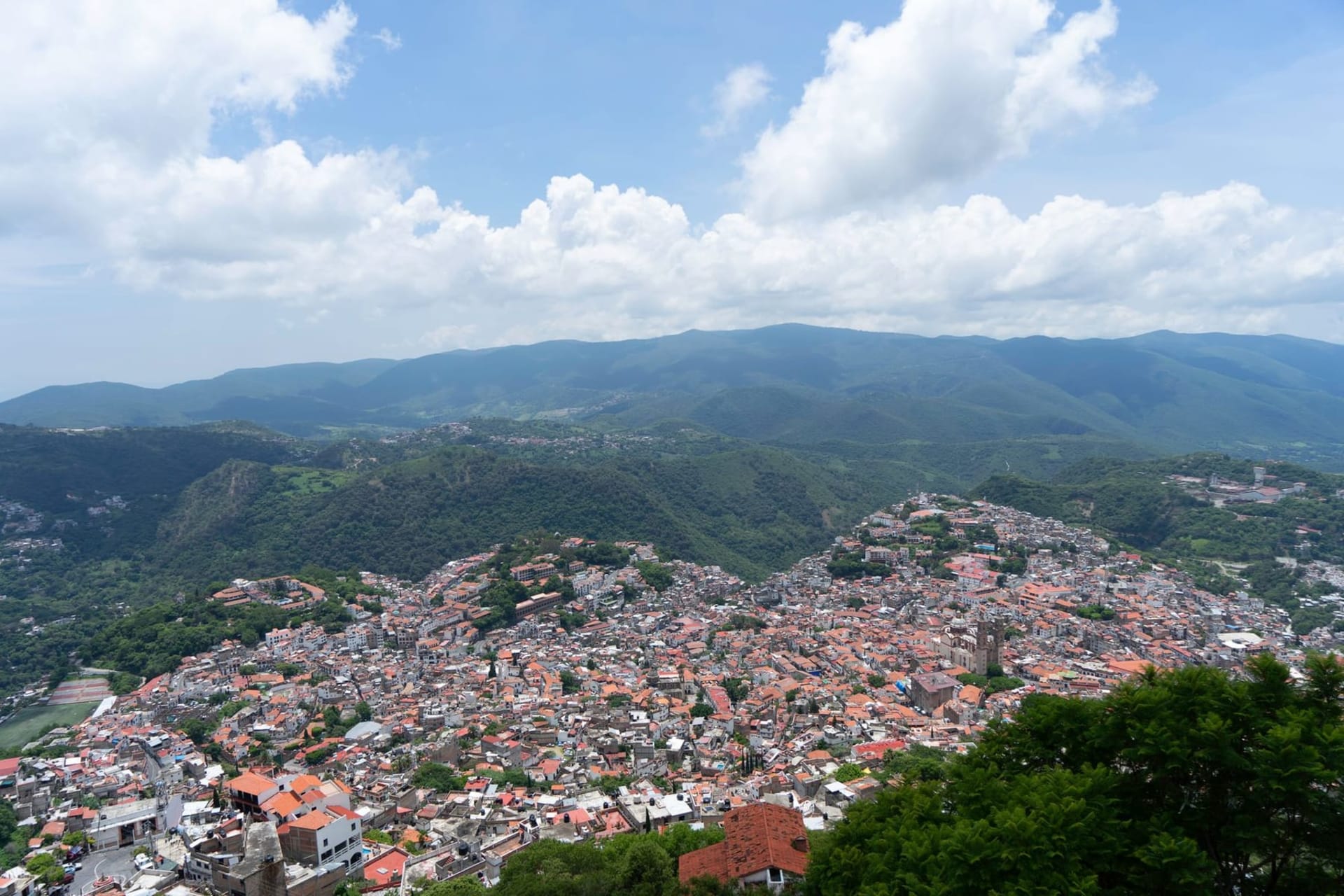
There are cities that reward patience, and Taxco is one of them. It doesn’t reveal itself quickly. The first hour I spent there, I was too preoccupied with the gradient — the callejones climb at angles that make your calves burn and your lungs apologize — to notice much else. Then I stopped on a small landing off Calle de las Delicias, caught my breath, and looked up. The twin baroque towers of Santa Prisca were catching the late afternoon light in a way that made the pink quarry stone look briefly, impossibly, like rose gold.
Taxco sits at 1,800 meters in the mountains of Guerrero state, roughly 185 kilometers southwest of Mexico City. The city exists because of silver — discovered here in the early colonial period and mined continuously since 1522, a run of five centuries that makes it one of the longest-operating mining centers in the Americas. The silver is mostly gone now, extracted by four generations of families who built the white-walled mansions that still line the upper streets. What remains is the craft — the silversmith workshops that have operated here since the 1930s — and the architecture they paid for.
Santa Prisca
The starting point is the cathedral. José de la Borda, an 18th-century silver magnate whose surname had become synonymous with wealth across New Spain, built the Parroquia de Santa Prisca between 1751 and 1758 as an act of gratitude after striking a particularly rich vein. The result is one of the finest Churrigueresque buildings in the Americas — a style of Spanish baroque so ornate it was criticized at the time as excessive by critics who were themselves building baroque churches.
The façade is carved in pink quarry stone (cantera rosa) to a depth and intricacy that requires some time to properly read. There are cherubs and vines and saints and structural elements that dissolve so gradually into decoration that the boundary between architecture and sculpture stops being meaningful. Inside, the gilded altarpieces by Isidoro Vicente de Balbás achieve the same effect in three dimensions and gold leaf: they are simultaneously overwhelming and precise, the product of six years of work by craftsmen who were paid well and given enough time.
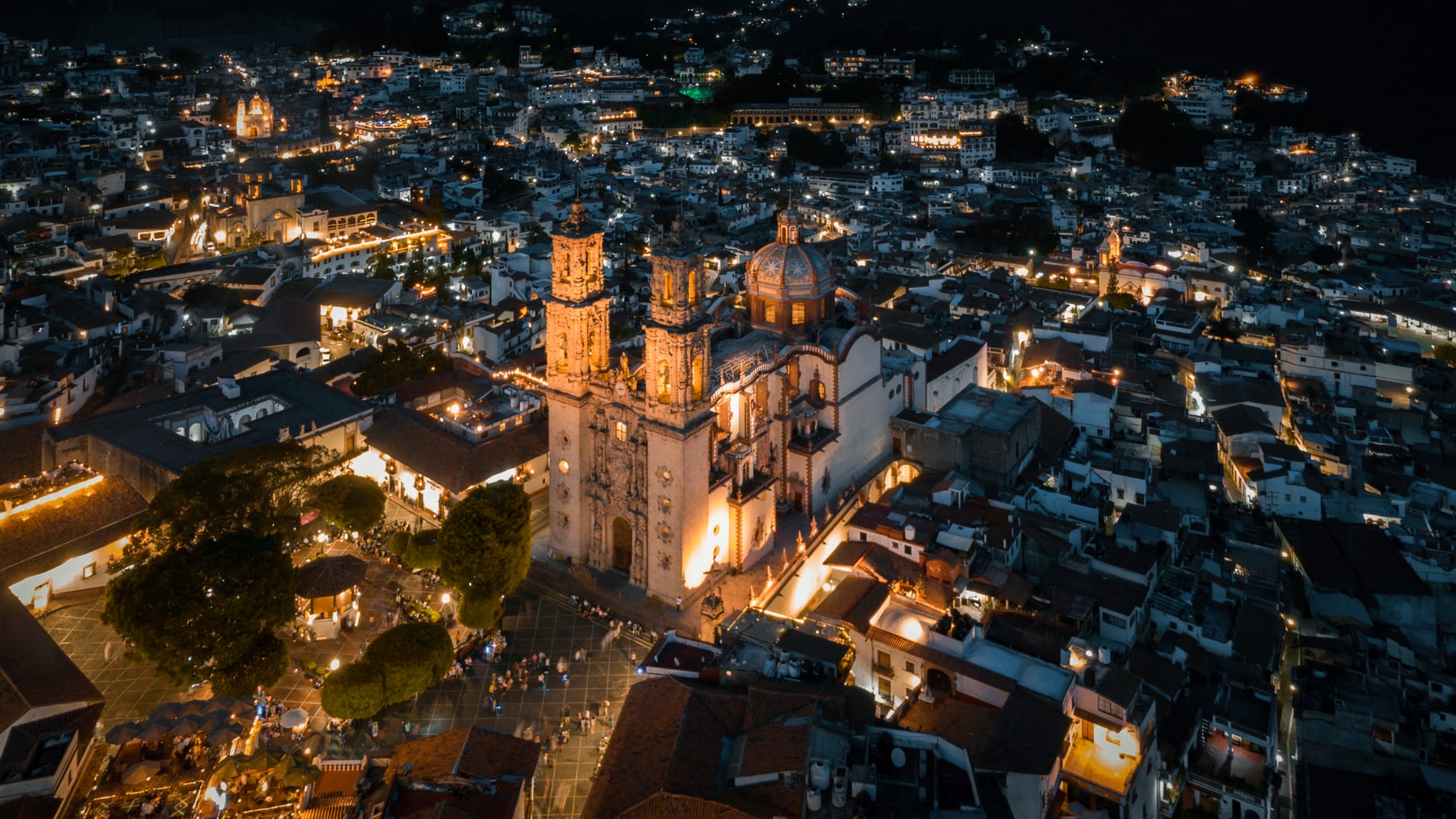
Go inside in the morning when the light comes through the windows at an angle that catches the gold on the altarpieces. Stand in the center and turn slowly. The effect is of being inside something made by people who were trying to externalize an interior state — devotion rendered architectural. Whatever your relationship with Catholic imagery, it is extraordinary craftsmanship.
The Plaza Borda in front of the cathedral is the social center of Taxco. At any hour of the day, schoolchildren, tourists, vendors, and elderly couples share the benches in a democracy of purpose that feels specific to Mexican plazas. The best perch is the terrace of any of the cafés on the south side of the plaza — two floors up, level with the cathedral’s second tier, with the whole city spreading out behind you.
The Silver
Taxco built its silver reputation twice. The first time was colonial — the mine wealth that built Santa Prisca and the mansions on Calle Juan Ruíz de Alarcón. The second time was the 1930s, when William Spratling, an American architect from New Orleans who had come to Mexico with John Dos Passos, settled here and convinced local artisans to revive pre-Hispanic metalworking designs. Spratling’s workshop trained a generation of silversmiths and created the aesthetic vocabulary — clean lines, indigenous motifs, oxidized finishes — that defines Taxco silver to this day.
That vocabulary is still visible in the best workshops. I spent a slow afternoon on Calle Cuauhtémoc watching a man solder a cuff bracelet with the focus of someone defusing something. He didn’t look up once. The workshop was small and hot, the surfaces covered in a fine silver dust, tools arranged on a bench with the orderliness of a surgical kit. He had been doing this for thirty-one years, he told me later, when I asked about a piece in his window. His father had done it before him in the same room.
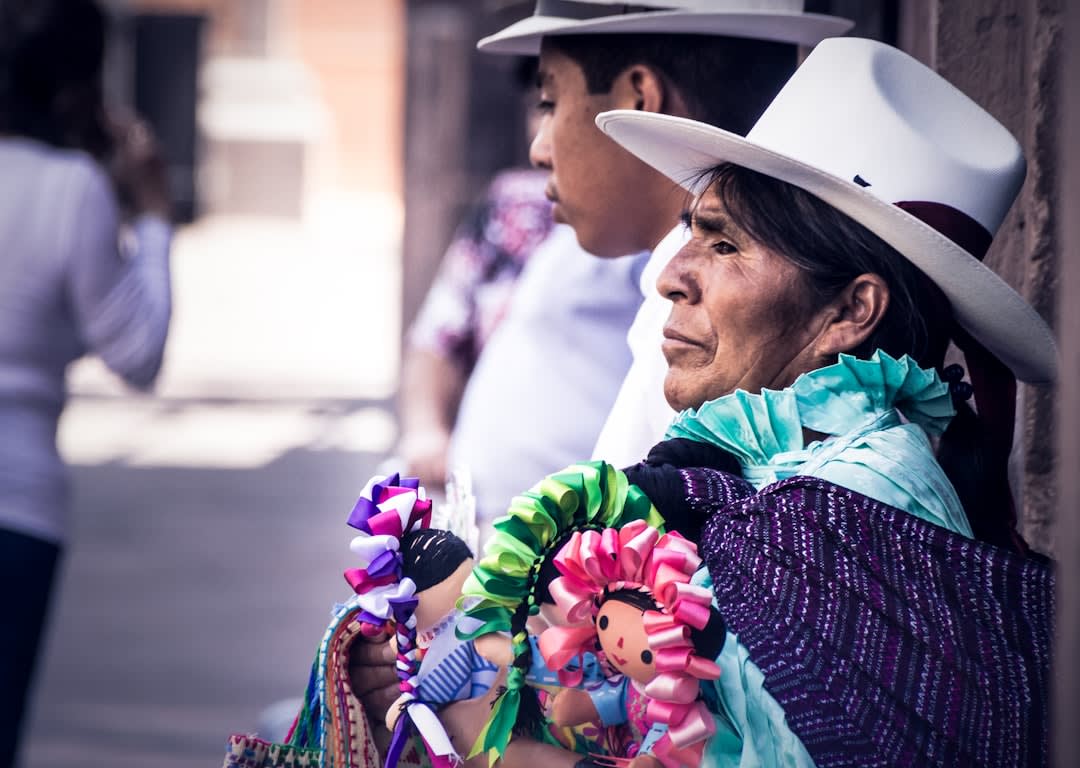
The challenge in Taxco is distinguishing the genuine from the tourist-grade. The shops ringing the Plaza Borda sell silver at all quality levels, some of it stamped .925 (sterling) and some of it not. Buy from workshops where you can see the work being done — the side streets off the main plaza, Calle Celso Muñoz and its offshoots, have the artisans who make rather than merely sell. The Museo William Spratling, one block below the cathedral, is worth an hour to understand the design lineage before you buy anything.
The Feria Nacional de la Plata in November is the apex of Taxco’s silver year — a week-long competition and market that draws silversmiths from across Mexico and fills the city to capacity. If you can time a visit around it, the quality and range of work available is exceptional.
The Callejones
The streets of Taxco are the city’s real attraction, and they resist efficient navigation. The main tourist orientation — cathedral, plaza, silver shops — covers perhaps twenty percent of the city’s geography. The rest is a tangle of callejones (alleys) and escalinatas (stone stairways) climbing the hillside in directions that no map fully reconciles with the ground.
Lia found the thing that surprised me most. She ducked into what looked like a hardware stall near the mercado and called me over. Behind a rack of plumbing fittings was a courtyard I would never have found alone — a crumbling colonial patio with a bougainvillea so large it had colonized the second-floor railing, and a woman selling tlayudas from a clay comal balanced on three bricks. We ate standing up, the tortillas thick and charred at the edges, spread with asiento and layered with chapulines. I had not expected to eat grasshoppers in a plumber’s courtyard in Guerrero, but Taxco runs on small revelations like that.
The upper callejones — above the Plazuela de San Juan, climbing toward the Iglesia de Santa Veracruz — are the most atmospheric and the least visited. The streets here are narrower and steeper, the houses smaller and less restored, and the views over the cathedral and the valley below increasingly dramatic. The Teleférico (cable car) that runs from the bottom of the city up to the Monte Taxco hotel gives the best aerial perspective on the city’s topography — cheap, quick, and extraordinary on a clear morning.
Getting around: The standard vehicle in Taxco is the VW Beetle taxi, which can negotiate streets that nothing else can. Hailing one from any corner gets you anywhere in town for a fixed low fare. Walking is the better option for exploring — but budget more time than distance suggests.
What to Eat
Taxco’s food culture is an extension of Guerrero state’s kitchen, which is serious and under-known. The state’s signature dish is pozole blanco — the hominy soup served clear, without the red or green chile bases used elsewhere in Mexico, garnished tableside with tostadas, radishes, dried oregano, and chiles secos. The version I ate at a family restaurant on Calle de los Plateros arrived in a bowl large enough to solve a medium-sized hunger problem for two people.
Chalupas — small thick tortillas topped with salsa and shredded meat — are sold at the morning market stalls before nine in a form that requires no embellishment. Cecina estilo Guerrero is different from the Morelos version nearby: thinner, drier, more heavily salted, served with guacamole made in a molcajete at the table. The Mercado Municipal below the plaza has the best version of both, along with tlayudas, aguas frescas, and the sweet potato vendors who park near the entrance in the afternoon.
For sit-down meals: El Adobe on Plaza Borda is reliable and has the terrace position, which you pay for in price. Better value is found one street back — the local restaurants on Calle Benito Juárez that open at noon and close when the food runs out.
A Day Trip Worth Taking: The Caves
Forty minutes north of Taxco, the Grutas de Cacahuamilpa are the largest accessible cave system in Mexico and among the largest in the world. The tour route covers two kilometers of illuminated passages through chambers tall enough to contain a six-story building, their walls draped in stalactites that have been growing since before the Aztec empire existed.
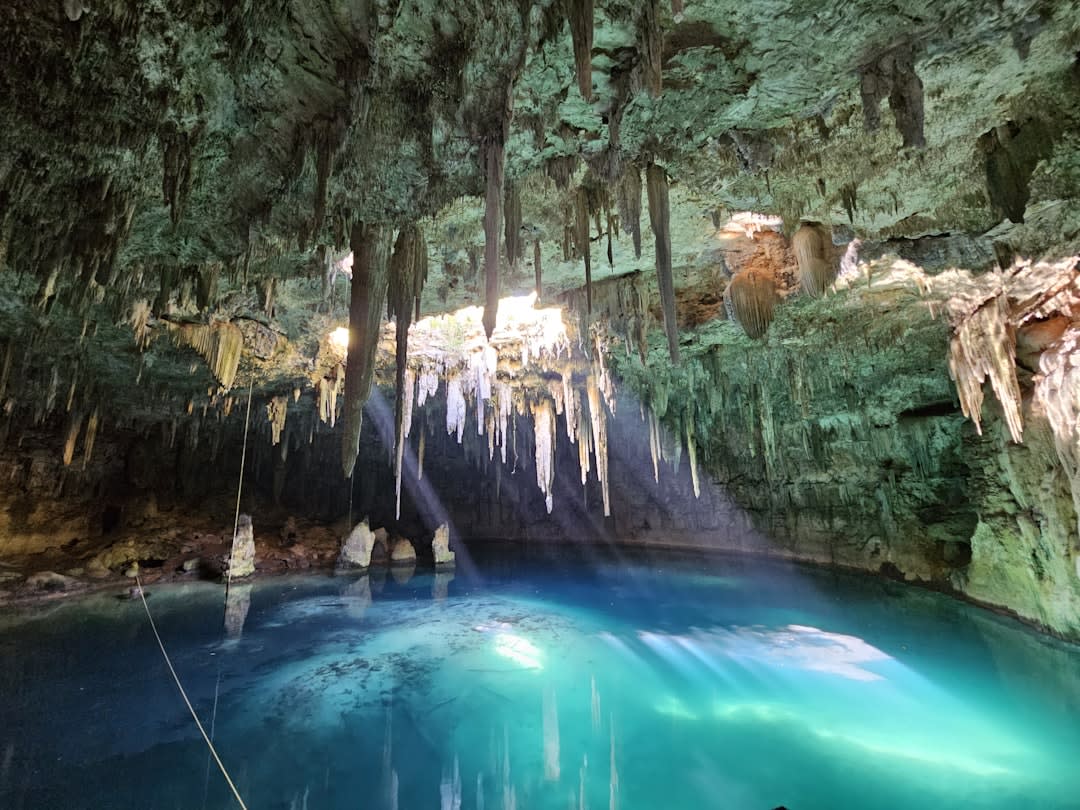
The hourly guided tours leave from the entrance and last ninety minutes. The formations have been given names by successive generations of guides — the Virgin, the Elephant, the Wedding Cake — which range from apt to imaginative. Ignore the names and focus on the scale: the largest chamber has a ceiling forty meters high and the acoustics of a concert hall, which someone discovered in the 1970s and used to stage opera performances that must have been extraordinary. The temperature inside is a constant 21°C regardless of season, which makes it an excellent destination in summer.
Semana Santa
Taxco’s Holy Week processions are among the most intense in Mexico. The flagellant brotherhoods — the encruzados, who carry heavy wooden crosses, and the penitentes, who beat their backs with branches — process through the narrow streets on the nights of Holy Wednesday and Good Friday in ceremonies that are pre-Christian in character regardless of their Catholic framing. Thousands of observers line the callejones, holding candles, in near-total silence.
I have not witnessed this myself — I was in Oaxaca both years I tried — but two people I trust, who are not easily impressed by spectacle, described it independently as one of the most striking things they had seen in Mexico. If you come during Semana Santa, book accommodation months in advance. The city fills to capacity and rates triple.
Getting There and Staying
From Mexico City: Estrella de Oro buses depart from the Terminal Poniente (Observatorio) and take approximately three hours to the Taxco central bus station. Uber from Mexico City is possible but the toll roads add cost and the bus is more comfortable.
From Tepoztlán or Cuernavaca: A shared colectivo or taxi to Cuernavaca, then another bus south to Taxco — total journey around two hours. Taxco and Tepoztlán make a natural two-stop trip through Morelos and northern Guerrero.
Where to stay: The posadas on Calle de los Plateros and near the Plazuela de San Juan are the best base — central, within walking distance of both the cathedral and the morning market. Posada San Javier, built around a colonial courtyard with a small pool, has been operating long enough that the staff know the city better than any guidebook. Hotel Emilia Castillo, family-owned, is quieter and slightly cheaper. Both require cash at the desk.
When to go: November through February is ideal — dry, clear, cool nights, the light on the cathedral façade at its best. The Feria de la Plata in late November adds a dimension if you can time it. July and August bring afternoon rains that clean the stones and make the callejones photogenic in the wet-light way, though the humidity is significant. Semana Santa is extraordinary but requires advance planning.