Copper Canyon
"The Chepe descends into the barrancas and the modern world disappears behind the ridge."
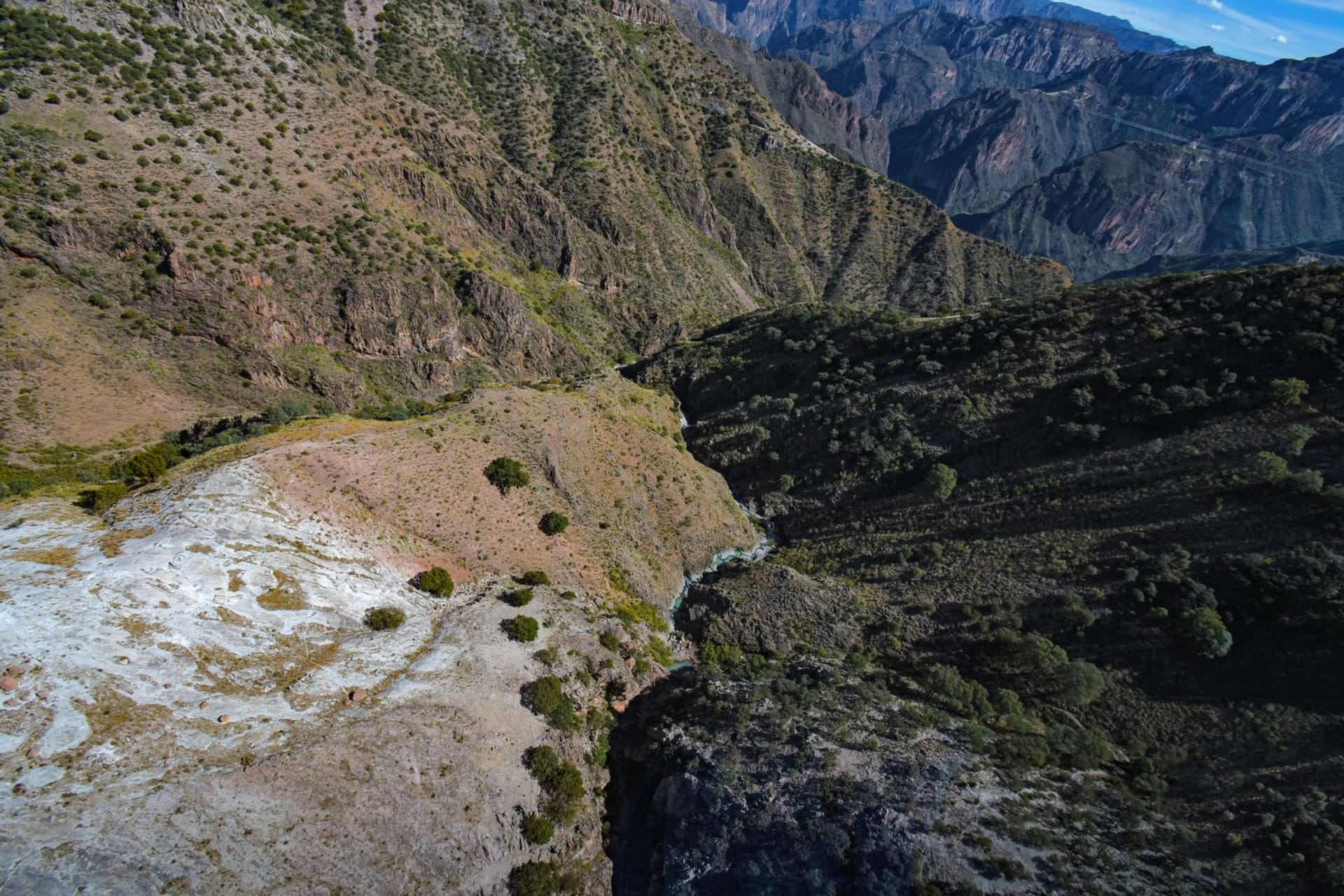
I had been watching the canyon appear in pieces through the scratched window of the Chepe — the Ferrocarril Chihuahua al Pacífico — for nearly an hour before I understood what I was actually looking at. Not one canyon. Six. The Barrancas del Cobre is a system of six interconnected gorges carved into the Sierra Tarahumara, and from the train you can watch their relative depths shift like tectonic argument as the track curves around each new promontory. The depth is abstract until a vulture drifts below you and becomes a speck.
The Train as Premise
We boarded in Creel at dawn, the air cold enough to see our breath on the platform, the pine forest above town still holding a darkness that smelled of resin and frozen soil. The Chepe runs the full route from Chihuahua City to Los Mochis on the Pacific coast — fifteen hours in each direction — but even a half-day segment from Creel to Divisadero will rearrange your sense of what Mexico is. Lia had the window seat, and I watched her face more than the canyon for the first twenty minutes, reading the landscape off her expressions.
At Divisadero, the train pauses for twenty minutes at a rim-side platform where Rarámuri women sell carved wooden figures and gorditas stuffed with beans and dried chili. The view from that platform drops 1,800 meters. I ate a gordita standing at the edge of nothing, the grease from the masa warm against my fingers in the cold canyon air, and felt briefly, cleanly ridiculous to be alive.
What Creel Keeps Quiet
The real surprise was not the canyon’s scale but its intimacy at ground level. I had expected monument. What I found, hiking the Valle de los Hongos outside Creel, was a landscape of volcanic rhyolite formations that locals have named for what they resemble — mushrooms, monks, a seated woman — rising from pale grass in morning light the color of old paper. No one else was on the trail. A Rarámuri man passed on a bicycle without looking at me, which felt like the correct response.
Creel itself is a timber and railway town with one main artery, Avenida López Mateos, a hardware store that doubles as a pharmacy, and a small Misión where Padre Verplancken spent decades photographing canyon life. The photographs are still there, hanging in the nave. Looking at them, I understood that the canyon has always absorbed people quietly, without making a spectacle of it.
When to go: October and November offer the clearest skies and bearable temperatures at both rim and canyon floor — the summer rains end, the crowds thin, and the light in late afternoon turns the canyon walls a deep, burnished copper that earns the name.