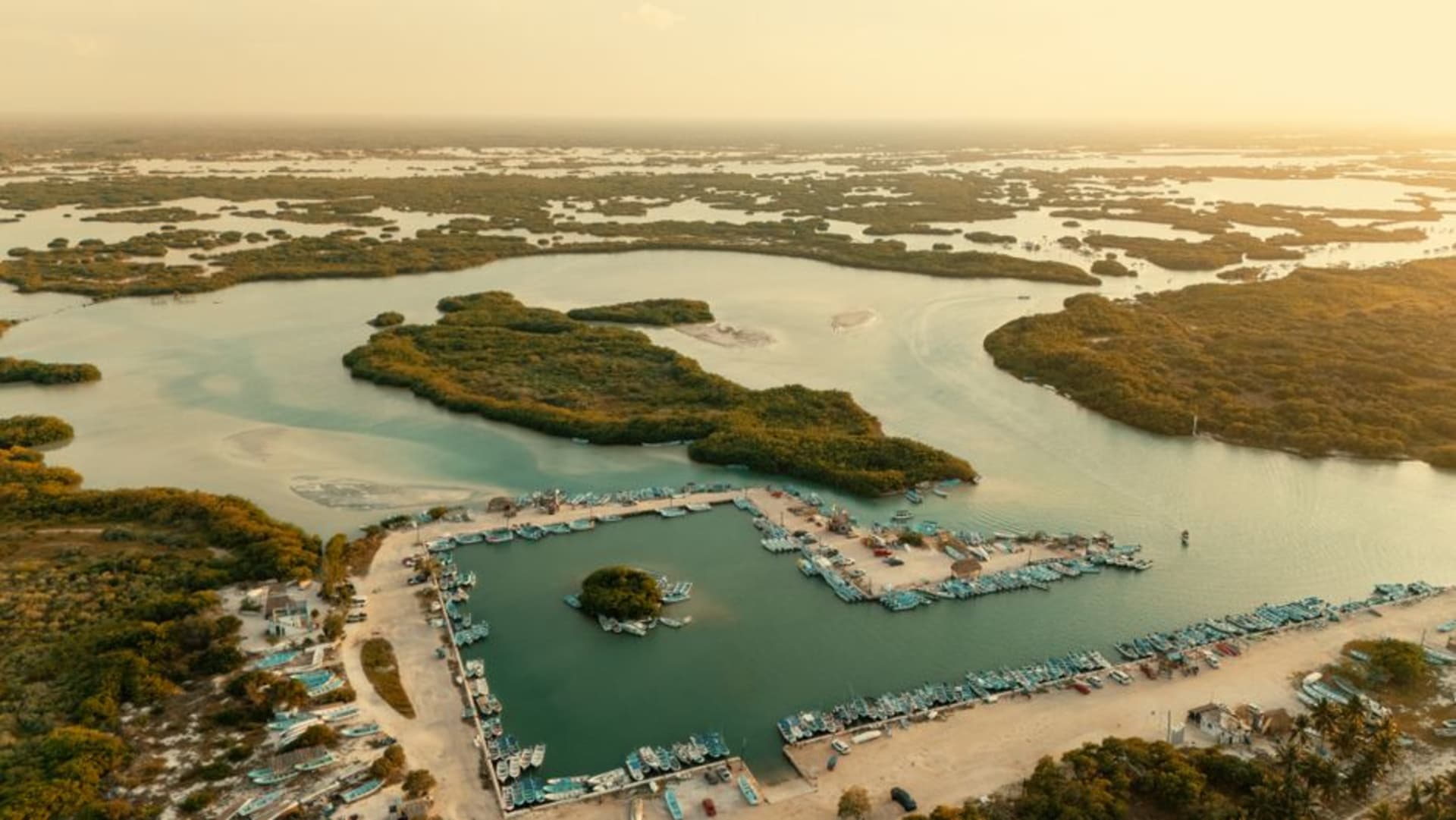
La Salada
"The mangrove channels go quiet a hundred meters in, and the birds act like you are not there — which is exactly what you want."
I found La Salada the way I find most things worth finding in Colima — by asking at a mariscos stall. The woman behind the counter in Armería talked about the lagoon the way people talk about a backyard: a place you go, not a place you visit. She drew a rough map on a paper napkin, named a man called Rodrigo who had a boat, and went back to shucking oysters. I drove out the following morning, past sugarcane fields and a string of speed bumps that the road signs seemed to have forgotten, and arrived at a landing that was little more than a patch of flattened grass beside brown water. Rodrigo was already there, bailing out his chalupa with a plastic cup.
Into the Channels
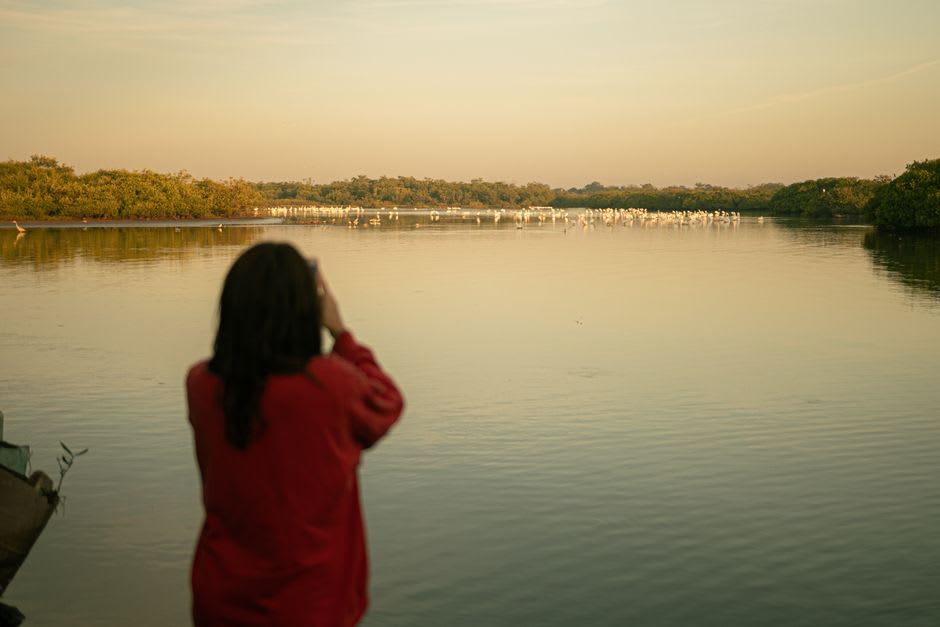
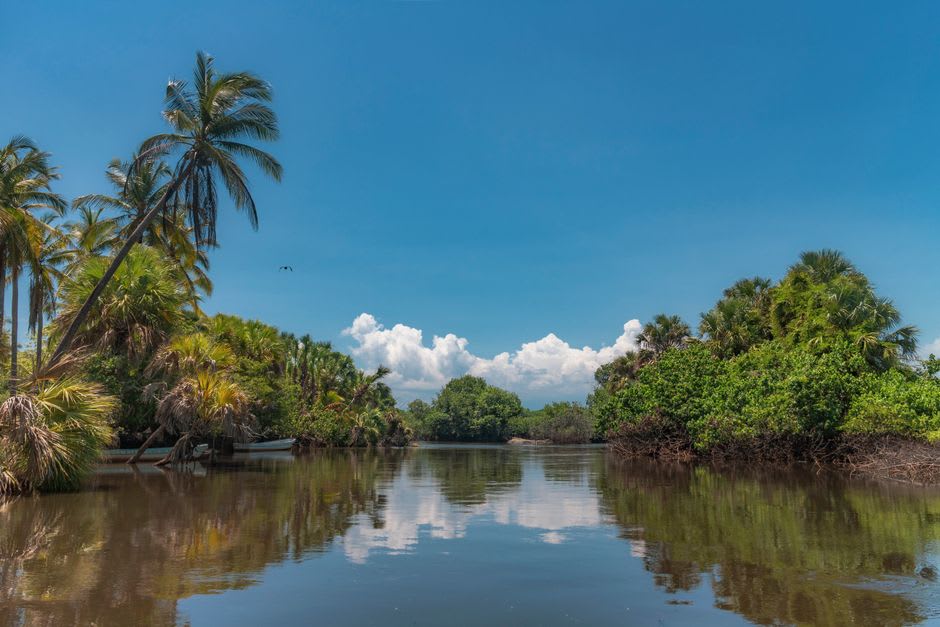
The lagoon opens wide near the entrance — brackish and tea-colored, with egrets standing in the shallows like white exclamation marks. But Rodrigo steered us into the narrower channels almost immediately, ducking under mangrove arches where the roots grip the water like fingers. Within five minutes the motor was off and he was poling instead, and the world contracted to a tunnel of green and the sound of my own breathing. Roseate spoonbills feed here in the early morning, swinging their paddle bills through the water in slow arcs. Tricolored herons lift off with an annoyed flap when the boat gets within three meters. Once, near a muddy bank where the channel bent sharply south, Rodrigo touched my arm and pointed without speaking: a crocodile, maybe a meter and a half, watching us from a tangle of roots with the patient disinterest of something that has been here longer than any of us.
The Lagoon in the Off-Hours
The thing nobody tells you about La Salada is that midday is not wasted time. When the birding quiets after eight or nine in the morning, the light on the open water turns flat and silver, and the mangrove edge becomes a solid wall of shadow. Rodrigo anchors in a shallow bay and produces a thermos of coffee. We sat for an hour doing nothing in particular, which felt entirely appropriate. The lagoon smells of salt and mud and something vegetal — not unpleasant, just honest. In the afternoon, the spoonbills come back. So does the crocodile, or one that looks like him.
After the Water
Back on land, Rodrigo pointed me toward a small comedor on the highway into Armería — no sign, blue plastic chairs, a handwritten menu taped to the wall. I ordered caldo de camarón and a plate of pescado zarandeado that had been grilled over wood in the back. Both arrived quickly and without ceremony. I ate slowly, still slightly damp from the boat, watching trucks pass on the highway, and thought that this was exactly the kind of morning a coastal lagoon should produce.
Getting There
La Salada sits a few kilometers west of Armería on the Colima coast. From Armería, follow the road toward Boca de Pascuales and watch for informal boat landings on the left. Rodrigo — or someone like him — is usually there by six in the morning. A two-hour tour in a chalupa runs around 300 to 400 pesos. Bring binoculars. Arrive before seven if you want the spoonbills.