
El Paraíso
"The Colima coast south of Cuyutlán is one of those stretches that still feels genuinely unresolved, and El Paraíso sits right in the middle of it."
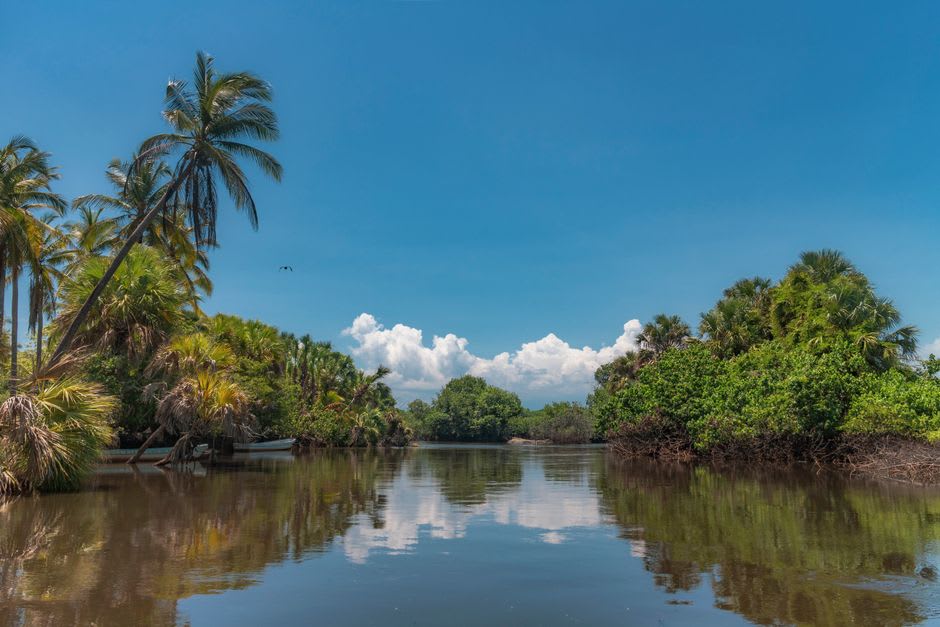
I came to El Paraíso on a Tuesday in February, after a colectivo from Manzanillo that stopped four times for reasons I never fully understood. The driver dropped me at the turnoff and pointed south. The road narrowed between mangrove walls before the lagoon opened on both sides — a long grey-green sheet of water that held the sky better than the sky did. A woman was washing something in a concrete basin near the embankment. Three pelicans sat on a submerged post. Nobody seemed particularly surprised to see me, which was its own form of welcome.
What the Lagoon Holds
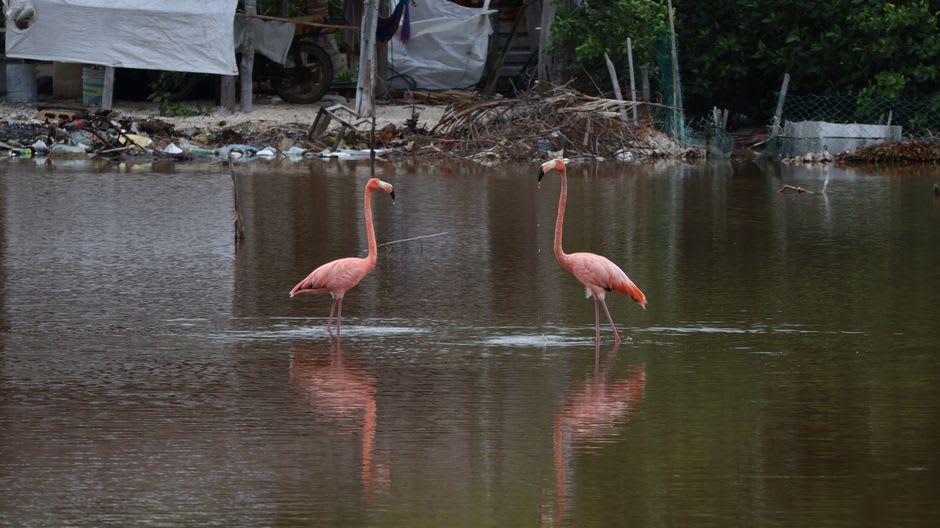
The Laguna de Cuyutlán system runs for kilometers along this coast, and El Paraíso sits at a point where the brackish water is shallow enough to read the bottom. In the early mornings — I was staying in a room above a family’s kitchen, the kind of arrangement where breakfast appears without being ordered — the lagoon fills with birds that feel borrowed from another continent entirely. Roseate spoonbills working the shallows in slow lateral arcs. Black-necked stilts picking through the mud with the focused urgency of airport security. Frigate birds overhead, always. I had binoculars and spent two mornings cataloguing what I could not name, which was most of them.
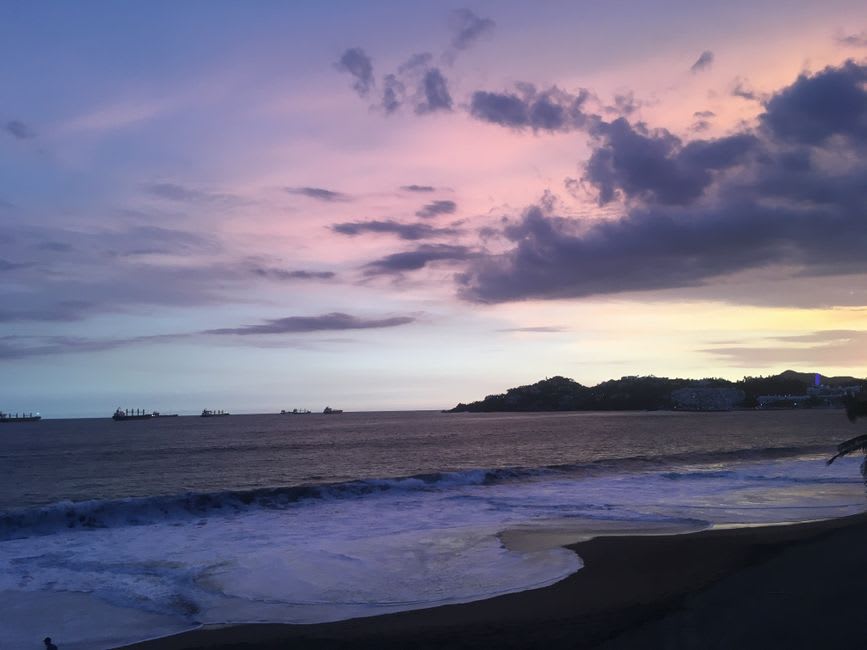
What El Paraíso lacks completely is any infrastructure for this — no guided tours, no interpretive signs, no entrance fee, no one to explain the birds to you. You walk the embankment road at whatever pace you choose and the birds do what birds do. The Pacific sits just over the dune ridge to the west. You can hear it from most of the lagoon edge but not see it, which creates a strange acoustic presence — the ocean as rumor.
Pescado from Before Dawn
The fishing families here are not performing anything for anyone. The two comedores I found — one of them operating from what appeared to be someone’s front porch — serve pescado zarandeado and caldo de mariscos in portions calibrated to people who have been awake since four in the morning. The fish comes from the lagoon and from pangas that go out before first light into the Pacific. I ate a whole huachinango zarandeado one afternoon, split across two meals, with tortillas pressed on a comal that had not moved from that spot in years.
The village runs along a single road parallel to the water. There are perhaps two hundred people, a small church that opens Sundays when the priest comes from Cuyutlán, and a tienda stocking Modelo, Jarritos, and not much beyond. Evenings are quiet in the specific way coastal fishing villages are quiet — a television through a screen door, someone servicing an outboard motor in the driveway, the lagoon going dark before the sky does.
On Staying Here
I would not call El Paraíso undiscovered — Mexican families from Colima city know it well enough, and on winter weekends a few arrive with coolers and children. But it has no ambition beyond what it already is, which is becoming a rarer quality along this coast as Manzanillo’s sprawl searches for the next foothold. If you stay, the rooms near the lagoon embankment are the only option; ask at the tienda and someone will make a call. Bring food for at least one meal and a hammock if you own one. The palms along the waterfront are spaced for it.
The birds are best between six and nine in the morning. Afternoons the Pacific wind picks up and the lagoon goes choppy and the birds relocate somewhere I never managed to find. This is genuinely useful information.
Getting There
El Paraíso lies roughly 50 kilometers south of Manzanillo via Highway 200 toward Tecomán. Look for the Cuyutlán turnoff and follow signs south through Cuyutlán to the lagoon communities. Colectivos from Manzanillo’s central terminal run toward Tecomán and can drop you at the junction; local transport covers the rest. No ATMs exist here, cell signal is intermittent, and neither condition is going to change soon.