Batopilas
"You descend for three hours through the Sierra Madre and arrive at the bottom of the world to find mango trees. Nothing about that is normal. Everything about it is right."
The road from Creel begins politely. The first twenty kilometers out of town are reasonable — unpaved, dusty, but wide enough that two vehicles can pass without serious negotiation. Then the canyon opens up.
The Batopilas Canyon is one of the five major barrancas that make up the Copper Canyon system — deeper, in fact, than the Grand Canyon at its maximum, though far narrower and far less photographed. The dirt road that descends into it was built in the 1960s to give the village at the bottom some connection to the world above, and it shows its age in the way that roads built by people who weren’t frightened of edges always do. The switchbacks are tight. The surface sheds material toward the canyon floor in certain places. The drop on the outside of certain turns is several hundred meters of nearly vertical barranca wall. There are no guardrails.
I had a driver named Rodrigo who had made this trip at least twice a week for fifteen years. He drove with the focused calm of someone who has long since stopped being frightened of something and now simply attends to it. I sat in the front seat trying to appear equally calm while gripping the door handle and watching an empty can of Tecate roll off the seat behind me and disappear under the floor mat. Lia, in the back, took photographs. The descent took two and a half hours for eighty kilometers. In France, eighty kilometers is forty-five minutes on a departmental road. In the Copper Canyon, it is a negotiation with topography.
What the Canyon Does to Vegetation
The first thing that happens as you descend is the pine trees change. The forest around Creel is dry highland pine — northern Mexico at 2,400 meters, which in ecological terms resembles parts of the American Southwest more than it resembles tropical Mexico. As you lose altitude, the pines thin and then disappear. Scrubby oaks appear. Then succulents — agave, columnar cactus species I couldn’t name — then a denser subtropical scrub.
And then, at a certain point in the descent, a mango tree.
I registered it before I understood it. The visual did not make immediate sense. Mango trees belong to the coast, to sea-level humidity, to the tropics. We were in the middle of the Sierra Madre, three hours from the nearest city, on a road that would be impassable in serious rain. A mango tree here required explanation.
The explanation is the canyon’s microclimate. Batopilas sits at about 500 meters elevation — low enough and protected enough by the canyon walls that it maintains a tropical climate entirely disconnected from the pine highlands above it. By the time we reached the valley floor, there were banana plants along the riverbank and bougainvillea running riot over every wall. The temperature had shifted from the cool dryness of Creel to something genuinely hot and humid. It felt like a different country. Ecologically, it was.
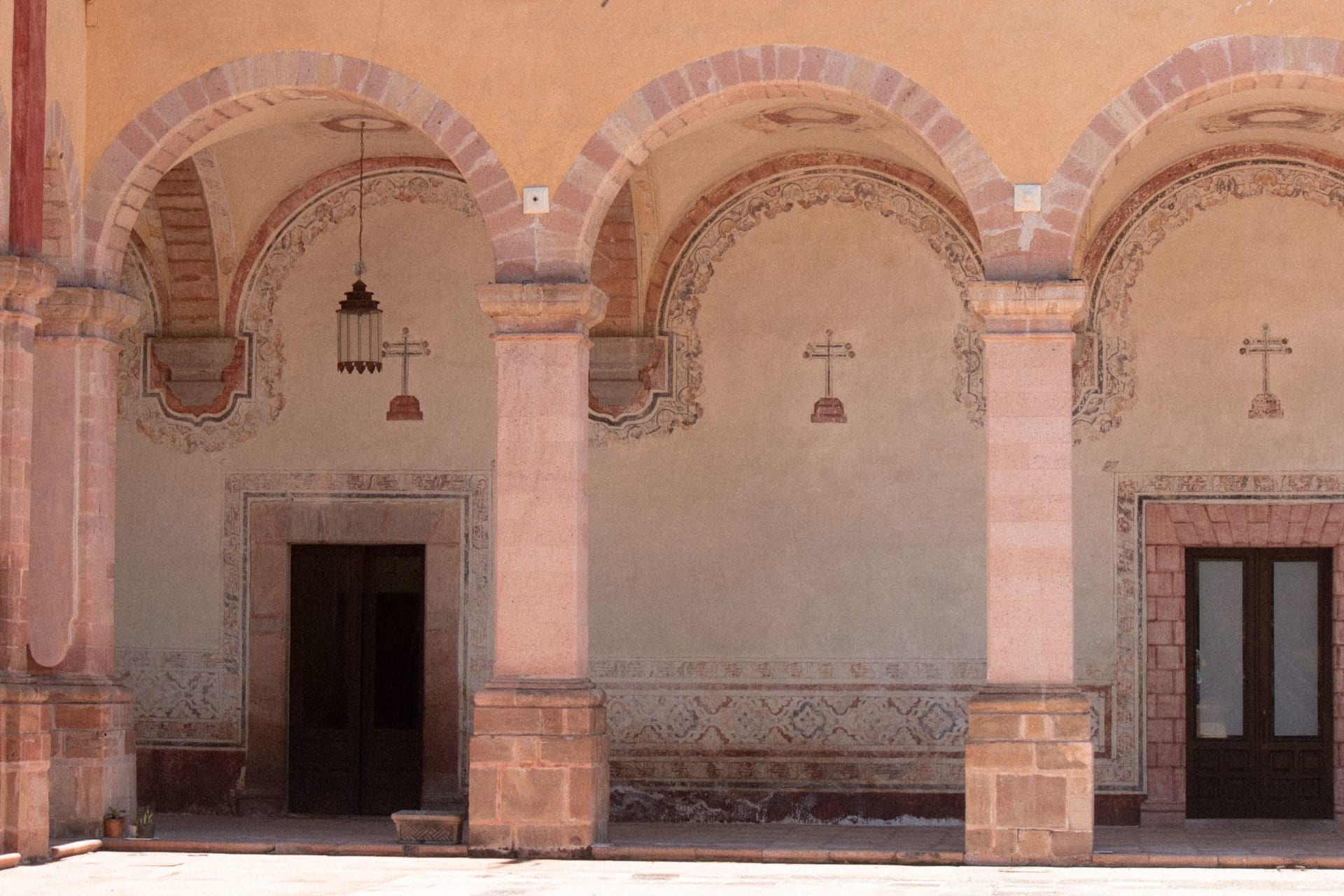
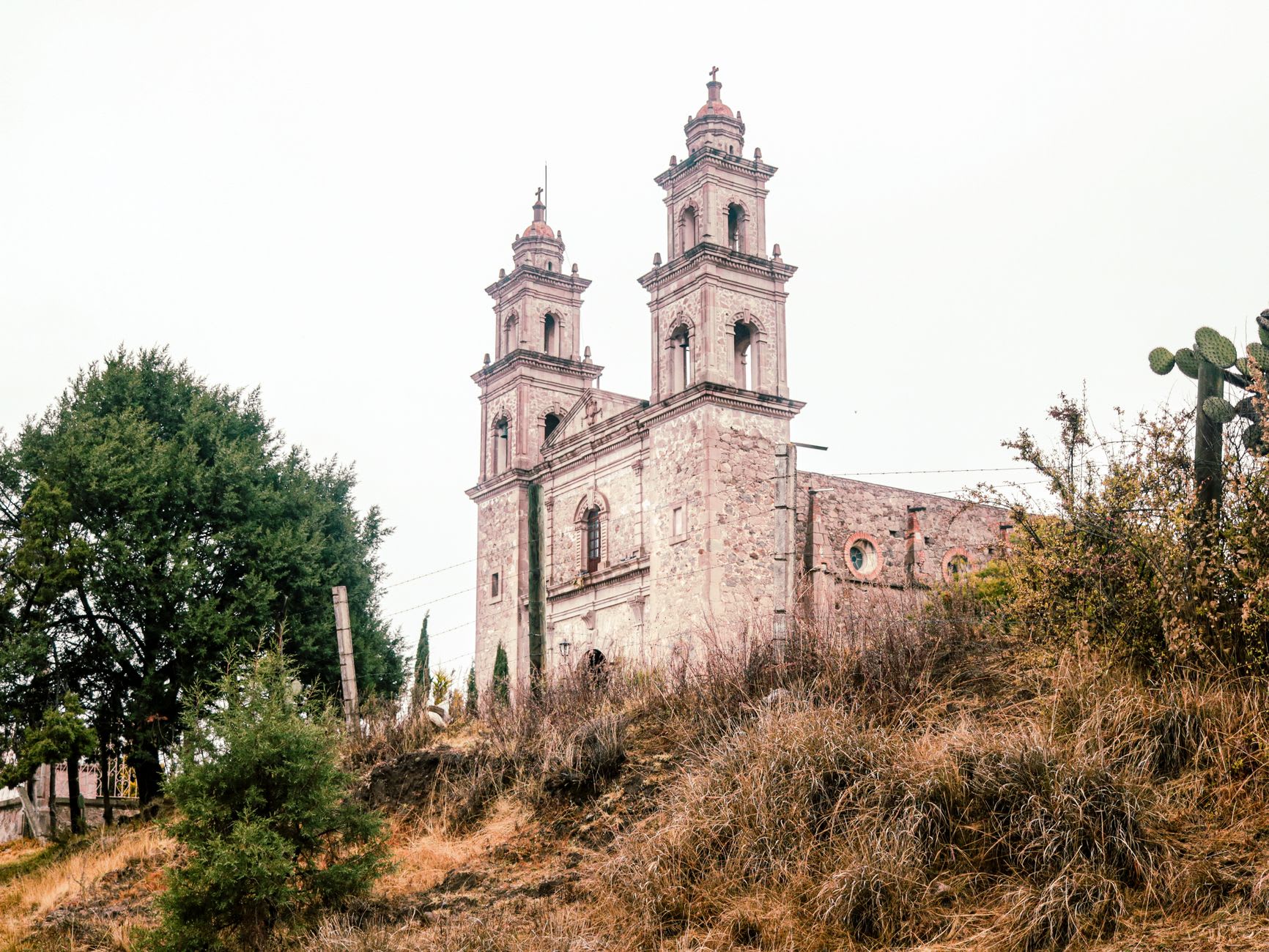
The village appeared along one cobbled street following the river. Houses in faded pastels — ochre, pale blue, a white that had given up on brightness and settled for dignity. A church. Chickens. The Río Batopilas running green and absolutely clear over stones you could see from the surface. The sound of water.
The Silver and What It Left Behind
Batopilas was once, by some accounts, the second largest silver producer in New Spain. That is a remarkable fact for a village of three thousand people reachable only by a road that barely qualifies as one. The silver came from the canyon walls — ore bodies discovered in the late seventeenth century and worked, with varying fortunes, for the next two hundred years.
The most dramatic episode in that history belongs to the late nineteenth century, when an American named Alexander Shepherd — who had served as governor of Washington D.C. during the Grant administration, departed under something of a cloud involving municipal finances, and apparently decided that northern Mexico offered a fresh start — bought the Batopilas mines and built an operation that by 1900 was producing millions of dollars of silver annually. He also built an aqueduct, a telegraph line, and a mansion.
The Hacienda San Miguel is what remains of that mansion. I walked through it on my second afternoon, in the cooling light before sunset. The outer walls are still standing, mostly. The roof is not. Fig trees have pushed their roots through the stone floors and grown, in some cases, to full height inside the roofless rooms, their canopy spread toward the open sky where the ceiling used to be. There is something about a fig tree growing through what was once a floor that concentrates the mind on the passage of time in a way that even the finest museum cannot achieve.
A stone fireplace remains in what must have been the main reception room. Iron fittings still hang on the doors. A staircase goes up to nothing. A carved lintel over a window arch is still legible despite a century of weather. I stayed for an hour and felt, when I left, that I had been somewhere.
Two Days Without a Signal
There is no mobile phone signal in Batopilas. I want to state this as a fact before I discuss its consequences, because I don’t want to romanticize something that was, for the first hour, simply annoying.
The muscle memory of reaching for the phone, finding no notifications, the small cognitive dissonance of that emptiness — it took longer than I’d like to admit to stop doing it. By the second hour I had stopped reaching. By the second day I had almost forgotten the phone existed, which is the more useful information.
What replaced it was unusual attention to immediate things. The temperature of the river when Lia went in to swim — cold enough that she came out almost immediately, dried off in the sun on a flat rock, and went back in fifteen minutes later. The particular shade of green that the canyon walls turn in late afternoon when the direct sun has gone but the reflected light from the opposite face is still full. The sound the chickens made outside our guesthouse window at 5:30 in the morning, irritating in the moment and entirely charming in retrospect.
The Rarámuri — the Tarahumara people whose territory this canyon system has been for far longer than it has been a silver mining district — were present without being spectacle. A woman near the church selling small woven bags, the geometric patterns in colors I couldn’t find names for. Two men walking the road above the river in the early morning with the particular ease of people who cover terrain by foot as a normal condition of life rather than exercise. I didn’t make this into something it wasn’t. The canyon belongs to them in a way that predates every silver mine and hacienda and dirt road.
At midnight on our first night, I walked to the river with a flashlight I didn’t end up needing. The strip of sky visible above the barranca — framed on both sides by canyon walls — was so dense with stars that the Milky Way was legible without effort. There is nowhere in France where you can see the sky like that. There is nowhere I had been before, and I have no comparison for it.
Getting There and Practical Notes
Getting there: Batopilas is reached from Creel, which is itself eight hours by train or bus from Chihuahua City. A shared van (colectivo) departs Creel for Batopilas daily, leaving around 7am and taking three to four hours depending on road conditions. The road requires a high-clearance vehicle for independent driving — standard sedans should not attempt it. Return transport departs Batopilas in the early morning.
Where to stay: Three or four small guesthouses and casas de huéspedes operate in the village. None are luxurious; all are clean. Bring cash — there is no ATM in Batopilas, and the nearest bank is in Creel.
When to go: October through April. The rainy season (June through September) makes the road briefly impassable after heavy storms. December through February are cool at night despite the low elevation. March and April are warm, dry, and as close to perfect as a canyon at 500 meters gets.
How long: Two nights minimum to justify the journey. Three if you want to explore the canyon trails above the village or walk upriver toward the old mine workings. The journey each way is significant enough that arriving and leaving the same day would be a serious waste.