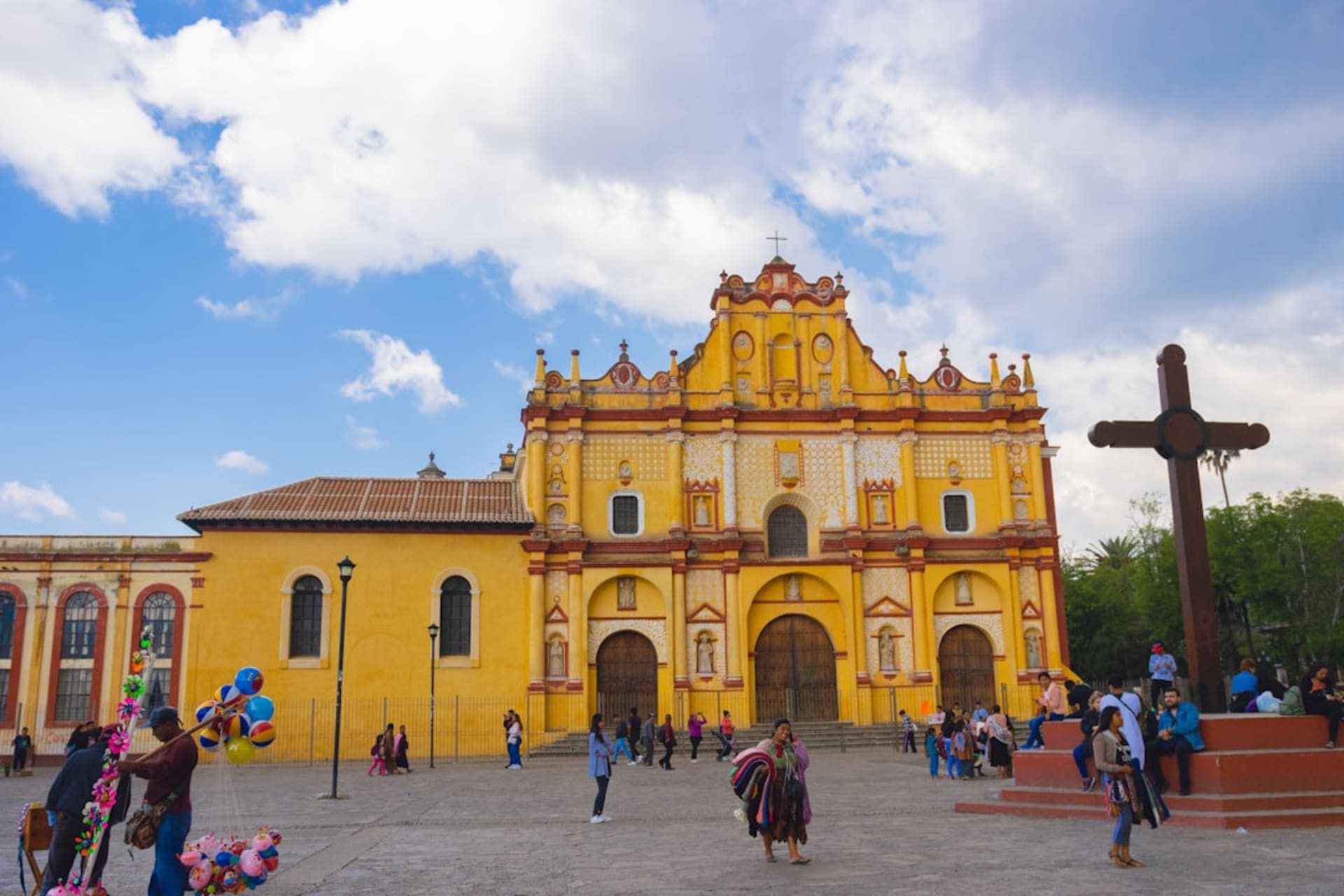
San Juan Chamula
"I walked into a church where the floor was covered in pine needles and a woman was whispering to a saint while cradling a Coca-Cola bottle like an offering. I have been to a lot of places. I am still not sure what I saw."
The colectivo from San Cristóbal takes twenty minutes on a road that climbs through pine forest and delivers you without ceremony into the central plaza of San Juan Chamula. There is a market, a municipal building painted green and white, and a church whose whitewashed facade looks ordinary enough from the outside. I had been told about the church. I thought I understood what I had been told. Then I pushed open the door and stood for a long moment while my eyes adjusted to the smoke and my brain searched for a category that fit.
The Church of San Juan Bautista
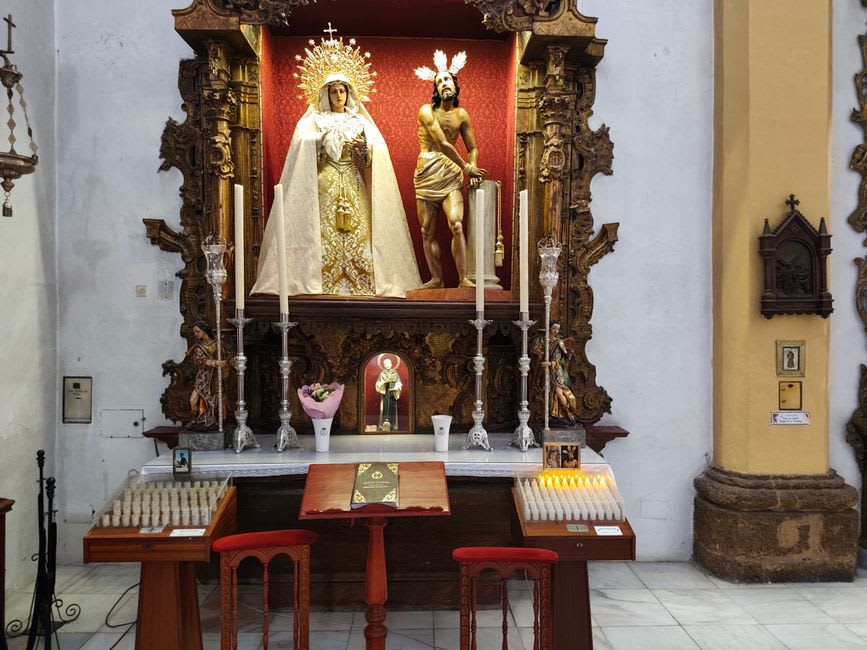
The floor is covered in fresh pine needles that release a forest scent cut through with copal smoke rising from clay censers. There are no pews and no priest. The saints line the walls in glass cases, their feet surrounded by candles and bottles of Coca-Cola and pox — the local sugarcane spirit that functions here as both drink and sacrament. Families kneel directly on the needles, sometimes accompanied by a j’ilol, a traditional healer, who passes an egg or a live chicken slowly over a person’s body while speaking quietly in Tzotzil. I stood near the entrance for a long time without moving. A woman to my left was cradling a Coca-Cola bottle like something intended as a gift. She was speaking to a saint I didn’t recognize, in a voice too low to hear.
Photography is prohibited inside, enforced by community members stationed throughout the space. I found the prohibition felt correct. Some things should stay where they are.
A Town That Runs on Its Own Terms
San Juan Chamula has operated with significant autonomy since the 1990s, when the community expelled evangelical missionaries and established its own police force and justice system. The Mexican state holds nominal jurisdiction; in practice, governance flows through the cargo system — a rotating structure of civic and religious offices that community members hold throughout their lives, obligations that predate the colonial separation of church and state by centuries.
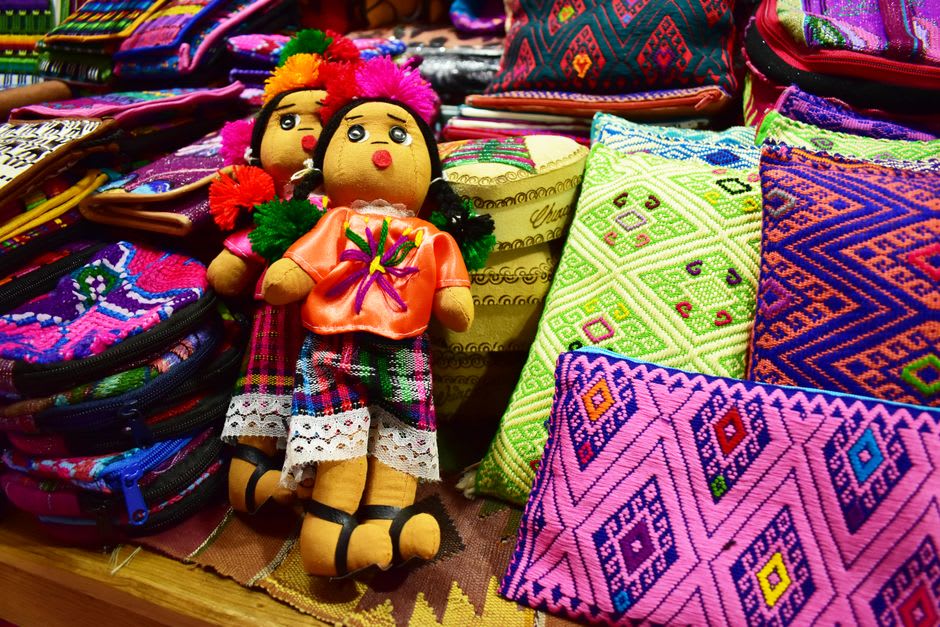
The market in the main plaza sells textiles woven on backstrap looms, copal resin packed into small bags, and the black wool tunics worn by Chamula men. On Sundays it expands considerably and the plaza fills early. I arrived on a Tuesday in March and still spent two hours I hadn’t planned to spend moving between stalls, buying copal I didn’t need and a small carved figure I probably did.
What to Know Before You Walk In
Entry to the church costs thirty pesos, collected at a booth to the right of the entrance — bring cash. The no-photography rule extends beyond the interior; in the atrium and sometimes the plaza, keep your phone in your pocket. If you want context rather than only experience, hire a guide from San Cristóbal; better still, ask the tourist offices there about guides from the community itself.
The major festivals — Carnaval in February, the feast of San Juan Bautista in late June — are genuine community events, not performances, and they draw large crowds. An ordinary Tuesday was more than sufficient for me. The pox sold near the market entrance is the real thing: clear, slightly sweet, stronger than it presents. I bought a small bottle and immediately regretted not buying the larger one.
Getting There
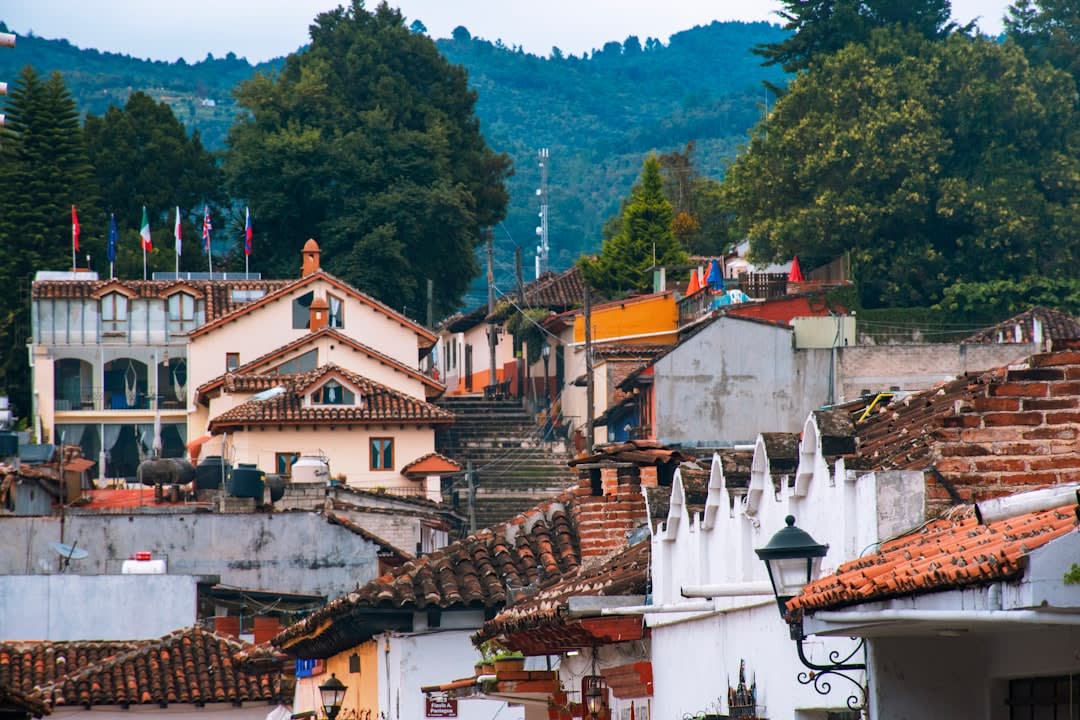
San Cristóbal de las Casas is the base, ten kilometres east. Colectivos leave from the market on Calle Honduras for around twenty pesos and run until mid-afternoon; the ride is twenty minutes. October through March brings the clearest weather in the highlands. If you plan to visit during Carnaval or the June festival, research access procedures in advance — crowds and logistics change considerably.