Frontera Comalapa
"The woman selling tamales at the border crossing was simultaneously serving customers on both sides — she told me the border had always been less of a line than people imagined."
I came down from Comitán on a second-class colectivo that deposited me at the edge of town with no fanfare whatsoever. Frontera Comalapa doesn’t perform arrival. The market was already in full motion at eight in the morning — Mam-speaking vendors arranging black beans and dried chiles alongside stacks of Guatemalan textiles so vivid they looked wrong under a grey sky. I had no plan beyond a cheap hospedaje and the vague intelligence that the Río Grijalva passed somewhere nearby. Both turned out to be easier to find than expected.
The Border Market
The Mercado Municipal spills past any formal perimeter and reorganizes itself daily based on what crossed the frontier overnight. On mornings after a favorable exchange rate, the Guatemalan side floods in — cardamom in quantities I’ve never seen in Mexico, copal incense shaped into cones, hand-embroidered huipiles that go for a fraction of what San Cristóbal charges for similar work. On slower days the Mexican side asserts itself: Chiapan amber, dried ancho chiles, sacks of regional coffee from farms in the highlands above town. The woman who sold me a tamal de chipilín and a cup of atole Negro at seven-thirty told me her family had been selling on this corner for three generations, which means they predate the border itself in any meaningful sense. She wrapped my tamal in banana leaf with the efficiency of someone who has done it fifty thousand times.
The Canyons and the Grijalva
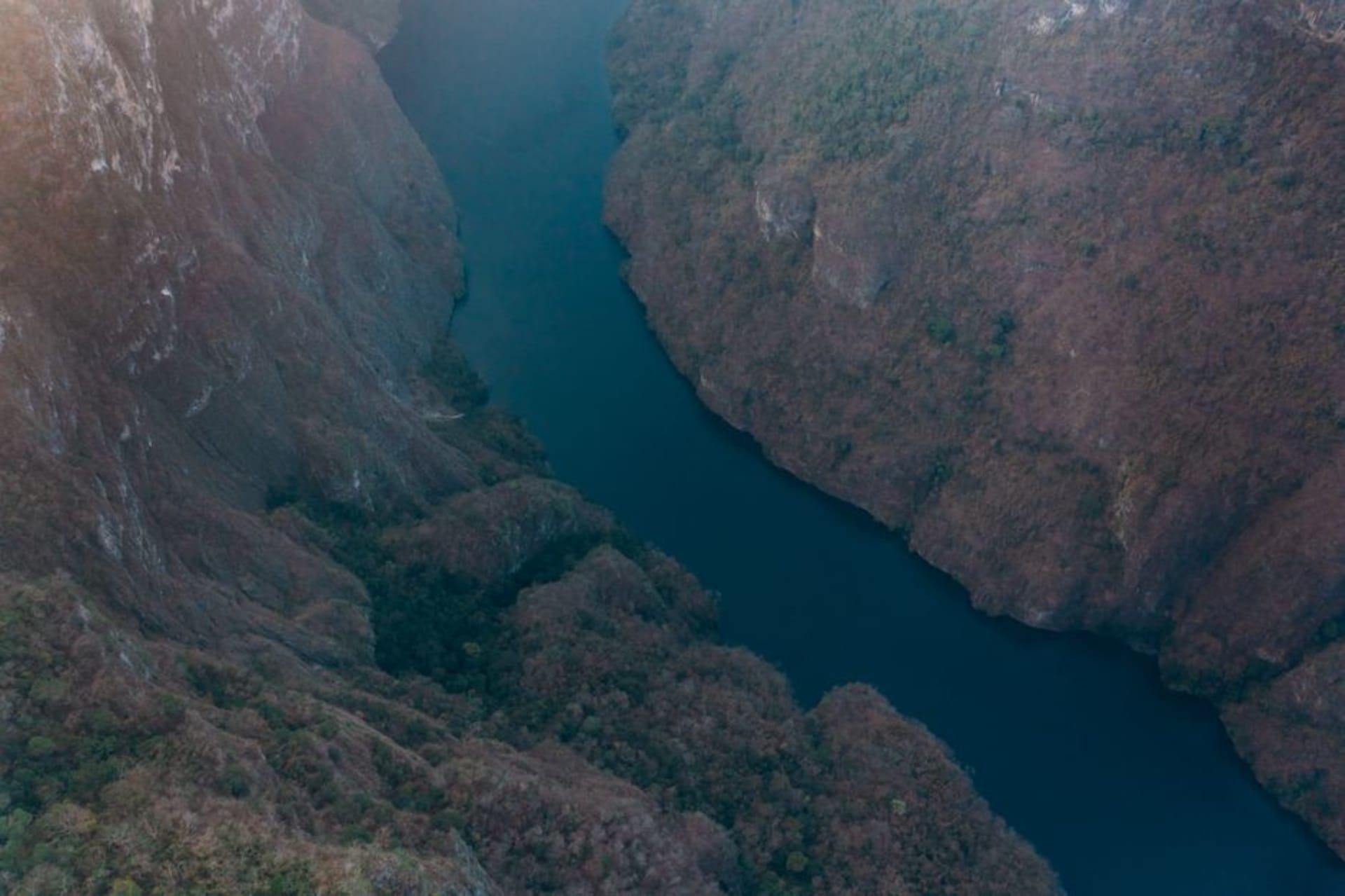
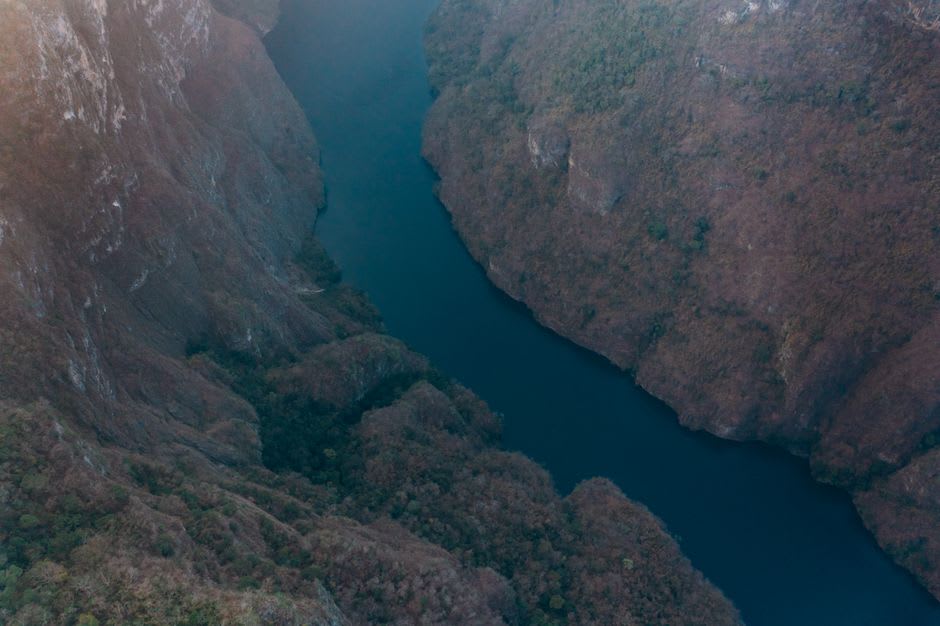
Nobody I met in San Cristóbal had mentioned the canyons. The Río Grijalva cuts through the western edge of the highlands here in a way that feels genuinely outsized — walls of limestone dropping toward water that runs clear green in the dry season. I hired a driver through the hospedaje for four hundred pesos to take me out to a lookout above the Cañón del Sumidero’s less-visited upstream reaches, and we passed through milpa fields and pine forest without encountering another vehicle going the same direction. The canyon walls hold nesting birds in the morning. The driver, a man named Arturo who also farmed a small plot of coffee, seemed mildly puzzled that I wanted to stop and look rather than just photograph and leave. We stayed forty minutes. He eventually got out of the truck and looked too.
Mam Character
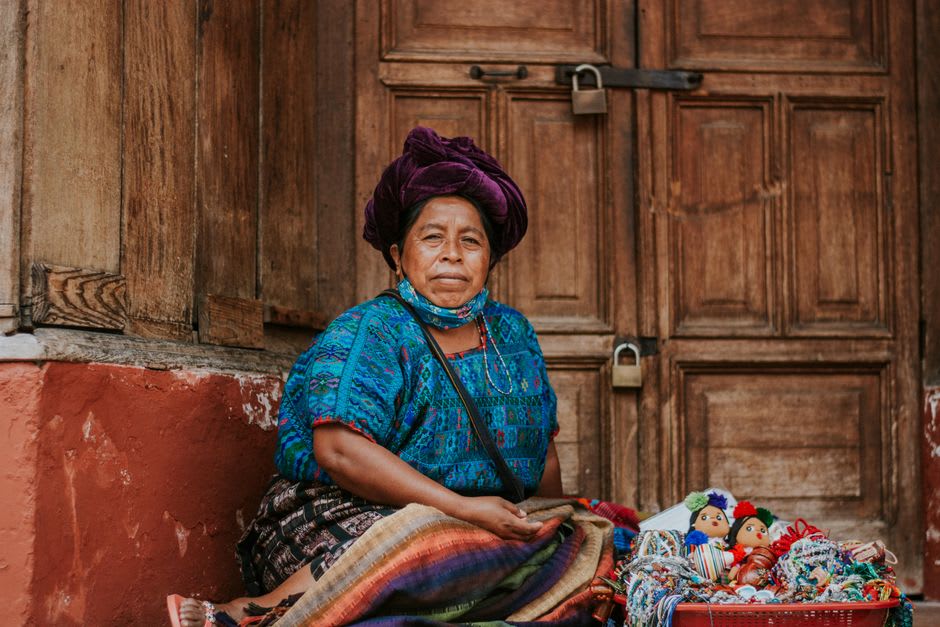
What distinguishes Frontera Comalapa from most of mestizo Chiapas is the persistence of Mam Maya culture in ordinary daily life — not curated for visitors, just present. The Mam language moves through the market in overlapping conversations. The textiles worn by older women follow patterns specific to this area, distinct from Tzotzil or Tzeltal work. There is a small church on the main plaza that holds a morning mass conducted partly in Mam. I sat near the back for ten minutes, understanding nothing, which felt entirely appropriate.
Getting There
Colectivos run from Comitán de Domínguez throughout the day, roughly two hours depending on stops. From San Cristóbal, take a combi to Comitán first and connect from the market there. No direct bus service from Tuxtla that I found. The colectivos back to Comitán stop running around six in the evening — don’t miss the last one.