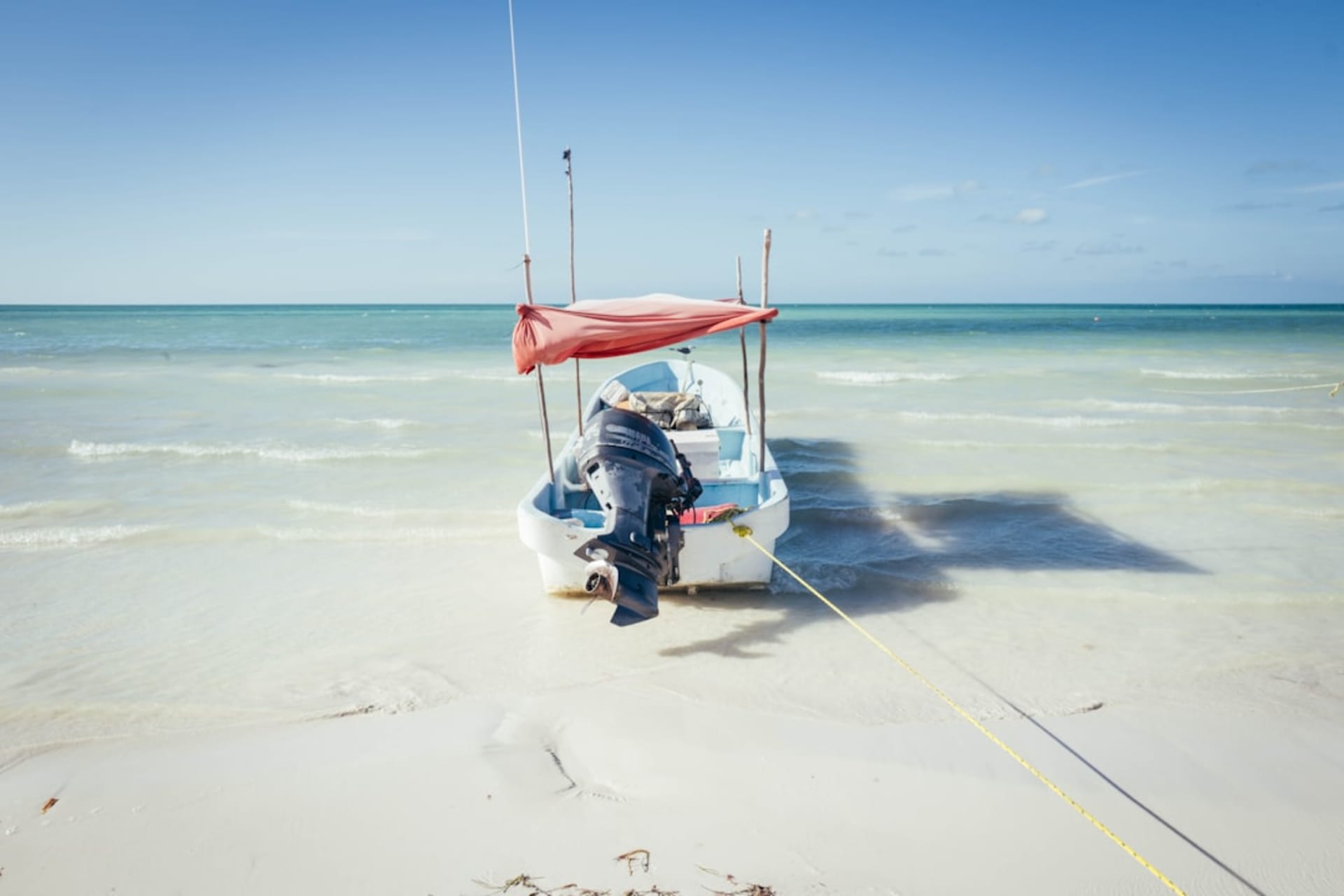
Isla Aguada
"The fisherman cut the engine and we drifted. Three spinner dolphins circled the hull, close enough that I could see the pale rings around their eyes."
The road to Isla Aguada crosses one of the longest bridges in Mexico — Puente Zacatal, which gives you roughly a minute over open water where the Gulf of Mexico and the Laguna de Términos press against each other without quite merging. The teal on the Gulf side turns to something darker, more considered, as you pass the midpoint. I noticed that transition on my first crossing and asked the driver to slow down, which he did not. By the time I had settled on the island — a ribbon of land barely wider than two traffic lanes in some stretches — I already wanted to go back over the bridge just to watch the water again.
What the Fishermen Know
I had not planned to go out on the water. That changed when the owner of the small hospedaje where I was staying mentioned, the way people mention things they consider obvious, that a fisherman named Rodrigo took passengers out most mornings at six. The fee was modest. The expectation was that you would not complain about the cold.
We motored out through the channel before dawn had finished settling, following the path the shrimping boats take toward open water. Rodrigo cut the engine somewhere past the bend where the mangroves thin out. We drifted. Three spinner dolphins circled the hull, close enough that I could see the pale rings around their eyes, close enough that their breathing was audible — that hollow, compressed sound that lands somewhere between a sigh and a gasp. They stayed maybe four minutes before angling south into the lagoon. Rodrigo restarted the engine without comment, as if this were simply how mornings worked out here, which for him they often do.
Mariscos Before Noon
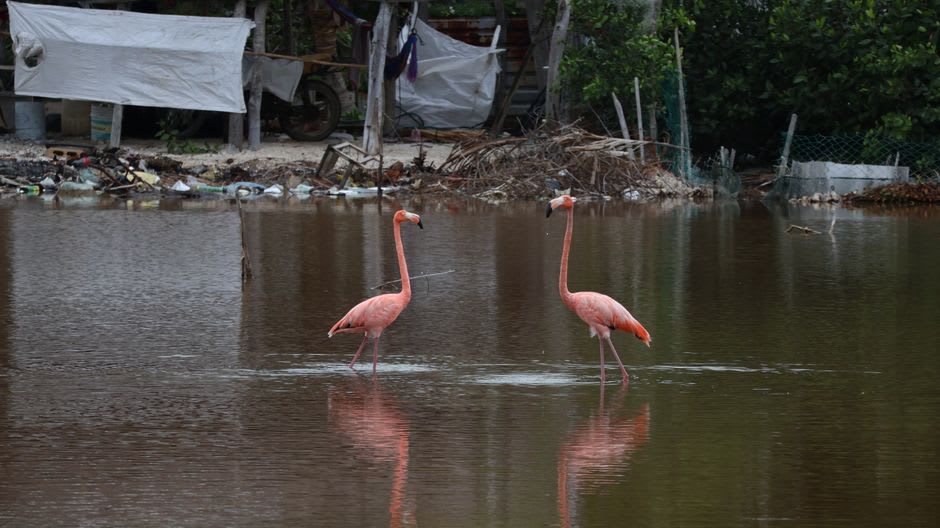
The eating on Isla Aguada follows the same logic as the fishing: early and unsentimental. By seven in the morning, the small comedores along the main road are already producing caldo de camarón — shrimp broth built from heads and shells, dark orange and thick enough to coat a spoon. I had it two mornings in a row at a place with no visible name from the street, run by a woman named Dolores who added a squeeze of lime and a sliced chile habanero to the bowl without asking.
Lunch meant pescado frito at one of the palapa restaurants facing the lagoon side of the island, where the light softens in the afternoon and the water sits perfectly still. The fish came with rice, frijoles, and a pile of tostadas. Nothing was labeled as a specialty. Everything was fresh in a way that required no announcement. I ate slowly and watched a great blue heron work the shallows thirty meters out, moving with the particular patience of something that has never once been in a hurry.
The Lagoon Side
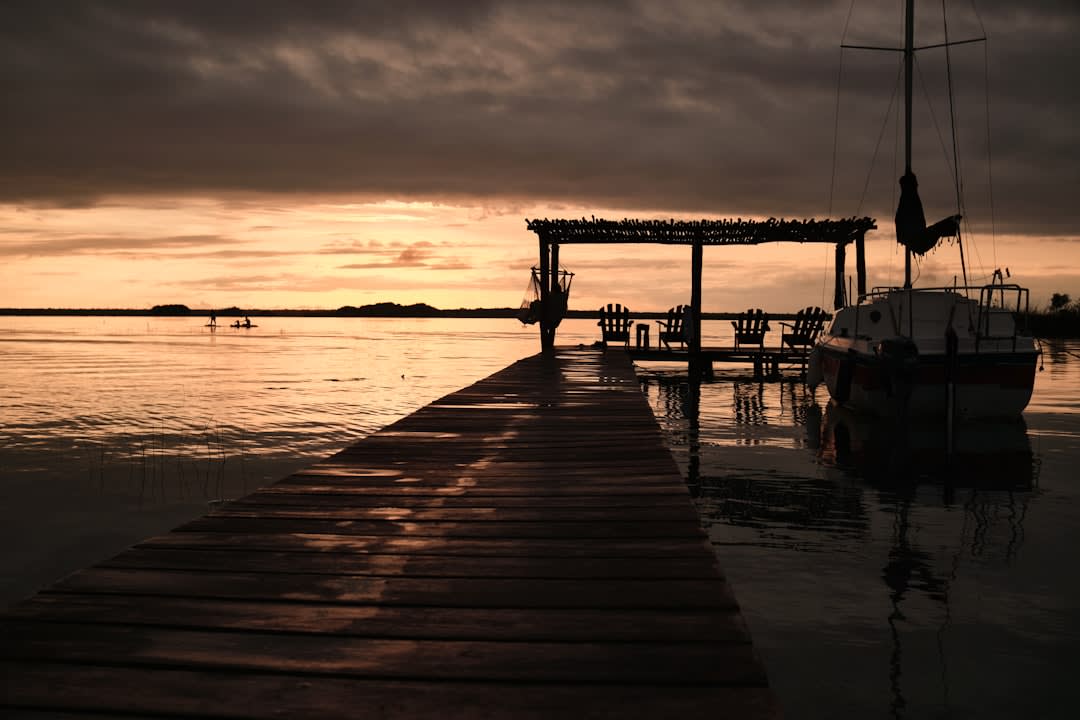
The Gulf side of the island is where the road runs, where the traffic passes, where most people orient themselves. The lagoon side is where I preferred to be. There is a short stretch of concrete embankment near the center of town where locals fish in the evenings with hand lines, and from which you can watch the mangrove wall across the water turn different shades of gray as the sun drops. The light between five and six in the afternoon is the kind that makes even a concrete ledge feel like a reasonable place to spend an hour.
I would not push for more than a night or two. Isla Aguada rewards patience more than duration. Bring something to read. Leave the agenda elsewhere.
Getting There
Isla Aguada sits roughly 35 kilometers west of Ciudad del Carmen via Highway 180 and the Puente Zacatal crossing. From Campeche city, expect about three hours by road. Buses from Ciudad del Carmen stop on the island, though service thins out after mid-afternoon. November through March is the most comfortable window — humidity drops, and the dolphins are reliably present in the channel. Semana Santa fills the palapas; go before or after.