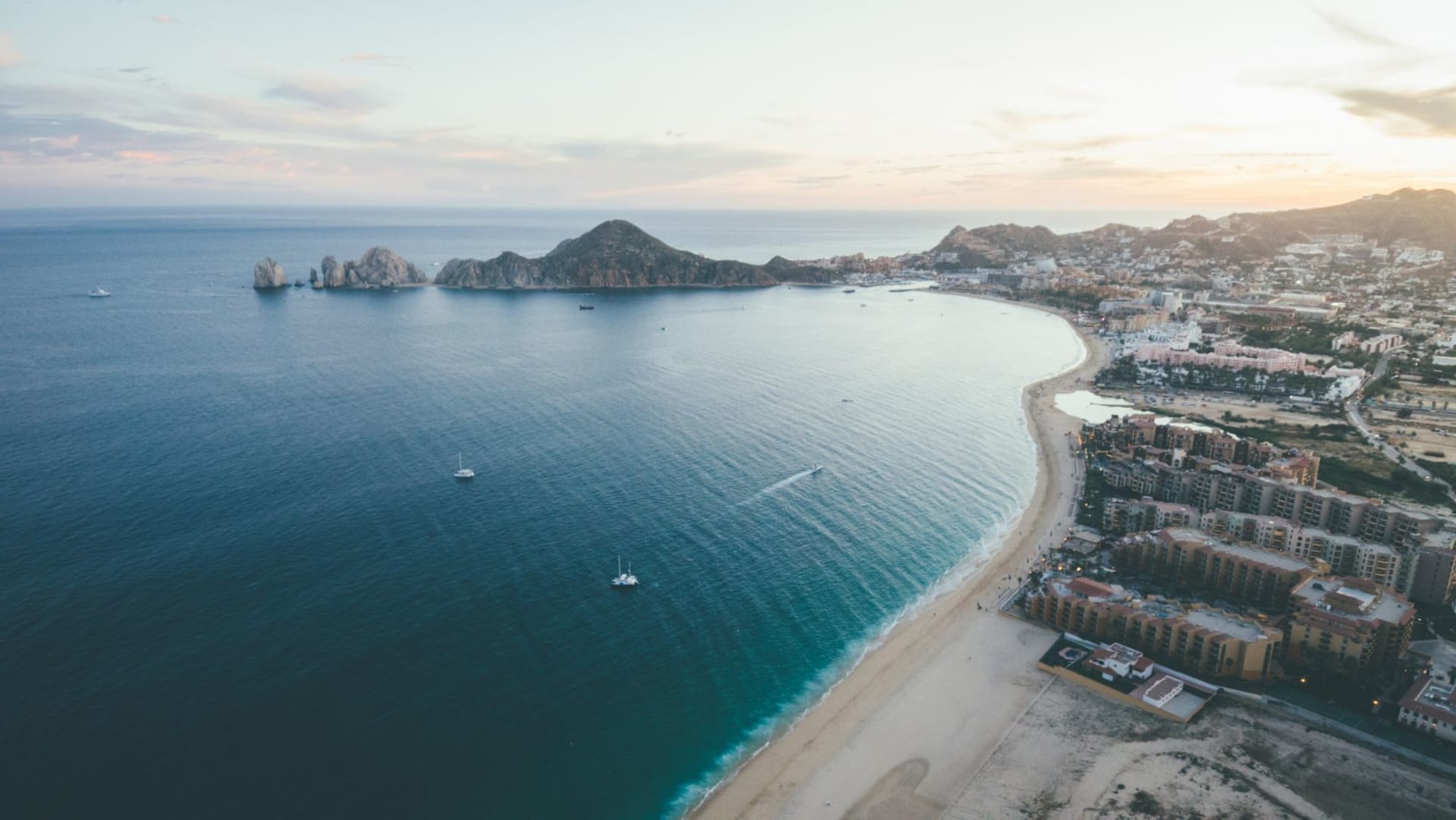
San José del Cabo
"The osprey dove and came up with a fish, and fifty meters away someone was negotiating over pottery. I preferred the osprey's transaction."
Most people who fly into Los Cabos International Airport are going to Cabo San Lucas — the marina, the hotels, the Arch, the nightlife that is assembled specifically for short-haul American and Canadian beach vacations. San José del Cabo is where the airport actually is, and many of those passengers drive straight through it in a taxi without looking up from their phones. I did the opposite: I based myself in San José and went to Cabo San Lucas once for a morning, which was enough.
San José del Cabo has tourism. I’m not going to pretend it doesn’t. The historic district has boutique hotels, farm-to-table restaurants, and a gallery walk that draws a crowd. But the scale is human, the town behind the tourist streets is a real Mexican city doing real Mexican city things, and the estuary at the edge of the tourist zone is the kind of place that exists in complete indifference to the hotel industry five hundred meters away.
The Mission and the Plaza
The Misión de San José del Cabo was founded in 1730, making it one of the oldest missions on the Baja peninsula. The current building is not the original — it has been rebuilt and modified multiple times, most recently in the nineteenth century — but it sits on the main plaza with the authority of a building that has been where it is for three centuries. The facade is white, which in the particular Baja light turns the color of bone at midday and of warm cream at five in the afternoon.
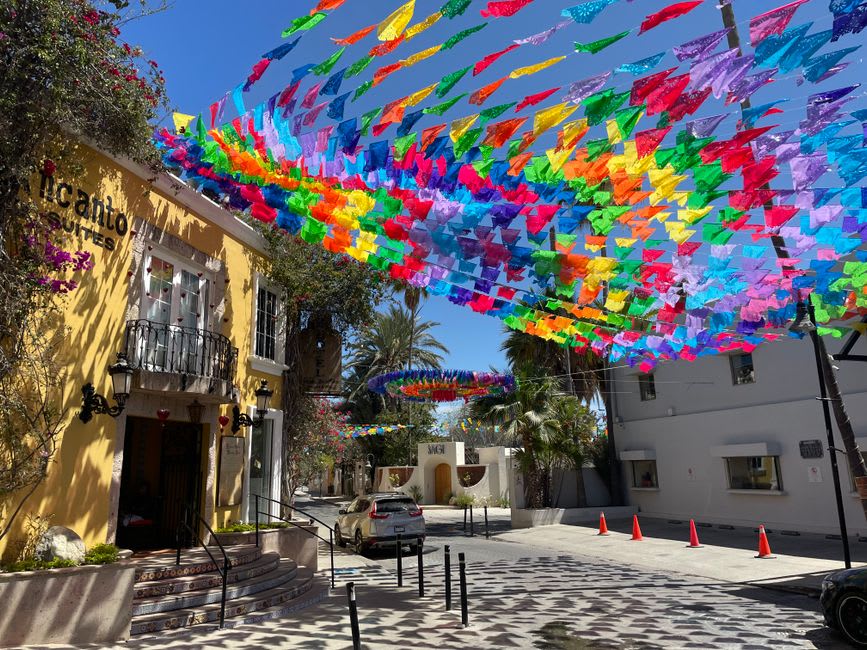
The plaza in front of it is a serious plaza: trees, benches, a kiosk, the normal activity of a town center going about its business. What is slightly unusual is that the business of this particular town center includes a remarkable density of galleries concentrated in the streets immediately surrounding the plaza. San José del Cabo has a significant working artist community, and on Thursday evenings the Art Walk animates what is already a walkable gallery district into something that feels like a genuine cultural event rather than a commercial one — studios open, artists present and sometimes working, wine on the street in the casual Mexican way where the distinction between public and private space is treated as a suggestion.
I went on a Thursday. The crowd was mixed in a way that Cabo San Lucas rarely is — tourists, yes, but also locals, and couples from the Todos Santos farming community who apparently make the drive for this specifically. A painter in a studio on Calle Obregón was working on a large canvas while people came in and looked at the process and occasionally bought the smaller works on the walls. The wine was basic and poured generously and nobody asked me to sign up for anything.
The Estuary
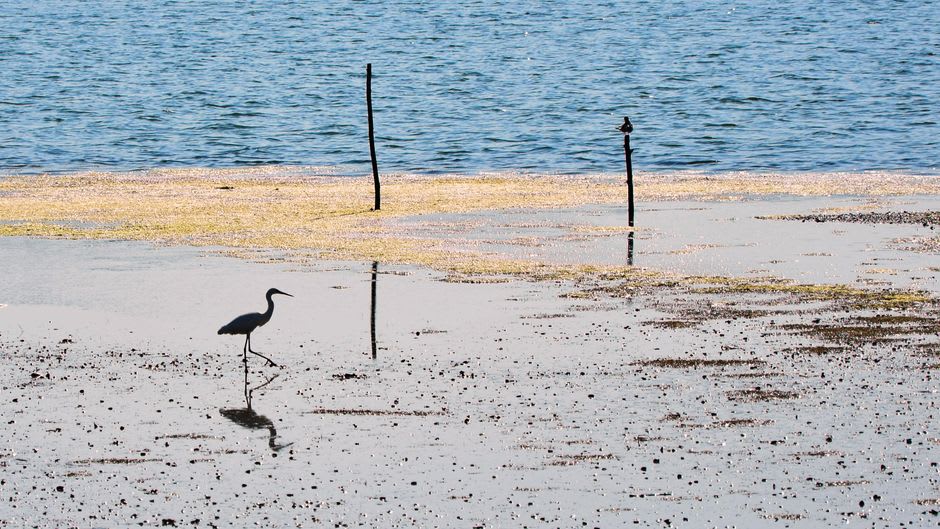
The estuary at the eastern edge of town is a freshwater lagoon where the San José River meets the sea, and it is a bird sanctuary of serious density. The list of species recorded here runs to more than two hundred, which is not a fact you would expect given that it is surrounded by resort hotels on two sides and a beach parking lot on the third. In the mornings, the herons work the shallow edges and the egrets stand in the reeds with their specific patience. I saw an osprey dive from maybe thirty meters up, go completely under the surface, and come up with a fish in less than a second. The whole sequence took maybe three seconds. It is the most economically impressive thing I have seen an animal do.
The fish taco cart near the estuary access path did not have a sign. It had a woman and a small gas burner and a stack of corn tortillas and fish that appeared to be fresh enough to still have opinions about things. I ate two tacos standing up and then a third because the second was over too quickly. The estuary smell — salt, reeds, something living and brackish — mixed with the smell of the fish on the comal in a way that worked entirely.
Eating Well
San José del Cabo has a farm-to-table dining scene built around the organic farms in the Todos Santos valley to the north, and it is better than resort areas have any right to be. Several of the restaurants source from these farms directly and change their menus seasonally, which in Baja means the menus change because the produce genuinely changes. The emphasis is on local fish, shellfish, and the vegetables from the valley — a roasted aguachile I had at a small restaurant on Calle Zaragoza using clams from the bay was as technically accomplished as anything I’ve eaten in Mexico, and this is a country with a strong claim to being the most technically accomplished cuisine in the Americas.
The street food is also good. Beyond the estuary taco cart, there are breakfast spots near the market doing machaca burritos and tacos de canasta, and a cocina económica two blocks from the plaza where the daily comida corrida is the kind of meal that makes you understand why Mexico has a lunch culture.
Staying and Getting Around
San José del Cabo has a range of accommodation from small guesthouses in the historic district to larger hotels near the beach. The historic district is the right place to stay — the estuary, the plaza, and the gallery streets are all walkable from there. The beach is a fifteen-minute walk or a quick taxi.
Getting to Cabo San Lucas is easy and costs almost nothing by local bus — the buses run the Los Cabos corridor constantly. The drive is thirty minutes. You can have your Cabo San Lucas morning and your San José del Cabo evening, which is the best combination available. The airport is minutes from town.
Come November through April for reliable dry weather. Come on a Thursday for the Art Walk. Come in the morning for the estuary birds. Come for the fish tacos whenever they’re available, which appears to be most of the time.