Mulegé
"From the highway you see it before you understand it — a dark green slash in the desert, too dense and too straight to be natural. Then you realize it's palms, hundreds of them, and below them a river."
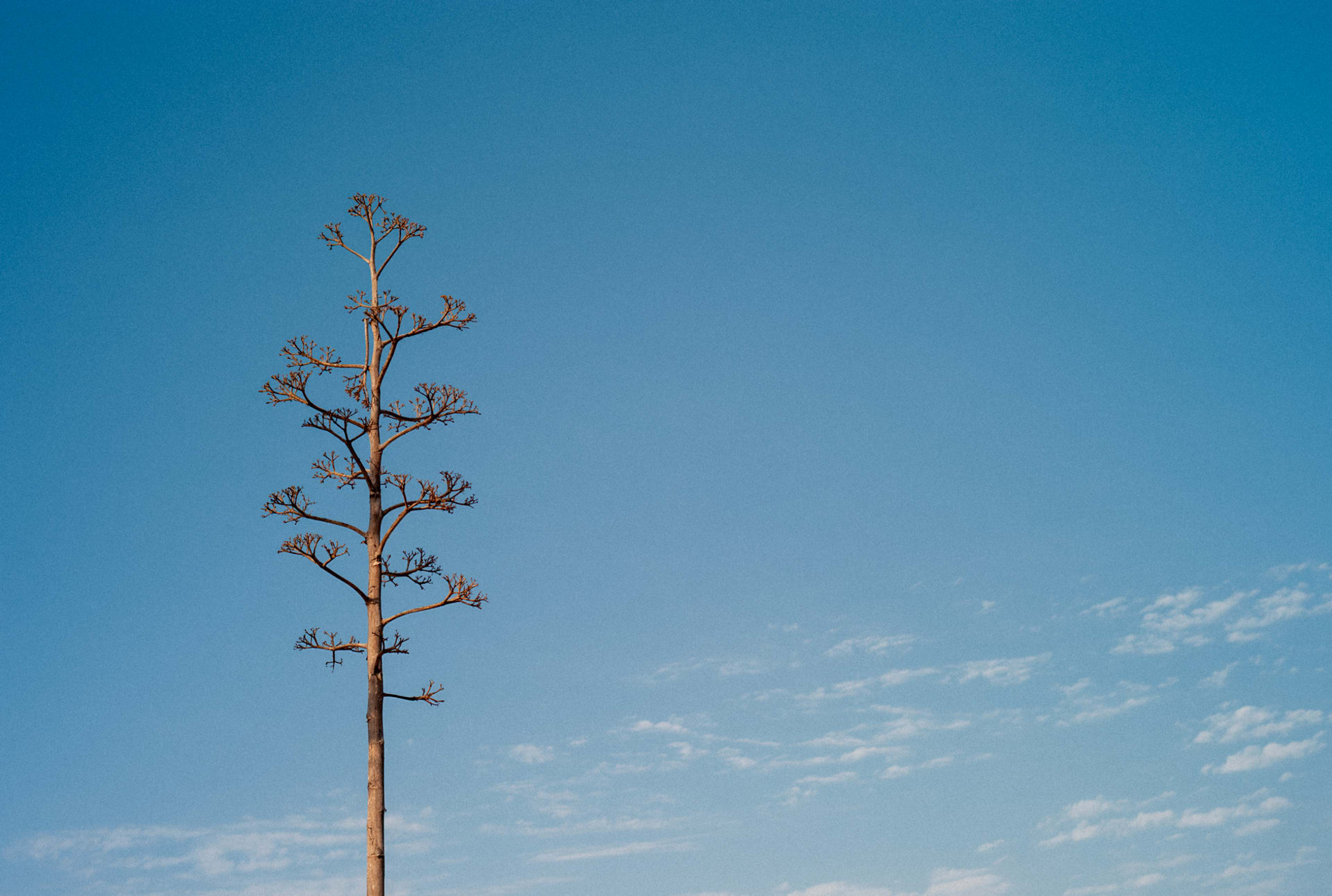
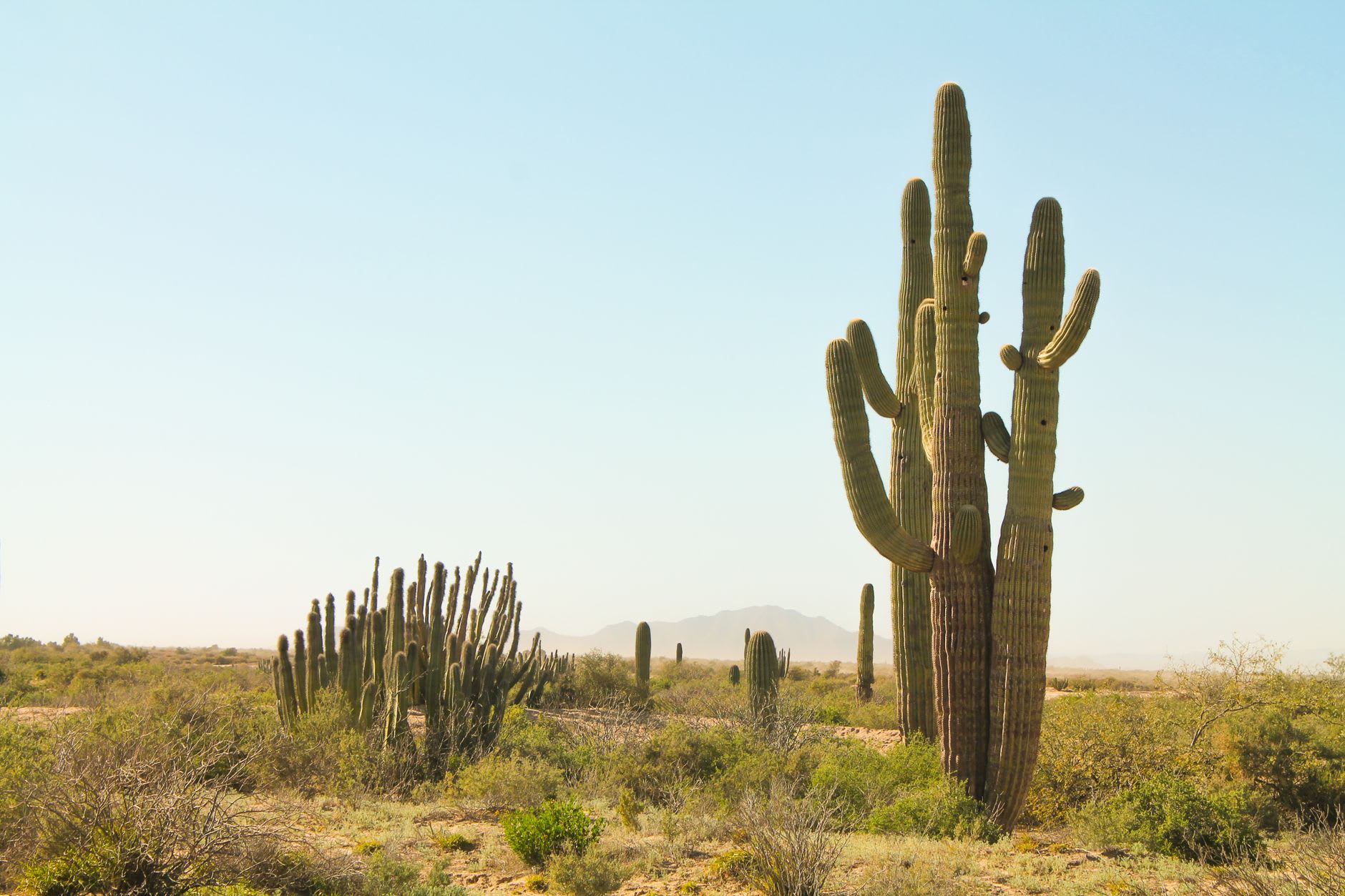
I have a vivid memory of the first time I saw Mulegé from the highway. Lia and I were eight hours south of Ensenada, the kind of long Baja drive where the landscape stops surprising you and the desert just becomes the world — beige and rust and the occasional cardón cactus standing with its arms raised like it has a complaint. Then, from the ridge above the arroyo, the green appeared. A corridor of date palms so dense it looked planted by a landscape architect, running in a tight green stripe through the valley below us and disappearing toward a glimmer of water.
“Is that a river?” Lia asked.
It was. The Río Mulegé, one of the few permanent water sources on the Baja peninsula, feeds a grove of date palms that the Jesuit missionaries brought here in the 1700s. The palms outlasted the missions, the missionaries, and most of the towns the missionaries built. They are still here, still shading the arroyo, still producing dates in late summer, and the effect of seeing them from the highway — that violent green against all that brown — is one of those moments that makes the long driving days worth it.
The Town, the Mission, the Morning Light
Mulegé itself is small in the way that feels deliberate. There’s a main street, a plaza, a few restaurants with plastic chairs on the sidewalk, a hardware store, a tienda. The town doesn’t strain to be more than it is. Dust settles on everything by mid-afternoon, and by evening it rises again when someone drives through on an ATV.
The mission sits on a low hill above the river — Misión Santa Rosalía de Mulegé, founded in 1705 and rebuilt in its current form in the late eighteenth century. I’ve seen a lot of colonial churches in Mexico by now, and the Baja missions are different. They’re not the baroque wedding-cake structures of central Mexico. They’re made from the same stone as the hills around them, low and horizontal and spare, and Mulegé’s is one of the simplest and most quietly beautiful of any I’ve been in. You walk up a steep cobbled path to get there. The door is often unlocked. Inside it’s cool and dim and almost completely undecorated, which in a country that tends toward gold leaf and painted saints is a very particular kind of aesthetic statement.
I sat in a pew alone for about twenty minutes. Outside, a dog was barking somewhere down in the town, and through the small windows the light was the specific warm yellow of late afternoon in Baja. France has beautiful old churches — I grew up within driving distance of several — but they are never this empty, never this quiet, never this stripped of ornament. It’s a different tradition of devotion, or maybe a different relationship between the land and what you build in it.
Kayaking the Estuary at Dawn
Lia is a better early riser than I am. On our second morning she had already arranged a kayak rental and woken me up before five. I want to say I resented this. By the time we reached the water I had stopped resenting it.
The estuary at Mulegé is a broad tidal channel where the river meets the sea, fringed with mangroves and so shallow in places that the kayak blades scraped bottom. At that hour — just before light, with a thin mist sitting on the water — it was profoundly still. Herons stood in the shallows with the patience of furniture. Ospreys had their nests at the tops of the taller dead trees, and one flew directly over us carrying something silver in its talons. At the mouth of the estuary, the Sea of Cortés opened up, and I could see, across the water, the silhouette of the volcanic islands.
“There’s a sea turtle,” Lia said.
I had been looking at the islands. I missed it. She described it: a loggerhead, she thought, maybe two meters ahead of her kayak, surfacing for a few seconds before disappearing. This is a consistent pattern in our travels. She sees the thing that matters; I am looking at something slightly to the left of the thing that matters.
The mangroves at Mulegé are in better shape than many I’ve seen elsewhere on the peninsula — the estuary is designated a protected zone and the access is controlled enough that the birds treat human-shaped objects as a minor nuisance rather than a threat. By the time we paddled back, the sun was above the hills and the date palms were throwing long shadows across the water. We ate breakfast at a table on the street, coffee in paper cups, and talked very little, which is how you know a morning went well.
Into the Sierra: The Cave Paintings of San Francisco
If you have an extra day near Mulegé, you spend it in the Sierra de San Francisco. This is non-negotiable.
The cave paintings of the sierra are a UNESCO World Heritage Site, and they are reached the way they have always been reached: on the back of a mule, with a local guide, over several hours of trail through some of the most dramatic desert landscape in North America. You arrange this through a guide in Mulegé or San Ignacio — you cannot visit independently, which I initially found mildly annoying and then, once I was there, completely understood.
The trail drops into a canyon, then climbs, then drops again. The mules move with the slow certainty of animals that have been doing this specific thing for generations. My mule was named Tornado, which I found either hopeful or alarming. He was neither. He was a sensible, steadily moving animal who ignored the precipices entirely.
The paintings are in a rock shelter — a shallow cave in the cliff face — and the first thing you notice is the scale. The figures are enormous, some two meters tall, in red and black and ochre, depicting deer, rabbit, fish, and what appear to be ceremonial human figures with their arms raised. They were made by a culture that predates the Maya in this part of the continent, possibly as many as 7,500 years ago. The guide explains this with appropriate gravity. A group of German tourists who were also there asked many careful questions. I stood at the back and just looked, because sometimes the information is less interesting than the thing itself.
What stayed with me was how protected the paintings are — the overhang keeps them out of direct sunlight and rain, and the remoteness has kept vandalism minimal. The colors have the quality of having been painted recently, which is unsettling in the best way.
Eating in Mulegé
On our last evening in Mulegé, Lia and I ate at a comedor on a side street — the kind of place with four tables, a handwritten menu on a whiteboard, and a television in the corner playing something neither of us recognized. The proprietress, a woman of perhaps sixty, seemed genuinely puzzled when I greeted her in accented Spanish. Not unfriendly. Puzzled.
The fish was from the Sea of Cortés that morning — I don’t know what species, something white and firm, cooked simply with lime and dried chile and served with rice and black beans and a basket of tortillas. A cold Tecate. There are restaurants in France that charge eighty euros for a fish experience less honest than this one.
She asked where I was from. When I said France, she repeated the word once, nodded, and went back to the kitchen.
In late summer, if you catch the harvest right, you can buy dates by the road — bags of them, warm from the tree, a completely different thing from the dates sold in French supermarkets at Christmas. We bought a bag on the drive south and ate them over two days. They tasted like the desert, which is to say like something very concentrated and sweet and improbably alive.
Getting There, Where to Stay, When to Go
Mulegé sits on Mex-1 about halfway down the peninsula, roughly 60km south of Santa Rosalía and 130km north of Loreto. There’s no direct bus service from the major cities — you take an ADO or Aguila bus to Santa Rosalía and arrange onward transport, or more practically, drive. The peninsula rewards a rental car; you won’t regret it.
The best season is October through April. Mulegé in summer is brutally hot — the kind of heat that bends your intentions. The estuary and the sierra are both more pleasant when the temperatures are under 35°C, which in peak winter they reliably are.
Accommodation runs to small guesthouses and a few RV parks for the Baja overlander crowd. Nothing fancy, everything functional. Book ahead for the cave painting tours — you need a licensed guide, and demand outstrips supply during high season. The tourist office in Mulegé or San Ignacio can put you in touch with reliable guides; your guesthouse will also have contacts.
Bring cash. The ATM situation in Mulegé is, let’s say, existential.