La Ventana
"I watched people doing something that looked genuinely joyful and thought: I should probably learn to do that. Then I ordered more shrimp tacos and let the thought pass."
I arrived in La Ventana having done no particular research about kitesurfing. I knew the village existed, knew it was on the Sea of Cortez south of La Paz, knew it was quiet. What I didn’t know until I turned off the highway and drove the last stretch of road toward the coast was that the bay would be covered in kites.
This requires some explaining. El Norte is a thermal wind that funnels down the Sea of Cortez from the north between November and March, generated by the temperature differential between the Sonoran Desert and the cooler Pacific air masses that push east. In La Ventana’s bay, the geography focuses and steadies it into something consistent and predictable — the wind arrives on a schedule, blows at a speed that is useful for kitesurfing without being hostile to everything else, and stops in the late afternoon. The conditions it creates are apparently exceptional by global standards. People fly from Germany and Australia to sail kites here.
The Bay
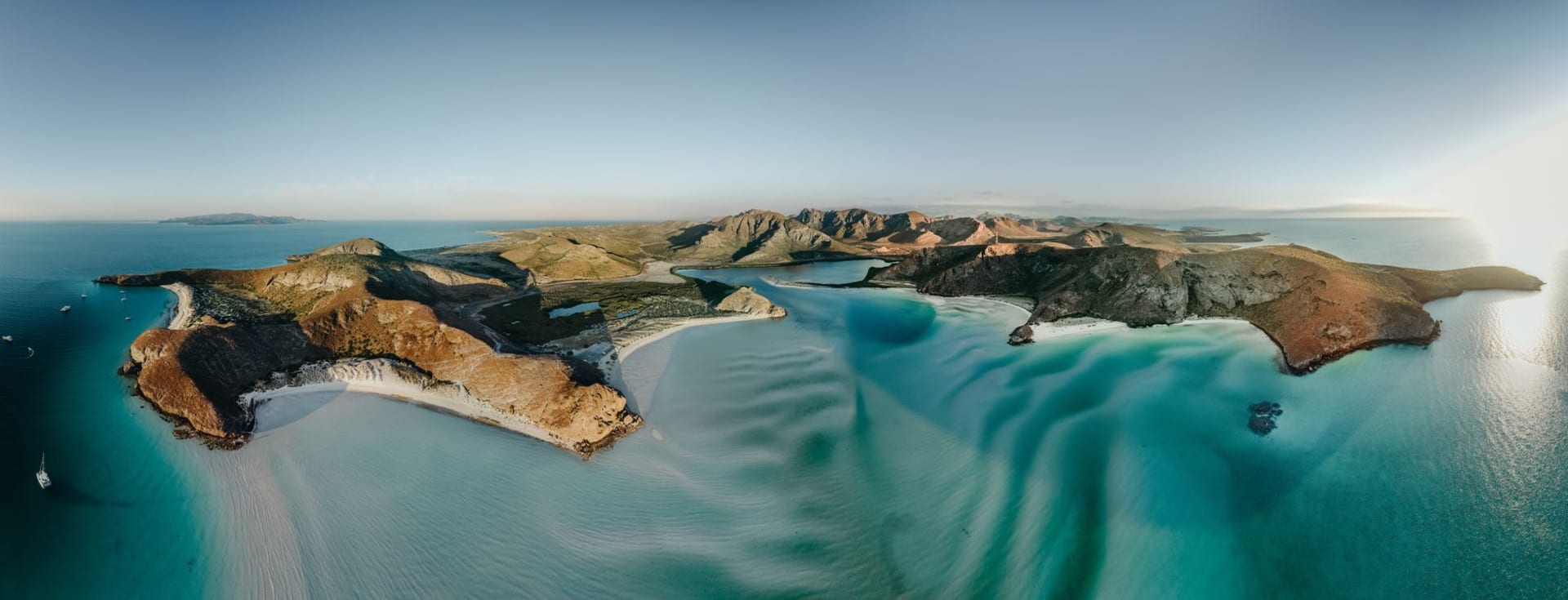
The beach at La Ventana is a long strip of sand backing a shallow bay of the Cortez. The water has the particular color that the shallow Sea of Cortez does especially well — a turquoise that goes green in certain lights, pale and transparent at the edge and deepening slowly as you wade out. On the morning I arrived, the wind was up and there were perhaps 20 kites in the air simultaneously, a visual field that took some adjustment.
The kitesurfers themselves were moving fast across the water — faster than you expect, with a lateral efficiency that makes sailing look laborious. The more accomplished among them were launching off small waves and briefly going airborne, which drew the involuntary attention of everyone on the beach. I watched from a table at the beach restaurant, a palapa operation with plastic chairs and a menu written in marker on a board that included fresh fish, shrimp, and the cold beer that the situation clearly required.
The shrimp tacos arrived as three corn tortillas with shrimp cooked in garlic butter, a cabbage slaw, a thin salsa verde, and a wedge of lime. They were not complicated. They were exactly what they needed to be. I ate them watching the kites and thought, genuinely and not for the first time, that this looked like something worth learning.

The Village Underneath the Sport
La Ventana would be a fishing village if the kitesurfers weren’t here, and in some essential way it still is. The pangas are pulled up on the beach alongside the kite equipment. The fishermen who go out before dawn in those boats live in the same houses that have been here since before anyone discovered that this bay had special wind. The kite shops and rental operations are visible along the main road, but they’re set into a fabric of ordinary Mexican village life — the tienda, the pharmacy, the taqueria that opens at noon and closes when it runs out of food.
This balance will shift as more people arrive and more infrastructure follows. For now, what makes La Ventana interesting is the coexistence: a world-class wind sport destination that is also a place where people live regular lives and have for generations, and where the pelicans on the boat hulls are indifferent to the distinction.
The Sea of Cortez here is also a wildlife corridor. Whale sharks use the bay seasonally. Dolphins pass through. Sea lions haul out on a rock formation about a kilometer offshore that I spotted from the beach and pointed at with the enthusiasm of someone who has been in cities too long.
What El Norte Feels Like on the Ground
Even if you don’t kitesurf or windsurf, the wind itself is an experience. When El Norte is blowing — which in the winter months is most mornings — the air has a particular quality: dry, steady, warm enough not to be unpleasant, carrying the salt and mineral smell of the Cortez. It bends the palms at a consistent angle. It makes the water a specific shade of agitated turquoise. It is wind as a presence rather than an inconvenience.
By mid-afternoon when it drops, the bay goes flat and the kitesurfers come in and the water becomes swimmable — calm and warm and perfectly transparent over the sandy bottom. I swam in the late afternoon, the sun going orange over the desert to the west, the kites coming down one by one across the beach. The pelicans landed on the pangas in the shallows with great dignity and sat there for a long time doing nothing in particular.

Getting There
La Ventana is about 50 kilometers south of La Paz on the road that runs down the eastern shore of the Baja Sur peninsula. The drive from La Paz takes under an hour. There is no bus service to the village itself; you need a car or a taxi from La Paz. Accommodation ranges from camping to simple casitas rented by the week; the village fills up in the peak wind season from December through February and quieter visits are possible in November and March when the wind is less consistent. If you want to learn kitesurfing, the instructors here are numerous and apparently very good. I was not ready to commit. Maybe next time.