Guerrero Negro
"She surfaced next to the boat, looked at us, and waited. I don't know what I was supposed to do with that."
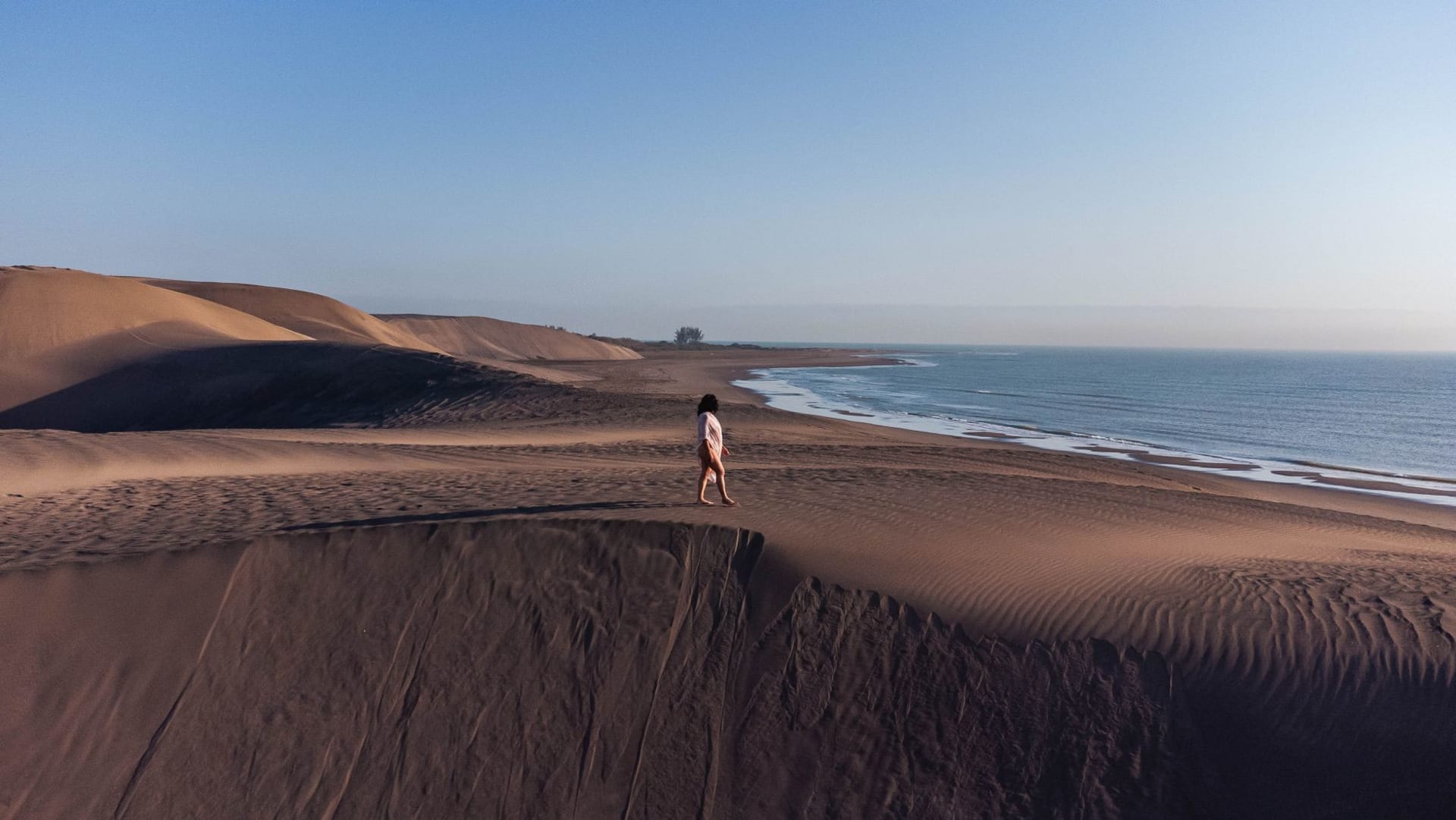
The drive down the Baja peninsula from the north is one of the great highway experiences — two lanes through desert that changes character every hundred kilometers, the Pacific on one side and eventually the Gulf on the other, almost no settlements of any size for hundreds of kilometers. Guerrero Negro appears at the state line marked by a large steel eagle sculpture that is visible from the road, and the town itself is flat and industrial and smells of salt, and you understand immediately why you are here and it has nothing to do with the town.
I had booked a tour with one of the lagoon operators from the hotel where I’d stopped for the night — a functional place on the main road whose owner had the booking form ready before I’d finished asking if there were still whale tours available. In February, she said, the lagoon is full. This turned out to be an accurate description.
The Lagoon at Dawn
We left at six-thirty in the morning, which meant loading into an open panga in the dark and crossing the flat desert road to the lagoon entrance. The air was cold in the way that coastal desert is cold before the sun comes — a dry cold without the bite of northern winters, but cold enough that I was glad for the jacket I’d been told to bring. The lagoon appeared as a pale brightness in the pre-dawn, then opened into something vast and still.
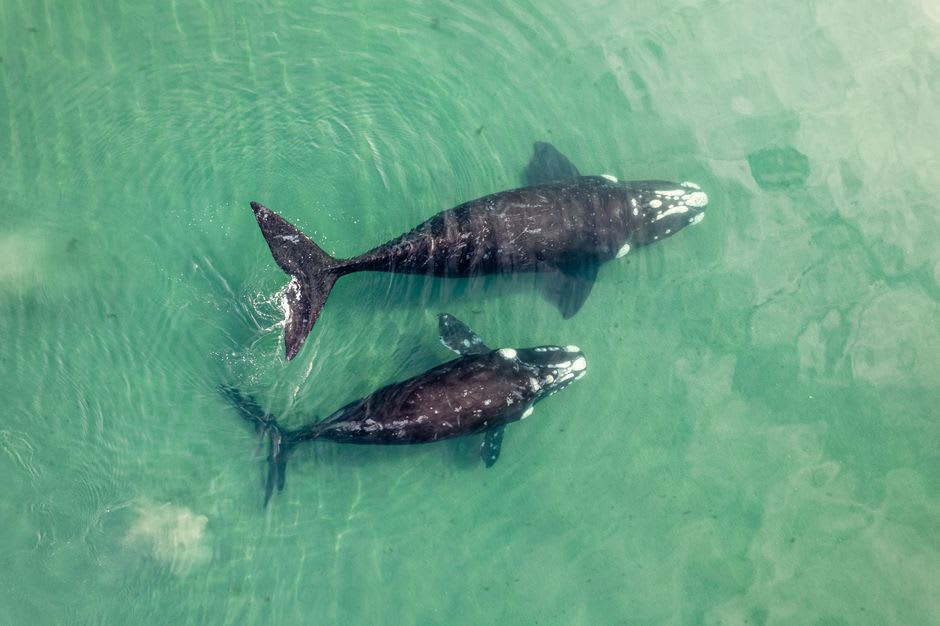
Laguna Ojo de Liebre is one of three lagoons on Baja’s Pacific coast that gray whales use for breeding. They arrive from the feeding grounds of the Bering Sea having traveled some of the longest migrations of any mammal — up to twenty thousand kilometers round trip — and they come to these specific lagoons, which have been protected since the 1970s, to give birth and nurse their calves in warm, shallow water before the return journey north. The lagoon is also part of the Vizcaíno Biosphere Reserve, the largest protected area in Latin America, which helps explain why it still works.
The guide cut the motor when we reached the whale zone, and we waited, and then the waiting became unnecessary because a whale surfaced thirty meters away with the slow, deliberate unhurriedness of something very large that has no reason to hurry. Then another. Then two more.
When a Whale Decides to Meet You
What I had not known before coming to Guerrero Negro — what nobody adequately conveyed in advance — is that the gray whales at Laguna Ojo de Liebre are not simply observed. They approach. The mothers, particularly, will steer their calves toward the boats. The working theory among the researchers who study this behavior is that the mothers are socializing their calves to human presence, preparing them for a world in which boats are a fact. Whatever the reason, the result is that you sit in a small boat in a lagoon and a twelve-meter animal with barnacled skin comes alongside, surfaces, exhales through its blowhole with a smell that is deeply marine and slightly rotten, and positions itself next to the gunwale.
The guide said we could touch it if it came close enough. It came close enough. The skin under the barnacles is smooth and dense, not what I had imagined from looking at them from above. The whale’s eye — gray-brown and very large — was level with the side of the boat. It looked at us. I want to be careful about what I say here because I know the risks of anthropomorphizing, but the looking was not incidental. The whale held position and looked at the people in the boat for a period of time that was long enough that several of us stopped reaching down to touch it and simply looked back.
The Salt and the Desert
Guerrero Negro’s other claim to industrial significance is the Exportadora de Sal, one of the world’s largest solar salt production operations. The company evaporates seawater across an enormous area of coastal flats using the Baja sun, and from the highway you can see the salt piles — white mountains of processed salt waiting for shipment. They are visible from kilometers away, gleaming in the desert sun with a brightness that reads as wrong, as if someone had deposited a snowfield in the wrong geography.
I drove past the salt operation on the way out of town and pulled over to look at it. The scale is genuinely difficult to take in. The white mountains are thirty or forty meters high in places. The smell is the smell of the sea, concentrated and mineral and dry. It is not a tourist attraction. There is no viewpoint. You just pull over on the highway and look at it, and then you drive on.

Getting There and When to Come
Guerrero Negro is 714 kilometers south of Tijuana on the Transpeninsular Highway — a long drive, usually broken at Ensenada or Cataviña. There is a small airport with irregular service from the peninsula’s larger cities. The overnight ADO bus from Tijuana takes about twelve hours and arrives at the main road stop from which hotels are walkable.
Come between December and April for the whales; the season peaks in February and early March when the lagoon has the most mothers with calves. Book tours with the established lagoon operators — there are several — and go in the morning when the light is better and the wind is usually lower. You will be cold. Bring layers. The whale will not disappoint.