Pak Ou Caves
"Thousands of Buddhas in the dark, every one of them brought here by someone who believed it mattered."
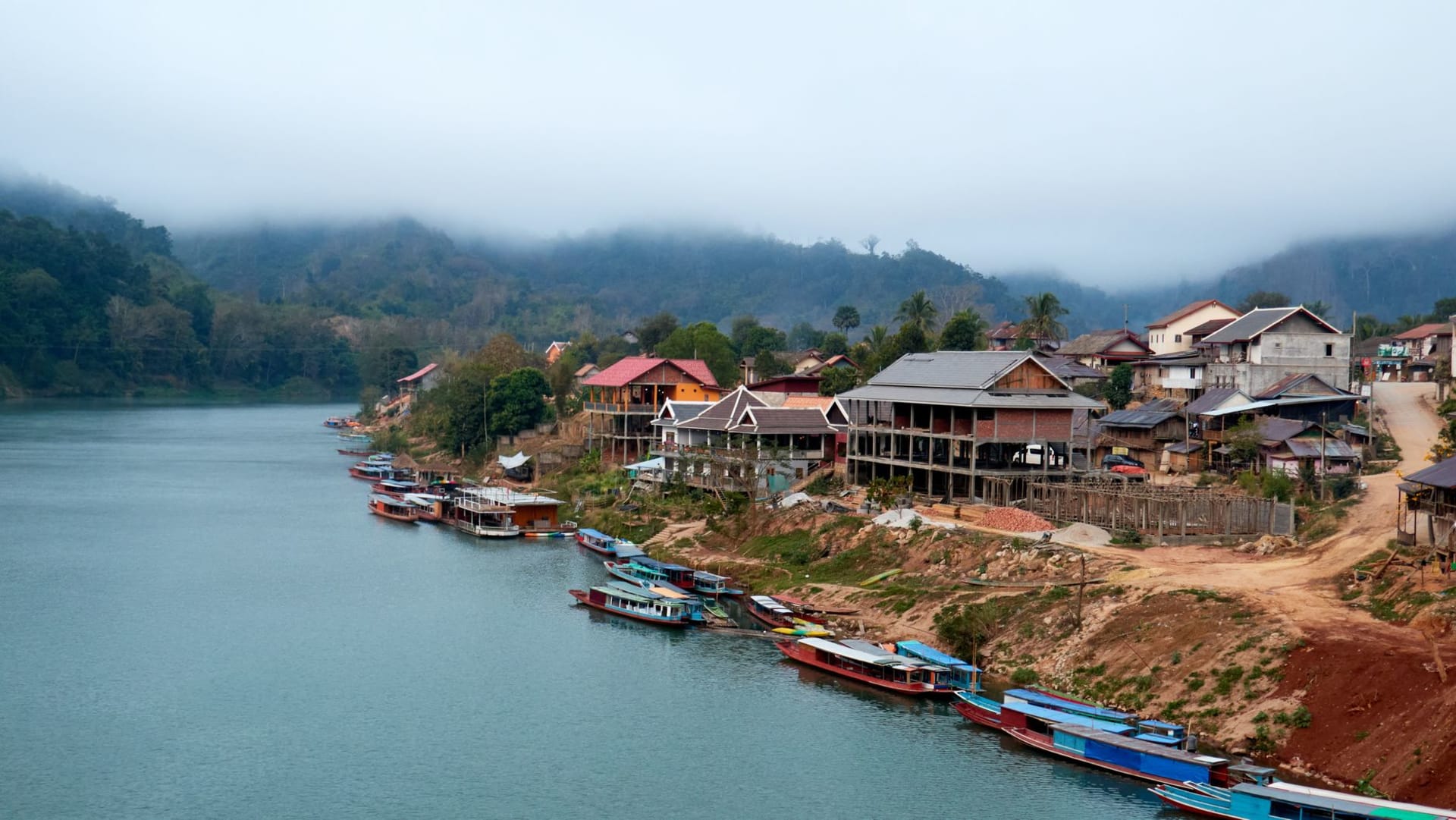
The boat upriver from Luang Prabang takes about two hours. You sit on the bow as the Mekong narrows and the karst cliffs begin to rise on the northern bank, their surfaces covered in a vegetation so dense and so uniformly green that it reads as a solid wall. Villages appear occasionally on the banks — women washing clothes on flat rocks, children watching the boat pass. The engine is loud enough that conversation requires effort, so most people stop trying and simply watch the river go past in reverse, upstream, the current working against you in a way that emphasizes the direction you’re heading: into the interior, into the older country.
Pak Ou sits where the Nam Ou — the largest of the Mekong’s Lao tributaries — joins the main river. The cliffs on the right bank rise sharply from the water, and in those cliffs, two cave mouths open like dark eyes. Tham Ting is the lower cave, accessible from the bank by a short steep stair. Tham Phum is the upper, a twenty-minute climb through forest, lit inside only by the flashlights visitors carry.
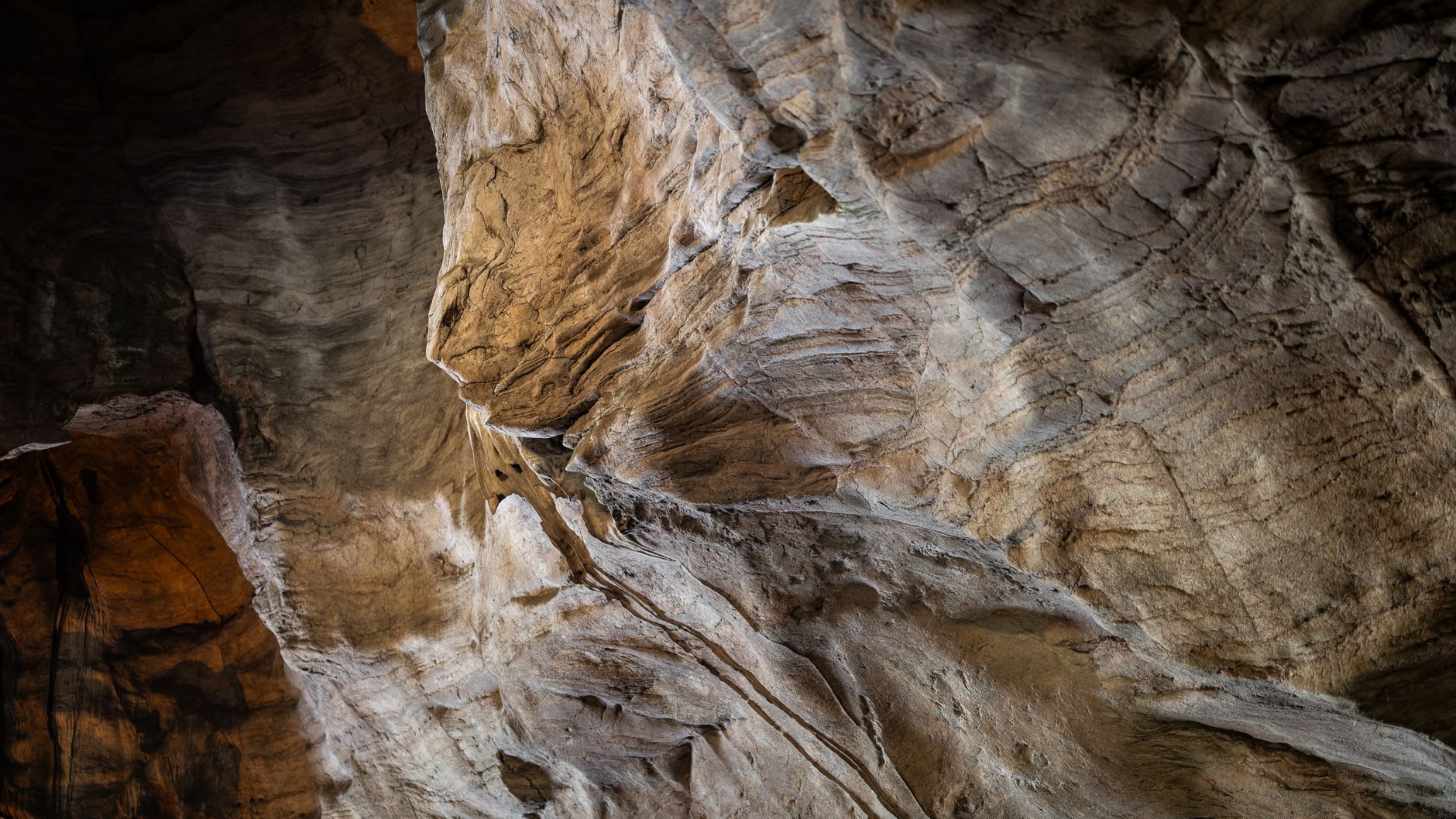
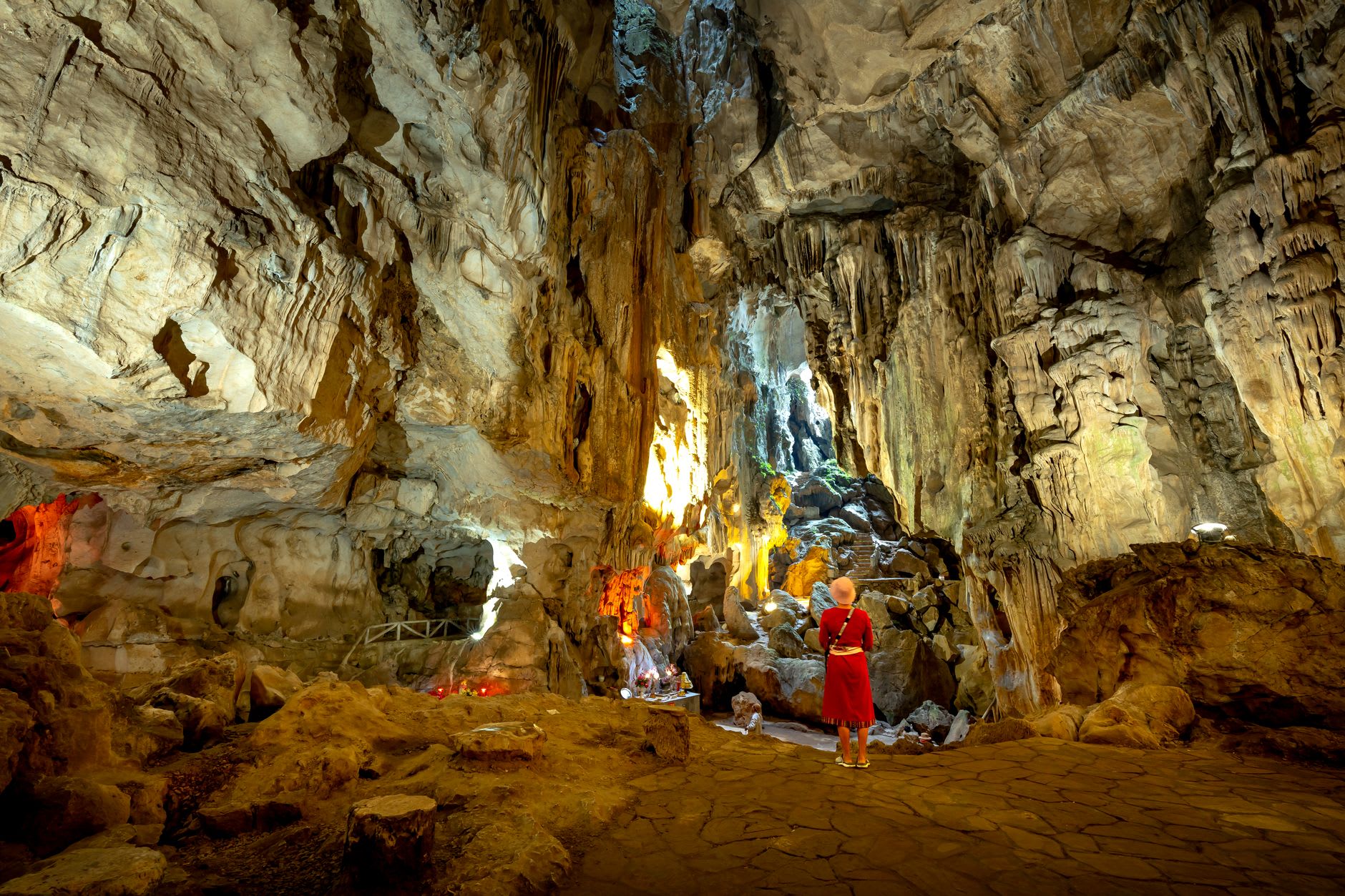
Inside Tham Ting, once your eyes adjust, the scale of what people have brought here becomes apparent. Thousands of Buddha figures — lacquered wood, carved stone, cast bronze, in sizes from thumb-high to waist-high — crowd every surface. Shelves cut into the cave walls hold rows of them. The floor between the larger statues is filled with smaller ones, placed wherever there was room. Some are gilded and recent. Some are blackened with age and candle smoke. Some are broken, missing limbs, their purpose unchanged by the damage.
The story is that for centuries, pilgrims have come to Pak Ou — by river, the only way — and left a Buddha image as an offering. When the cave became too full, they brought them to the upper cave. When that filled, they arranged them more carefully. There is no official record of who brought what or when. The accumulation is entirely devotional. You stand in a cave full of the faith of people you will never know, and the effect is peculiar: not exactly sacred, not exactly sad, but something in between that doesn’t have a clean name.
The upper cave, Tham Phum, requires a flashlight and grants you near-solitude. Tour groups rarely make the climb. The cave goes back further than Tham Ting and is darker, the Buddhas here arranged more sparsely, some fallen on their sides. At the back of the cave there is a passage that leads deeper into the mountain. Nobody goes there, and the darkness that comes from it has a quality that is different from ordinary dark — heavier, older.
The boat back is with the current and takes less than an hour. The villages you passed going up slide past again in the other direction. You stop, usually, at a village known for its lao-lao rice whisky — the boat driver expects this, has probably been doing it for years — and a woman pours small cups from an unlabeled bottle. The whisky is strong and tastes of fermented rice with something herbal behind it. You buy a bottle to be polite and drink a second cup and watch the Mekong glitter downstream.
When to go: November through February, the dry season, gives the clearest views of the cliff face and the most pleasant boat ride. The Lao New Year in April (Bun Pi Mai) sees special ceremonies at Pak Ou, when the caves are particularly thronged with Lao pilgrims — more crowded but more alive with purpose. Avoid the rainy season if you want calm river conditions.