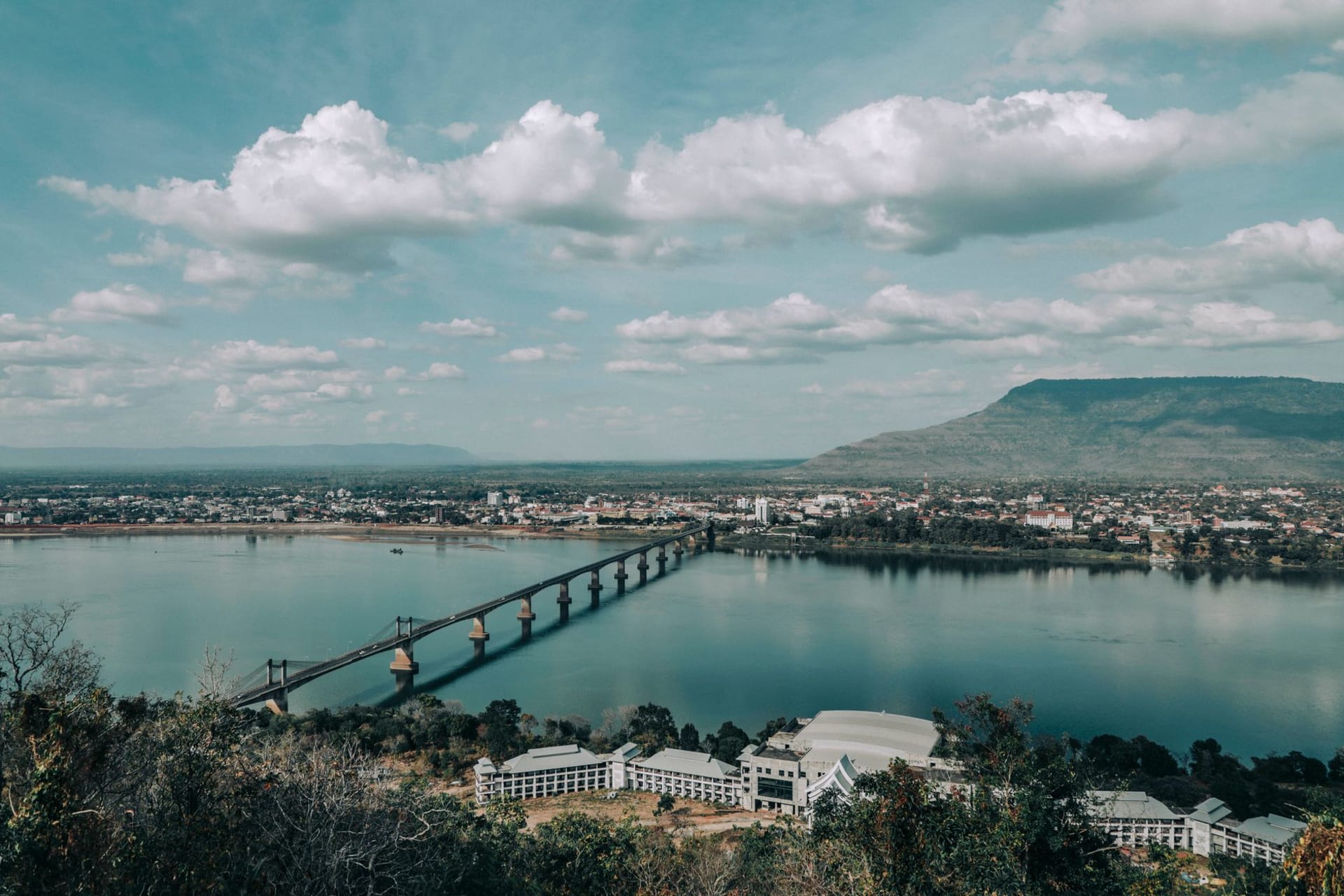
Kuang Si Falls
"That shade of blue-green has no business existing in nature. And yet there it is."
Twenty kilometers outside Luang Prabang, down a road that winds through rice paddies and small villages with wood-smoke drifting from morning cooking fires, the jungle suddenly closes in. The tuk-tuk parks in a clearing among other tuk-tuks and motorbikes, and you follow a path through trees that are noticeably taller and older than anything near the road. Within five minutes you hear it — not a roar but a sustained low rushing, like the sound you might get if you cupped your ear to the wall of a large room and heard the building breathe.
Kuang Si starts with the bears. A sanctuary for rescued Asiatic black bears occupies the lower section of the park, and the enclosures are set back enough from the main path that the bears have space. There were two when I passed, both enormous, one sleeping in a patch of sun, one turning over a log with the methodical focus of someone who has decided this rock is hiding something important. I stood watching longer than I intended. Then the sound of the water reasserted itself and I followed it uphill.
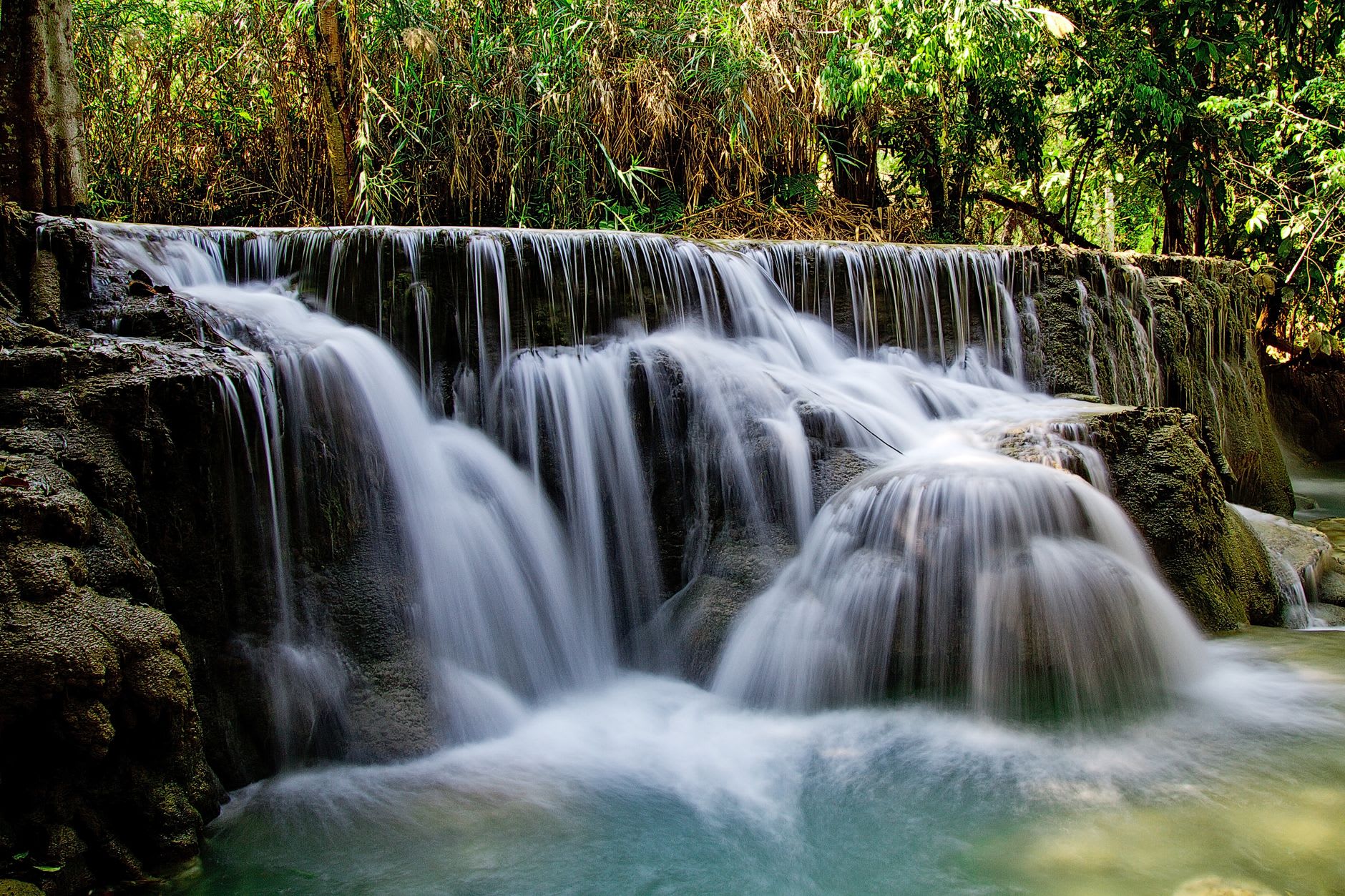
The upper pool is the photograph. You will recognize it before you see it — you have seen it in a hundred travel accounts, in airline magazines, on Lao tourism brochures. The water falls in a wide curtain over a limestone lip into a pool of a blue-green so saturated and specific that it reads, on first viewing, as the product of food coloring or long-exposure photography. The color comes from high calcium carbonate content in the water, which scatters light differently from ordinary water. None of this information makes the color less extraordinary when you are standing in front of it.
You can swim. This is one of the details that elevates Kuang Si above mere spectacle. The lower pools, connected by smaller cascades, are cool and clear enough to see the bottom, and on weekdays before ten in the morning you can find a pool that is nearly empty. I swam on a Tuesday in December when the air was cool enough that getting in felt like a commitment. The water was cold in the way that is briefly shocking and then deeply clarifying. A Lao family was picnicking on the bank nearby. Their children were in the water making the noise that children everywhere make in cold water, which is a specific kind of joyful complaint.
The hike above the main falls continues uphill through forest to the source pools — quieter, less visited, reached by a trail that crosses the stream twice on stepping stones. I went alone in the early afternoon after most visitors had left, and the jungle up there had a different quality: denser, the light coming through the canopy in shafts, a bird somewhere above making a sound I couldn’t identify. The source pools are shallow and green with algae and not especially photogenic, but the absence of other people and the walk itself made them feel like a reward.
When to go: November through February gives the fullest waterfall flow combined with clear water and manageable crowds. March and April are hot and the falls can slow slightly. From May through October, the rainy season fills the falls dramatically but turns the lower pools brown — swimming becomes inadvisable. Go early in the day regardless of season: tour groups from Luang Prabang arrive between nine and eleven, and the pools fill.