Amogjar Pass
"I put my hand on a giraffe that grazed here when this desert was still green."
A rocky gap in the Adrar plateau where giraffes and elephants were carved into sandstone thousands of years before the Sahara turned to sand.
We left Chinguetti before sunrise, our guide Sidi’s 4x4 rattling over a track that barely qualified as one, and I remember asking him twice how much further before he just laughed and pointed at the plateau ahead. Amogjar Pass isn’t marked by any gate or sign — it’s simply the place where the Adrar’s flat expanse folds into a narrow rocky gap, worn smooth by centuries of caravans moving salt and dates between Chinguetti and the deep desert. Lia had read that this was one of the densest concentrations of rock art in the region, and even so, neither of us was prepared for how close you get to stand to it. No ropes, no glass, no ticket booth. Just sandstone, and on it, a giraffe.
Sidi walked us along the outcrops pointing out shapes I would have completely missed on my own — cattle with long curved horns, an elephant with its trunk raised, more giraffes with the same loose, elegant pecked lines. He explained, matter-of-factly, that these were carved several thousand years ago, when this part of the Sahara was savanna, not sand, and animals like these actually lived and drank here. Standing in that heat, surrounded by nothing but rock and pale sky, it was hard to reconcile — until I looked down at the ground and noticed it was cracked in the exact pattern of a dried lakebed.
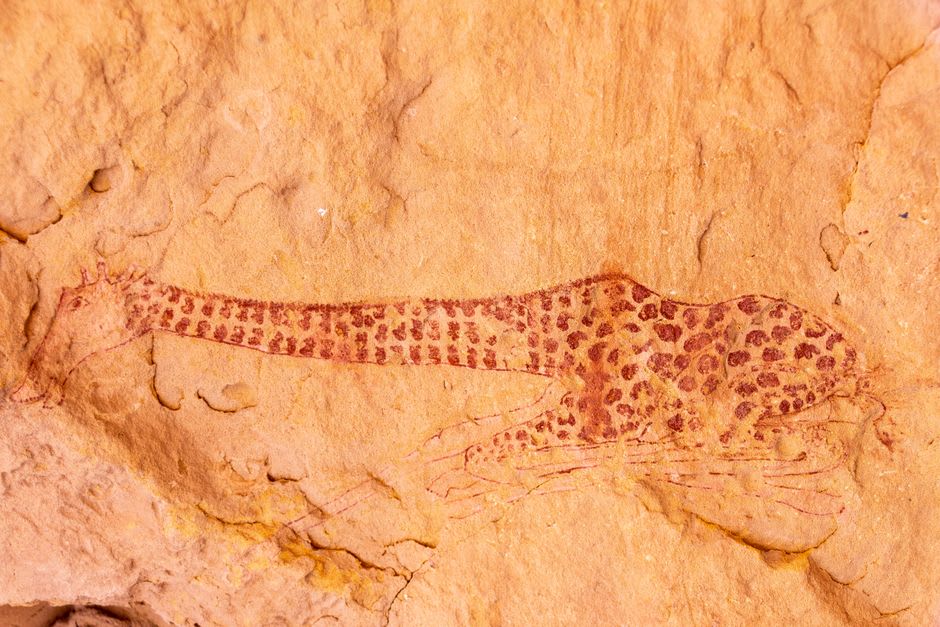
We spent maybe three hours moving slowly between the panels, and honestly I think we found more the longer we stayed — Sidi kept spotting fainter engravings in the low morning light that would have been invisible at noon. Lia sat for a long while just sketching one of the cattle figures in her notebook while I wandered the pass itself, trying to picture the caravans that once threaded through here loaded with salt slabs bound for Chinguetti’s markets. There’s a stillness to the place that has nothing to do with emptiness — it feels used, in the oldest sense of the word, a corridor people and animals have been moving through for millennia.
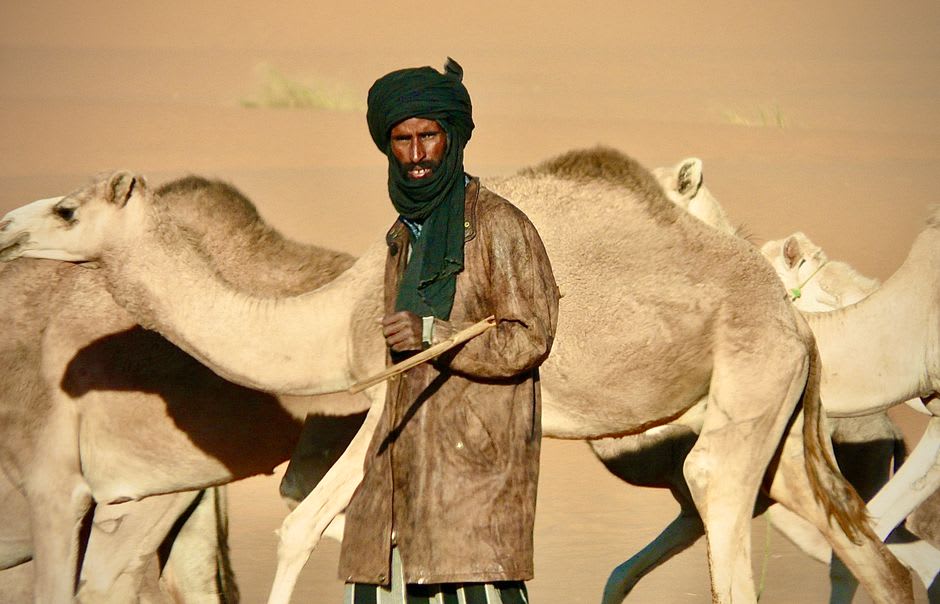
By midday the heat had turned serious enough that Sidi started shepherding us back to the truck, and I understood then why nobody does this as anything but a half-day trip. We drove back to Chinguetti dusty, quiet, and a little stunned — the kind of quiet that comes from having touched something much older than yourself.
When to go: Aim for November to March. We went in January and were still glad of the early start — by summer, the Adrar’s heat makes the drive out here, let alone hours spent scrambling over sun-baked rock, a genuinely bad idea.
Keep exploring
More from Mauritania
 mauritania
 Atar
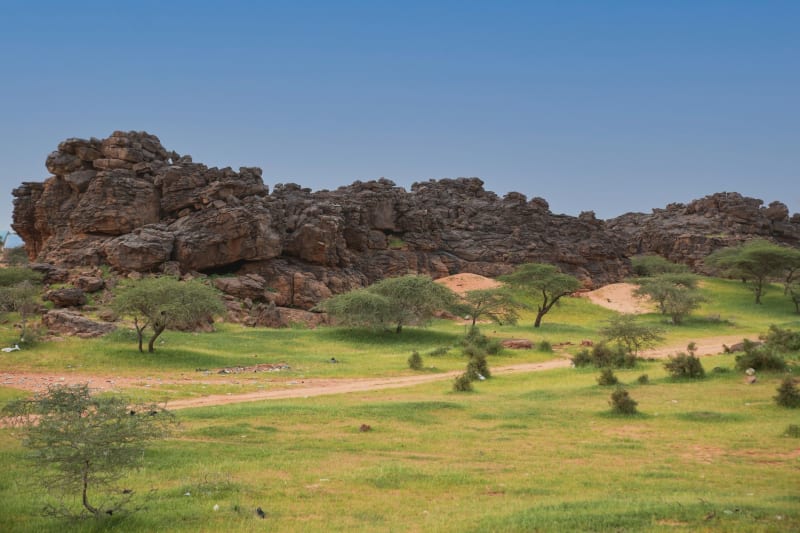
The Adrar's unassuming gateway town where desert tea ceremonies last longer than some flights and the date palms hold back the dunes with quiet conviction.
Explore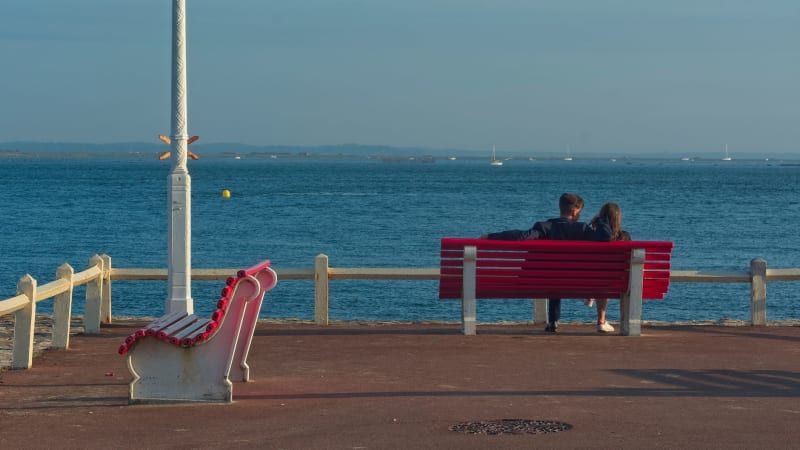 mauritania
 Banc d'Arguin
A UNESCO-listed coastal wilderness where two million migratory birds winter among shallow Atlantic tidal flats fished by the Imraguen in hand-built boats.
Explore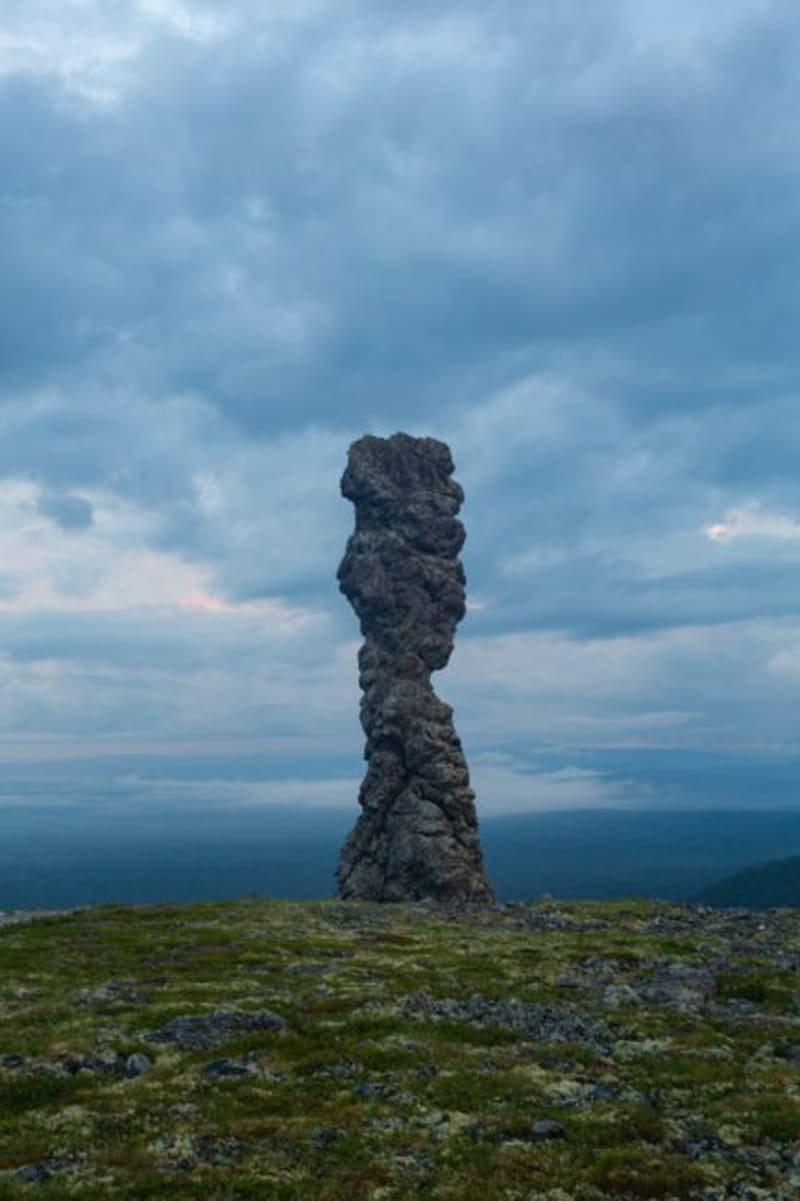 mauritania
 Ben Amera
A 633-meter granite giant rising alone from the Sahara, second only to Uluru, guarding a silence I've never felt anywhere else.
Explore mauritania
 Chinguetti
Islam's seventh holiest city is slowly disappearing into the dunes — and that impermanence is exactly what makes it sacred.
Explore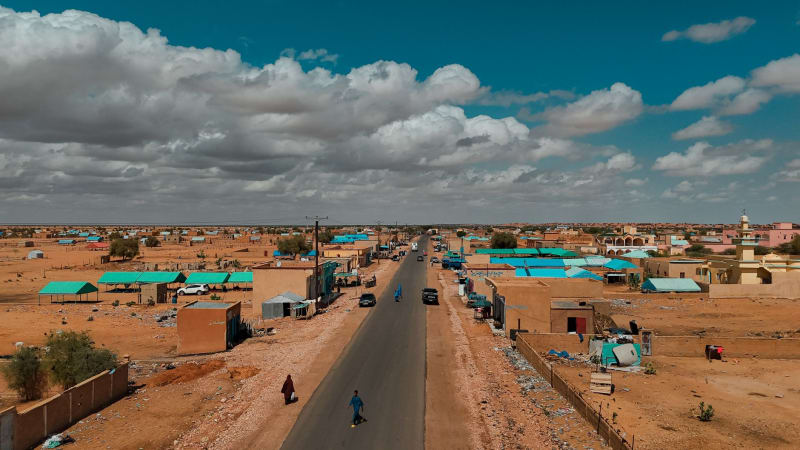 mauritania
 Néma
The eastern end of the Route de l'Espoir and gateway to the Sahel, where Mauritania shades into a different continent and the market brings the whole region together.
Explore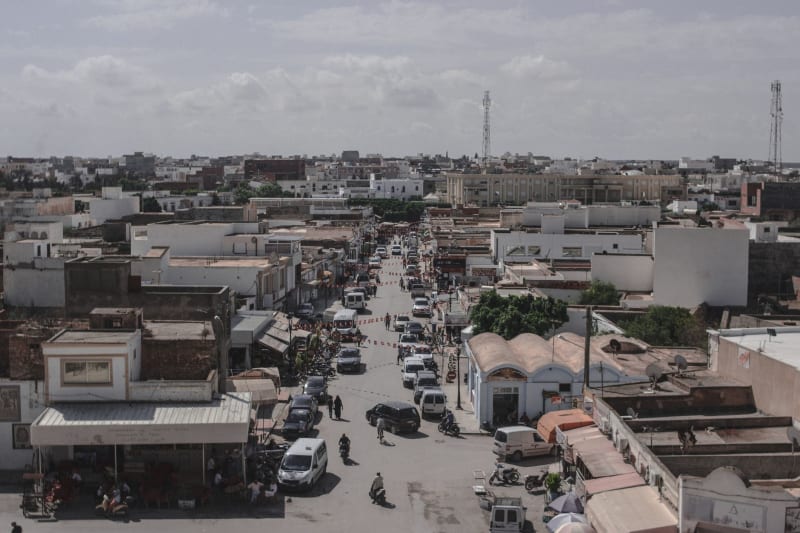 mauritania
 Nouadhibou
A port city at the edge of a peninsula where one of the world's largest ship graveyards rusts into the Atlantic and the fishing industry runs on a scale that makes the ocean feel temporary.
Explore