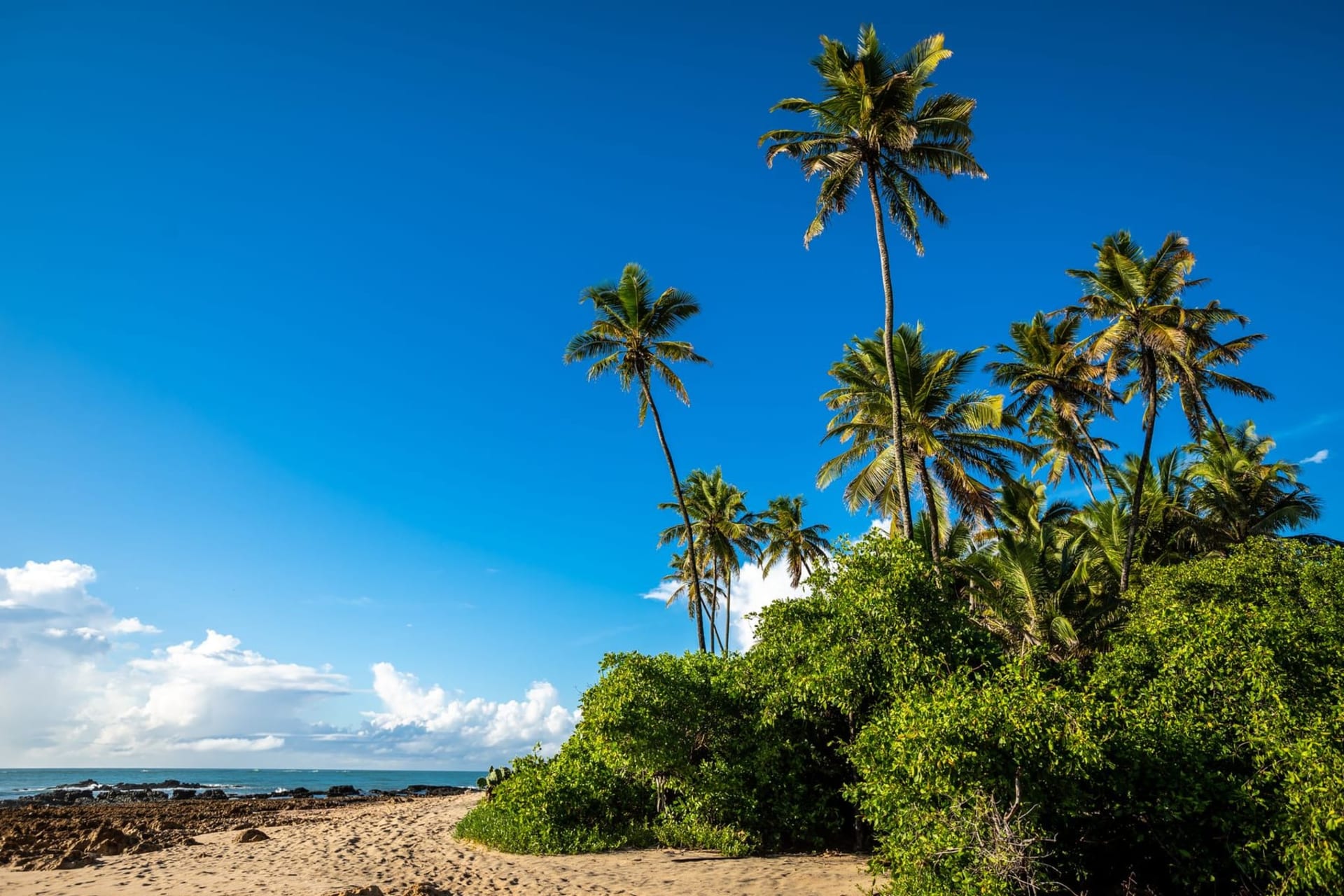
Les Salines Beach
"Some beaches convince you that perfection is a reasonable standard."
A crescent of white sand backed by salt ponds and coconut palms — voted one of the Caribbean's finest beaches.
The road to Les Salines runs south from Sainte-Anne through dry scrub and low hills that smell of salt and warm earth — nothing to signal that what waits at the end of it could stop your breath. I had read the superlatives. I had scrolled the photographs. I still wasn’t prepared.
The Crescent
The beach announces itself through a corridor of coconut palms, their trunks leaning at the same practiced angle, as if they had all agreed on a pose. Then the sand — and the sand is the thing that matters. It is not merely white. It is white the way old linen is white, soft and warm and slightly luminous, and it gives underfoot in a way that makes walking feel like a small luxury. The arc stretches roughly a kilometre from the rocky point at the south end to the calmer, shallower water near the salt ponds at the north, and from anywhere along it the view is the same: turquoise bleeding into cobalt, a handful of fishing pirogues anchored just offshore, and the low silhouette of the Rocher du Diamant in the southern distance.
Lia sat down within two minutes of arriving and did not move for an hour. That told me everything I needed to know about the pacing this beach requires.
The Salt Ponds and the Pelicans
What I had not expected — what the photographs never showed — were the Étangs des Salines behind the tree line. The salt ponds are shallow and still and the colour of old mirrors, rimmed with mangroves and occasionally patrolled by brown pelicans so confident in their territory that they barely registered our presence. We wandered back there in the late afternoon when the light went flat and pink and strange, and the whole lagoon turned the colour of a bruise healing into gold. It was completely unlike the beach fifty metres away. It felt like another country.
I also had not expected the accras. A woman with a cooler near the northern palm cluster sold accras de morue — salt cod fritters — hot from oil, wrapped in newspaper, three euros a portion. I ate two. They were the best thing I put in my mouth in Martinique, which is saying something on an island that takes its food seriously.
Getting There and When to Linger
Les Salines sits at the southernmost tip of Martinique, about four kilometres past Sainte-Anne along the D9. There is a car park that fills early on weekends — arriving before nine in the morning means space, calm water, and the palms still casting long shadows across the sand.
When to go: The dry season runs from December through May, when the trade winds keep the heat honest and the sea stays clear. January and February are the quietest months on the beach itself — the crowds thin, and Les Salines returns to something close to the stillness it deserves.