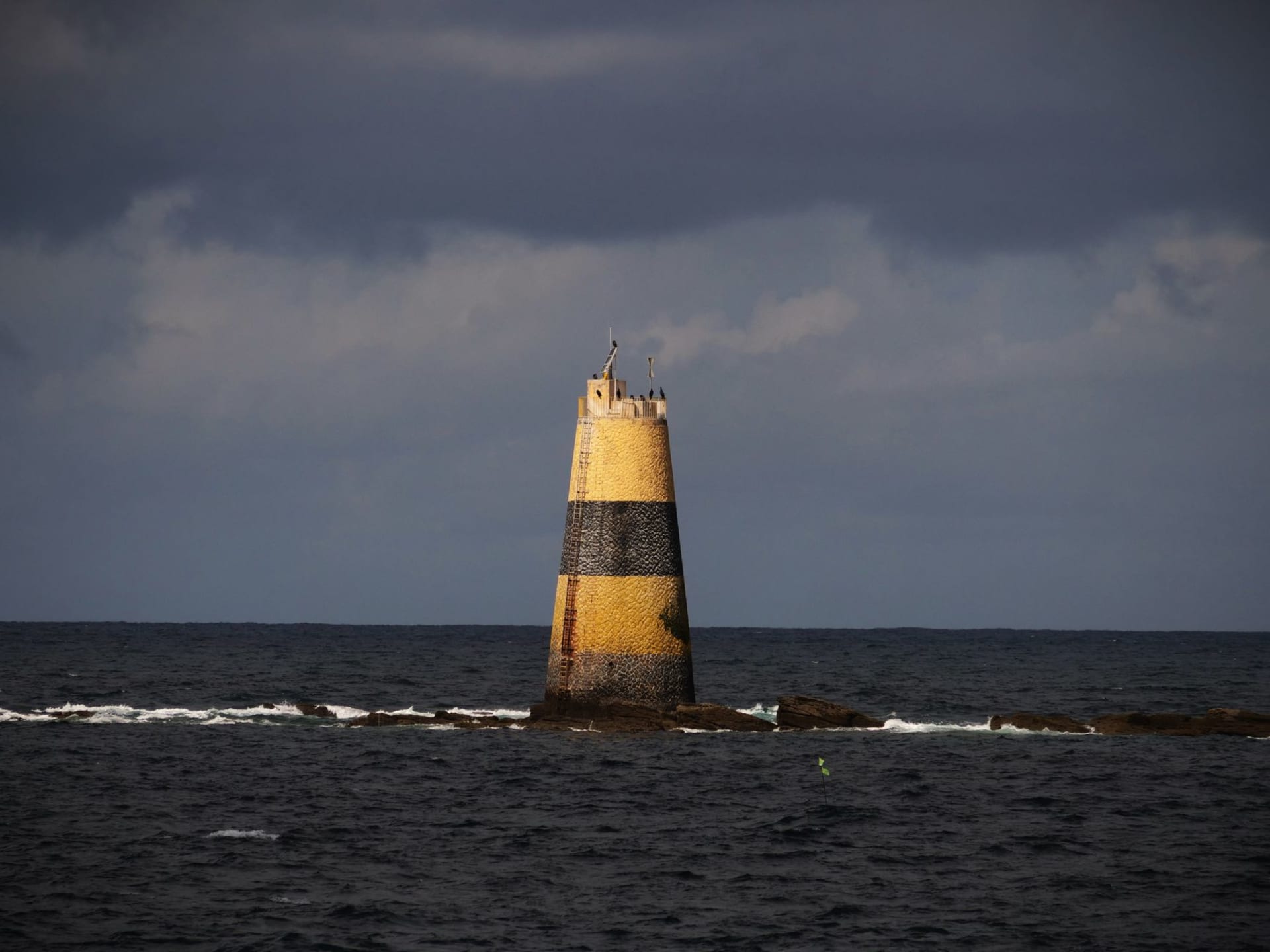
The ferry to the other ocean
Most people who visit Martinique spend their time on the leeward, Caribbean side — calm water, postcard beaches, the kind of light that makes everything look edited. The Caravelle peninsula faces east, toward Africa, and the difference is immediate. The water changes color first, going from turquoise to a deeper, more serious blue. Then the wind picks up, steady and insistent, and the landscape sheds its prettiness for something rawer.
I took the N1 out of Fort-de-France on a Tuesday morning, which meant weaving through the commercial sprawl of the island’s center before the road climbed into banana plantations and the humidity thickened under the canopy. By the time I reached Tartane — the small fishing village that anchors the peninsula — the road had narrowed to something barely wide enough for two cars, and the Atlantic was visible in snatches between the sea-grape trees.
Château Dubuc and the weight of sugar
The ruins of Château Dubuc sit at the far tip of the protected reserve, accessible by a well-marked trail through dry coastal scrub that smells of sage and hot stone. What remains is substantial: stone archways, cisterns, processing vats, a windmill tower with its cap long gone. The estate dates to the seventeenth century and changed hands enough times — through sugar fortunes, debt, piracy accusations — that its history reads like a West Indian novel.
What stays with me is the quietness of the place. No vendors, no audio guides, no other visitors on the morning I went. Just the ruins slowly returning to the hill, the sea visible on three sides, and the sound of the wind working through dry grass. A place like this asks you to sit with uncomfortable math: the scale of what was built here, and what it cost to build it.
Mangroves and the Atlantic shore
The reserve trails split — one route climbs through dry forest to clifftop viewpoints, another descends toward the mangrove lagoon on the protected southern edge of the peninsula. I did both. The clifftop path is the one that earns the views: the Atlantic crashing against layered rock below, the peninsula narrowing to a green spine ahead, and on clear days a faint silhouette of Dominica to the north.
The mangrove trail is quieter, murkier, and better. The light filters green-brown through the canopy and the water is still in a way that feels almost theatrical after the wind on the heights. Egrets pick their way through the roots. The smell is tidal and green and faintly sulfurous in the best way.
Tartane and the body-surfing hour
I ended the day in Tartane, which has the kind of beach you’d call rough on the Caribbean side — waves with real force, no shade until late afternoon, the sand dark and coarse underfoot. The local kids were body-surfing the shore break with the casual expertise of people who’ve done it since they could walk. I attempted it once, got tumbled immediately, and spent the rest of the time watching from a safe distance with a bottle of Lorraine from the snack bar at the beach’s edge.
The beer was cold, the sun was low, and the whole peninsula felt satisfyingly far from the tourist circuit.
When to go: January through April for the driest, clearest conditions — the Atlantic wind keeps the heat manageable and the trails stay passable. Avoid heavy rain season (July–October) when paths into the reserve can become muddy and slippery. Weekday mornings are best for solitude at Château Dubuc.