The Lake at the Center of Everything
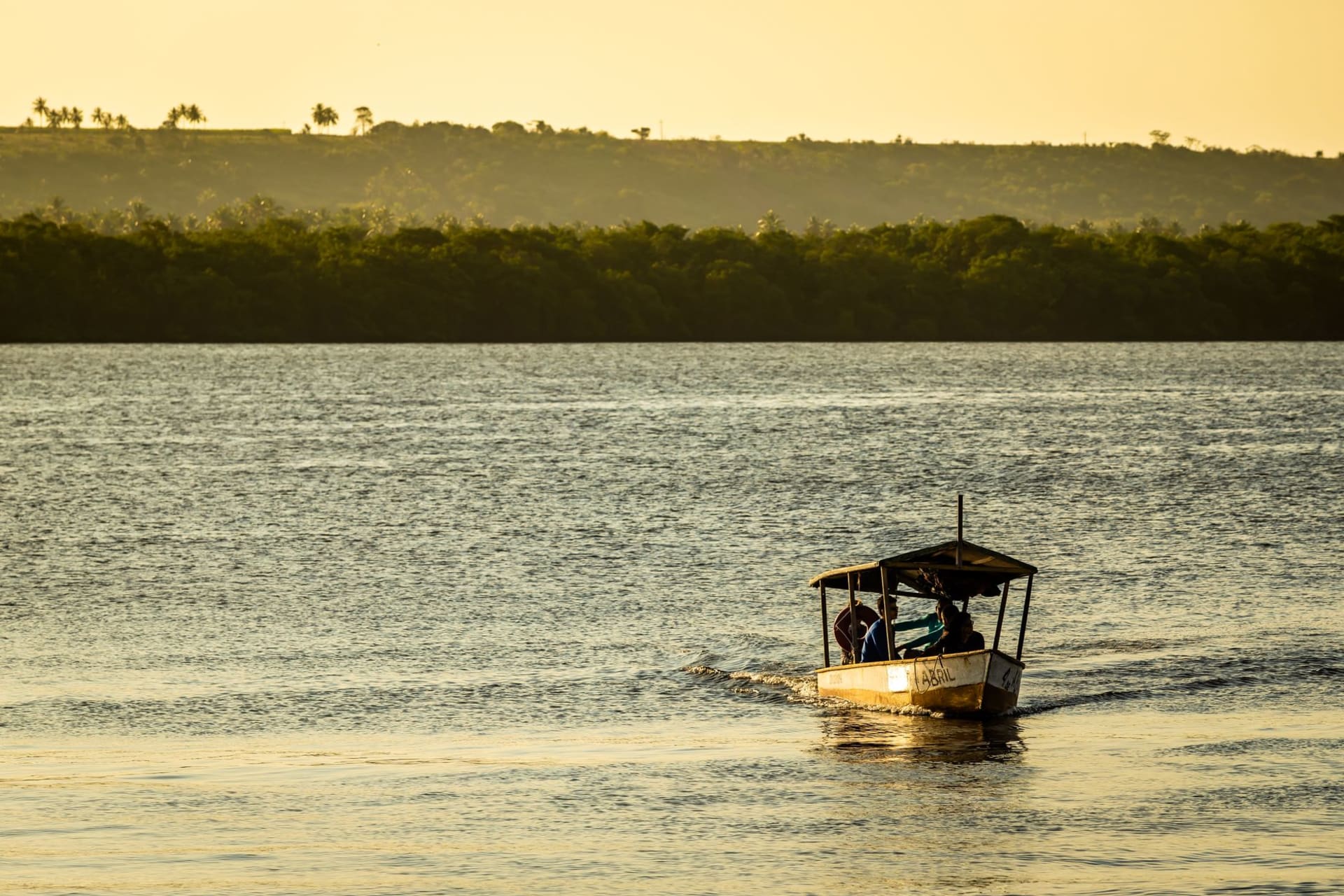
Lake Arari is Marajó’s interior sea — a freshwater body that swells enormously in wet season and contracts to reveal wide mudflats in the dry, and Santa Cruz do Arari sits at its northern edge in a state of cheerful isolation. I came here on a boat from Cachoeira do Arari, an hour upriver, and stepped off onto a small dock into a village where the main activity at 4 p.m. was a group of teenagers fishing off the waterfront and arguing about something I couldn’t follow.
The lake in front of the town stretches so far in multiple directions that you can’t see the far bank in clear conditions. What you can see, if you’re patient and quiet at the right hour, is the backs of boto vermelho — the Amazon pink river dolphin — breaking the surface. They come close to the village dock at dusk, hunting fish attracted by the light. Lia heard about this from the woman running our pousada and we were both there waiting when the first one surfaced, maybe fifteen meters out. They’re larger than you expect, and pinker, and they come up in a rolling arc and are gone again in a second.
Birding Without a Guide
The wetlands around Santa Cruz are a serious destination for birding, though the village makes no effort to market itself as such. I don’t travel with binoculars as a rule, but I borrowed a pair from the pousada owner and spent an early morning on the dock identifying things by process of elimination. The jabiru stork — huge, prehistoric-looking, with a red neck patch that seems like too much — is everywhere here. Roseate spoonbills work the shallows in groups. Kingfishers in three sizes hang over the water and plunge without warning.
The floodplain around the lake supports a density of birdlife that would cost you a four-figure tour package in the Pantanal. Here you just wake up early and walk to the water.
The Flooding Calendar
Santa Cruz’s character changes entirely with the seasons. In the wet season, the lake overtops its banks and parts of the lower village flood — not destructively, but enough that canoes replace walking in some areas. The buffalo are driven to higher ground. The campos turn into shallow lakes and the herons concentrate on whatever remains above water. In dry season, the lake retreats and vast mudflats emerge, turning the landscape from blue to terracotta overnight.
I came in late August when the water was receding and found the transition most interesting — the flats still damp and covered in wading birds, the village children playing football on what two months earlier had been lake bottom.
Life on the Waterfront
Santa Cruz has a quality I find rarer than it should be: a waterfront that actually belongs to the people who live there. No resort bars, no tourist boat operations, no tiered pricing. Old men play cards on a covered veranda facing the lake. Women sell fried macaxeira from a cart. The only floating structure is a dilapidated community dock where boats arrive from Cachoeira and occasionally from deeper in the island’s interior.
I ate at the one restaurant that was clearly ready for visitors and had the best tacacá — the hot broth with jambu leaf and dried shrimp — I’d had since Belém. The jambu numbed my lips within seconds. I ordered it again.
When to go: August to October gives the best balance of accessible roads, visible mudflats for birding, and calm lake conditions for dolphin watching. The transition from wet to dry season (July) is spectacular for landscape photography as the lake retreats. Avoid March and April when flooding is at its peak and boat schedules are unpredictable.