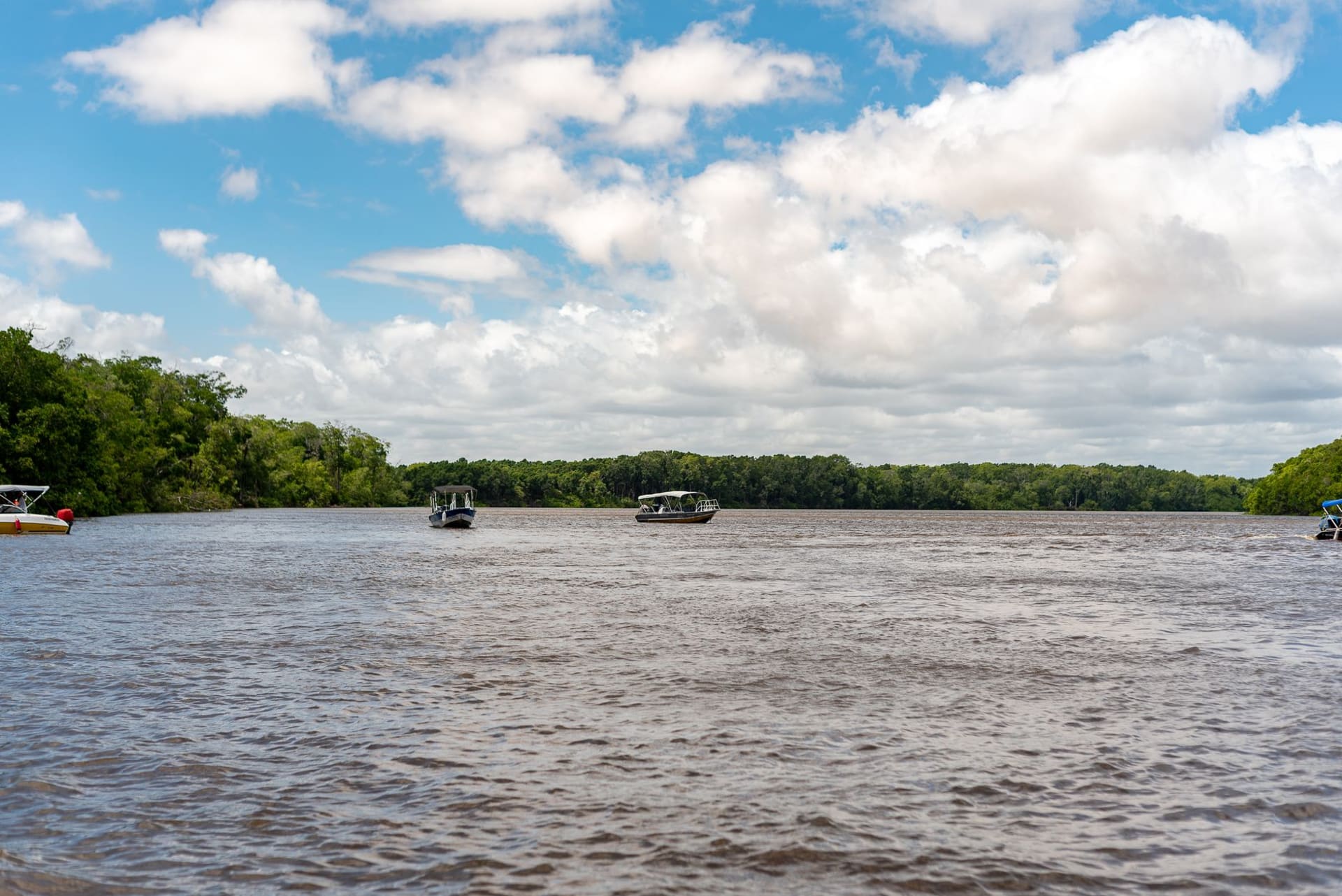
The Riverboat Gateway
Breves is not the Marajó of beaches and buffalo. It’s the Marajó of rivers, channels, stilt houses, and the particular logistical world of Amazonian river transport. The town sits at the meeting point of several waterways on the western side of the island and serves as the main hub for boats traveling into the interior and across to the mainland at Belém. If you’ve ever taken a regional riverboat in the Amazon — the kind where you hang your hammock between strangers and eat from a shared galley — Breves is that town.
I came here not as a destination but as a transit point, and then stayed for three days because the channels around Breves turned out to be worth more than a night.
The Furos: Marajó’s Channel Labyrinth
The area around Breves is defined by furos — narrow water channels that cut through the forested island, connecting rivers, creating a navigable labyrinth that local boatmen have memorized over generations. The forest closes in on both sides of some channels so completely that you travel in green shade even at midday. The water is black from tannins, not pollution — a phenomenon called água preta (black water) that’s common in certain Amazonian tributaries. It smells of wet earth and green things.
The most accessible channel trip from Breves goes through the Furo do Breves to a series of communities accessible only by boat. These are villages of 50 to 200 people built entirely on stilts over the water — no roads, no vehicles, no land to walk on except during the lowest waters of dry season. Families arrive at school by canoe. Commerce happens at a floating market. Generators provide a few hours of electricity per evening.
Life in the Furos
I spent a day traveling one of these channels with a local fisherman who was delivering goods to three communities. He’d done the route twice a week for eleven years and knew every bend, every family, every point where the channel narrowed enough to require care. We stopped at a house where a woman sold cold drinks from a chest freezer powered by solar, and I sat on her dock for an hour watching the trees reflected in the black water while he caught up on news with people he hadn’t seen in two weeks.
This is Amazonian life in its everyday form — not the curated eco-lodge version, but the actual infrastructure of a world built without roads, navigating by water and season and community memory.
Breves Itself
The town is working-class, practical, and not organized around tourism. There are adequate hotels near the dock, decent restaurants serving the regional staples (maniçoba — a slow-cooked dish of manioc leaves, pork, and sausage that takes days to prepare — is a specialty here), and a riverfront market where everything from live chickens to solar panels arrives by boat and leaves the same way.
The harbor activity is worth a morning of unscheduled observation. Boats of every size and vintage come and go: canoes loaded with açaà palms, regional ferries to Belém, cargo vessels headed deeper into the channels, fishing boats returning with ice chests. The operational logic of a port town without roads is different from anything else I know how to describe.
Onward from Breves
Breves is also the jumping-off point for Chaves, Anajás, and the deeper western reaches of Marajó — communities that almost no tourists reach and that require patience, flexibility, and genuine interest in being somewhere that has no interest in being a destination. For that kind of travel, there’s no better base.
When to go: Year-round, since Breves functions as a river hub in all seasons. July to November offers calmer channel navigation and lower water levels that make the furo communities more accessible. The wet season turns some channels impassable by larger boats but opens others. Come with an open schedule — river transport on Marajó runs on its own logic.