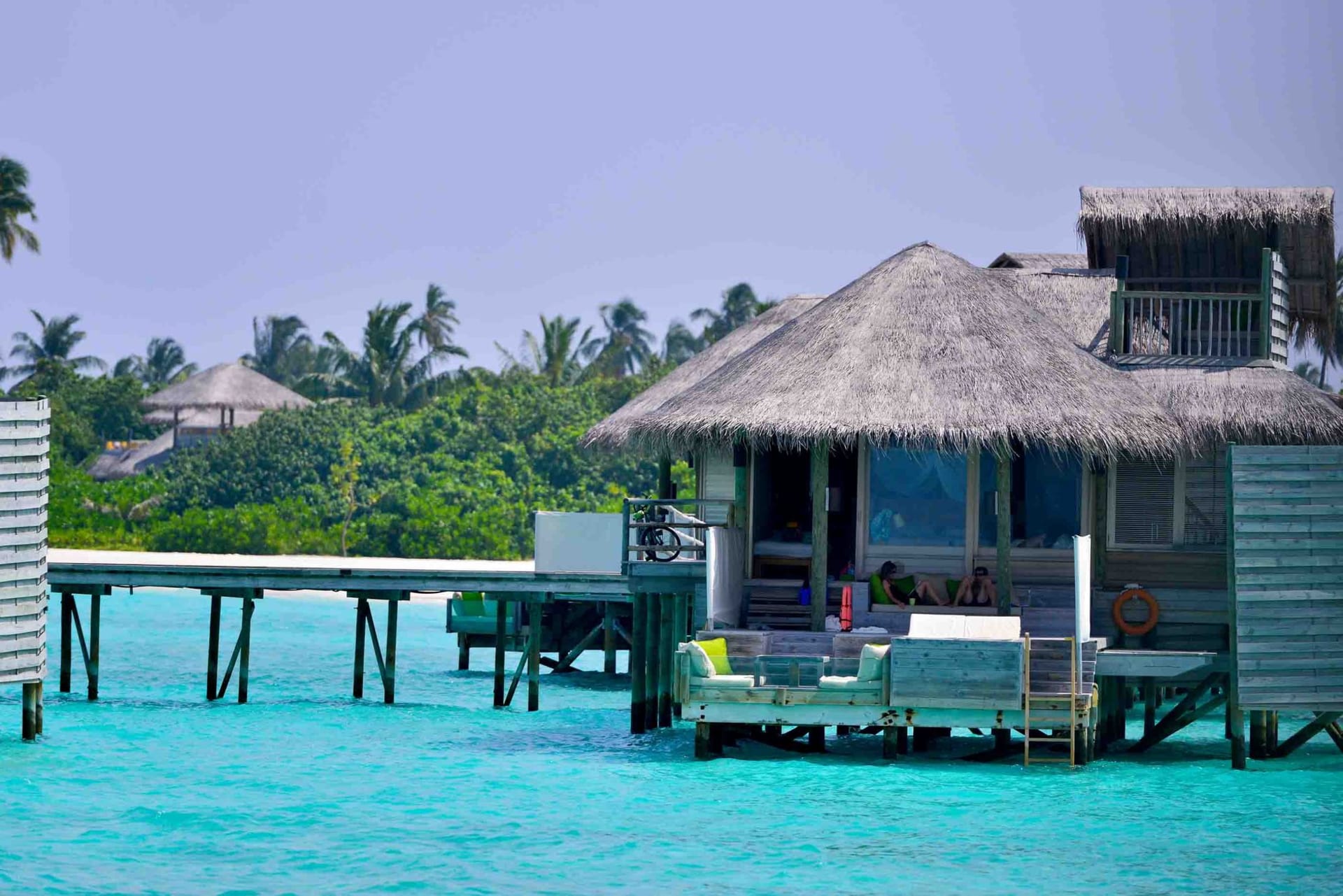
Addu Atoll
"The British left a runway and some coral-stone buildings and an atoll that still feels slightly surprised they're gone."
The road runs for twelve kilometres across the lagoon. Not beside it, not around it — across it, a causeway of reclaimed land and concrete bridges that connects six islands in a chain you can cycle along while the ocean glitters on both sides and occasional herons stand at the waterline with the patient vacancy of birds who have nowhere to be. I rented a bicycle in Gan, the southernmost island, and pedalled north along what locals call the Link Road, and it felt completely unlike anything else I’d done in the Maldives. There was shade from the trees. There was terrestrial landscape. There were breadfruit and banana palms growing in gardens beside houses where people were actually living their lives on dry land.
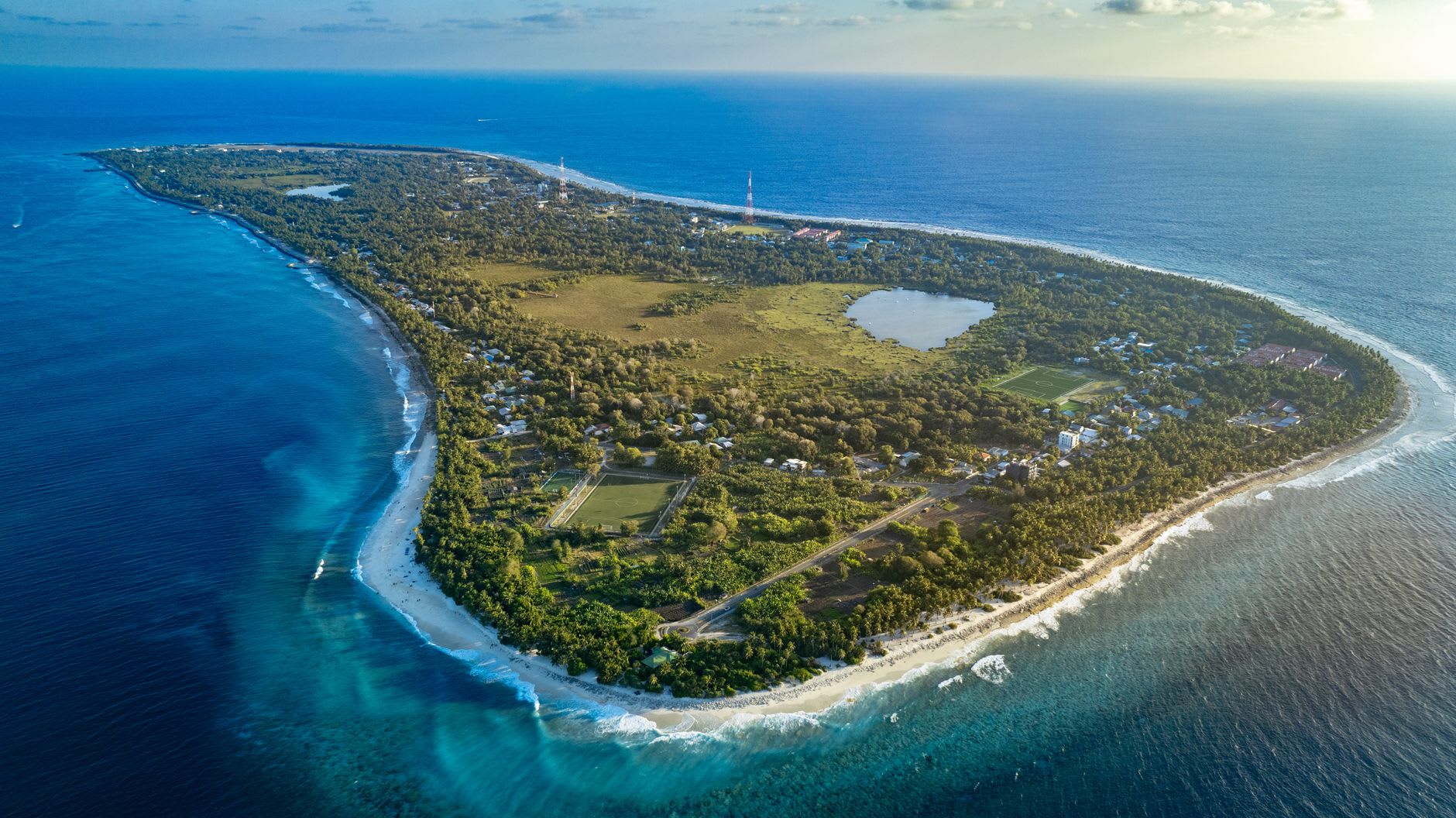
Addu’s odd character comes partly from its geography — it’s the southernmost atoll in the country, closer to Sri Lanka than to Malé — and partly from its history. The British Royal Air Force operated a base at Gan from 1941, using it as a strategic staging point during the Second World War and maintaining a presence here until 1976. The RAF runway is still there, now serving as Gan Airport, and the coral-stone buildings of the former base cluster near the southern shore — officers’ quarters, a cinema, a church, all built from the same local material in a utilitarian tropical colonial style that looks both out of place and deeply embedded, depending on the hour. A small heritage area around the old base has been preserved with varying degrees of care, and wandering through it in the morning — when the heat hasn’t fully arrived and the buildings cast long shadows — is one of the stranger architectural experiences I had in the Indian Ocean.
The lagoon at Addu is enormous by Maldivian standards, and the diving within it accesses British Loyalty, a sunken Royal Fleet Auxiliary oiler that now sits in fifteen metres of water near Gan harbour, colonised by hard and soft corals and inhabited by schools of jackfish and the occasional barracuda drifting through the engine room. I descended along the hull in warm water so clear the wreck was visible from the surface and spent forty minutes moving slowly through what is now entirely a reef, the original function of the ship invisible beneath decades of marine growth. You know intellectually that it’s a warship. What you see is a coral garden shaped like a warship, which is a different and stranger thing.

The people of Addu — who call themselves Adduan and speak a dialect distinct enough from standard Dhivehi to require translation for some Malé residents — have a history of cultural independence that expressed itself most dramatically in 1959, when the southern islands briefly declared a separate republic called the United Suvadive Republic before rejoining the Maldives three years later. This history gives Addu a particular quality of self-containment that you feel in conversations with older residents — a sense that this atoll has its own story that runs parallel to the national one, intersecting at various points but never quite merging.
The city, administratively called Addu City, is the second largest urban area in the Maldives, which in practice means several connected island communities with markets, schools, clinics, and a rhythm entirely independent of the tourist calendar.
When to go: November through April is the dry season and gives the best diving visibility in the lagoon and outer reef. The wreck of the British Loyalty is diveable year-round. Flights from Malé take around ninety minutes and Gan Airport is directly on the island, so you walk off the plane into the atoll.