Andasibe-Mantadia
"The indri's call hits you before coffee. Before reason. Before you've decided you're a person who cries at animals."
The train from Antananarivo used to stop here. The tracks are gone now, or at least the trains are, and you arrive instead by taxi-brousse on a road that elbows its way east into the highlands until the air turns wet and the roadside stalls start selling vanilla pods and live chameleons in small bags. I told myself I wasn’t going to photograph the chameleons. I did not photograph the chameleons.
Andasibe sits at about 900 meters, just close enough to the capital—roughly three hours—that it functions as Madagascar’s first genuine wildlife stop for most visitors. That proximity could make it feel like a zoo annex. It doesn’t. The forest absorbs you.
The Call That Owns the Morning
At dawn, the indri announce themselves before any alarm could. The sound is something between a whale song and an air-raid siren, pitched high and carrying through maybe two kilometers of canopy. It’s mournful and completely alien and the first time I heard it from my guesthouse bed I sat up straight and couldn’t tell if it was beautiful or terrifying. Both, probably.
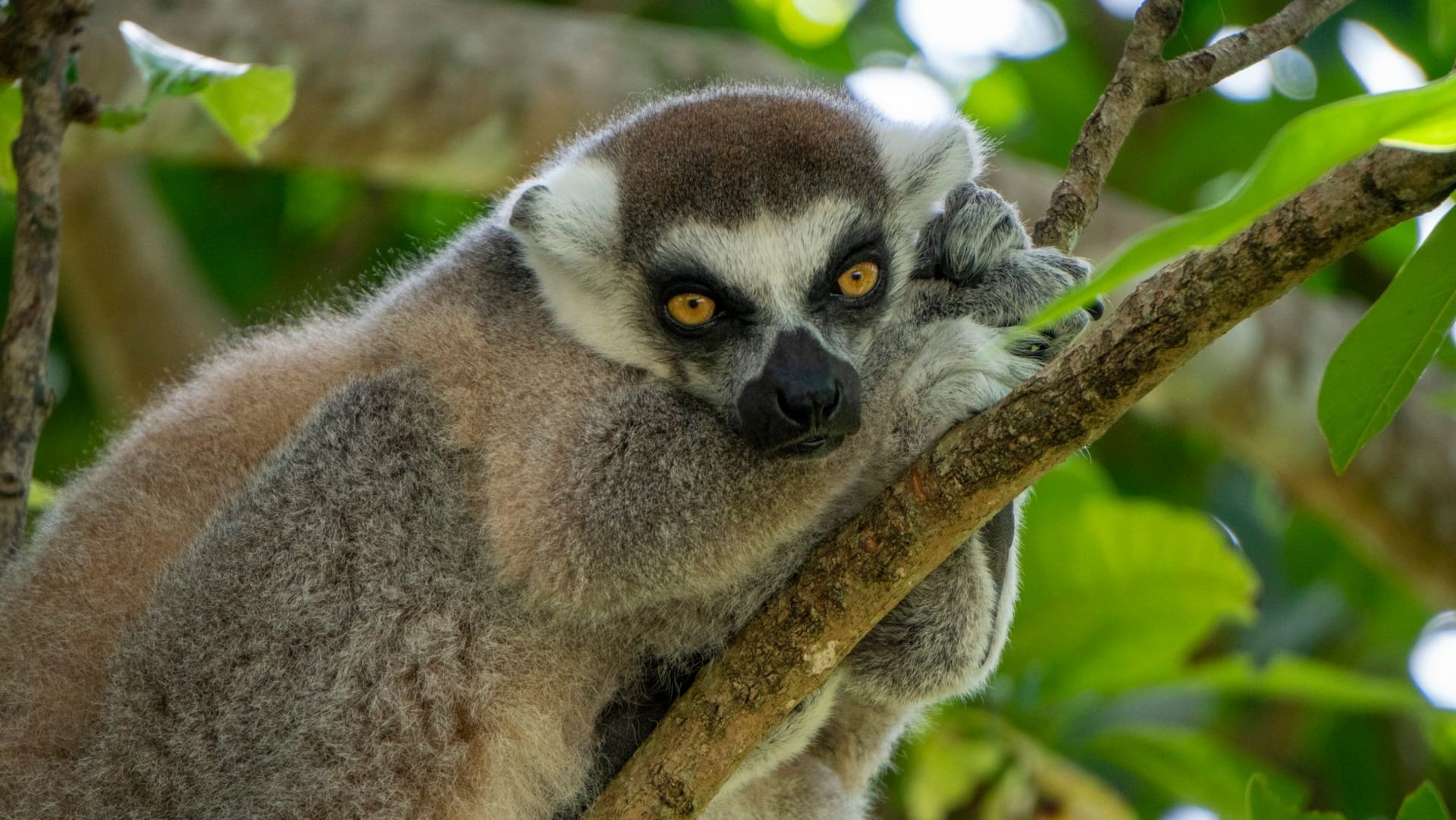
Guides in Andasibe are mandatory inside Analamazaotra Special Reserve and non-negotiable in terms of usefulness. Mine, Faly, located a family of indri within twenty minutes of entering the forest. The animals sat about eight meters up, sun-bathing with the particular dignity of creatures that have decided humans are boring. Their eyes are orange. Their calls, up close, vibrate your sternum.
After the Stars
The reserve gets busy mid-morning as tour groups arrive from Tana on day trips. If you’re staying overnight—which you should—the afternoon and early morning belong mostly to you. The night walks are something else: satanic leaf-tailed geckos pressed flat against bark, mouse lemurs with eyes like drops of amber oil, sleeping chameleons gone rigid on branch-tips as if painted there.
I went out with a local guide named Jacky who spoke in urgent whispers and pointed his red-light torch at things I would never have seen alone. A sleeping woolly lemur, round as a fist. A stick insect the length of my forearm. The forest at night operates on rules you weren’t taught.
What the Village Holds
The village of Andasibe itself is small and unassuming—a main street, a few hotels built around timber and thatch, women selling dried flowers and woven baskets near the park entrance. The guesthouses here tend toward simple and cold-shower, but a couple of lodges on the reserve’s edge have managed warmth and decent cooking without tipping into eco-resort smugness. I ate rice and zebu stew two nights running and had no complaints.
The community guides program is genuinely well-organized: your fees go somewhere visible, and the guides know their patch with the kind of intimacy that only comes from growing up inside it.
When to go: April through October offers dry, clear conditions and the best visibility inside the forest. The indri can be heard year-round but are most active in the cooler dry months. Avoid late January through March when cyclone-season rains can make the eastern highlands miserable and roads unpredictable.