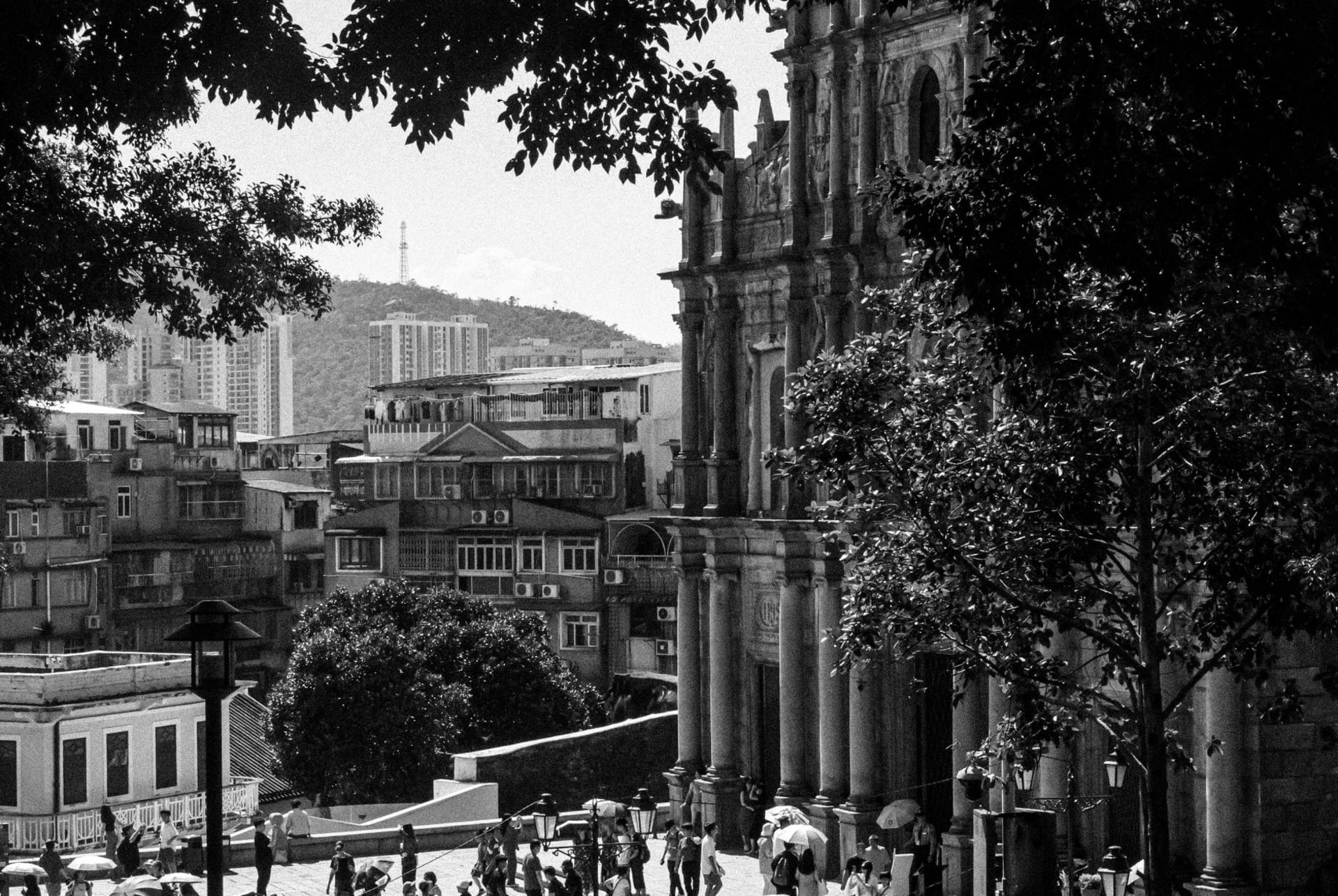
Ruins of St. Paul's
"The church is gone. The front wall stayed. That's the part that matters."
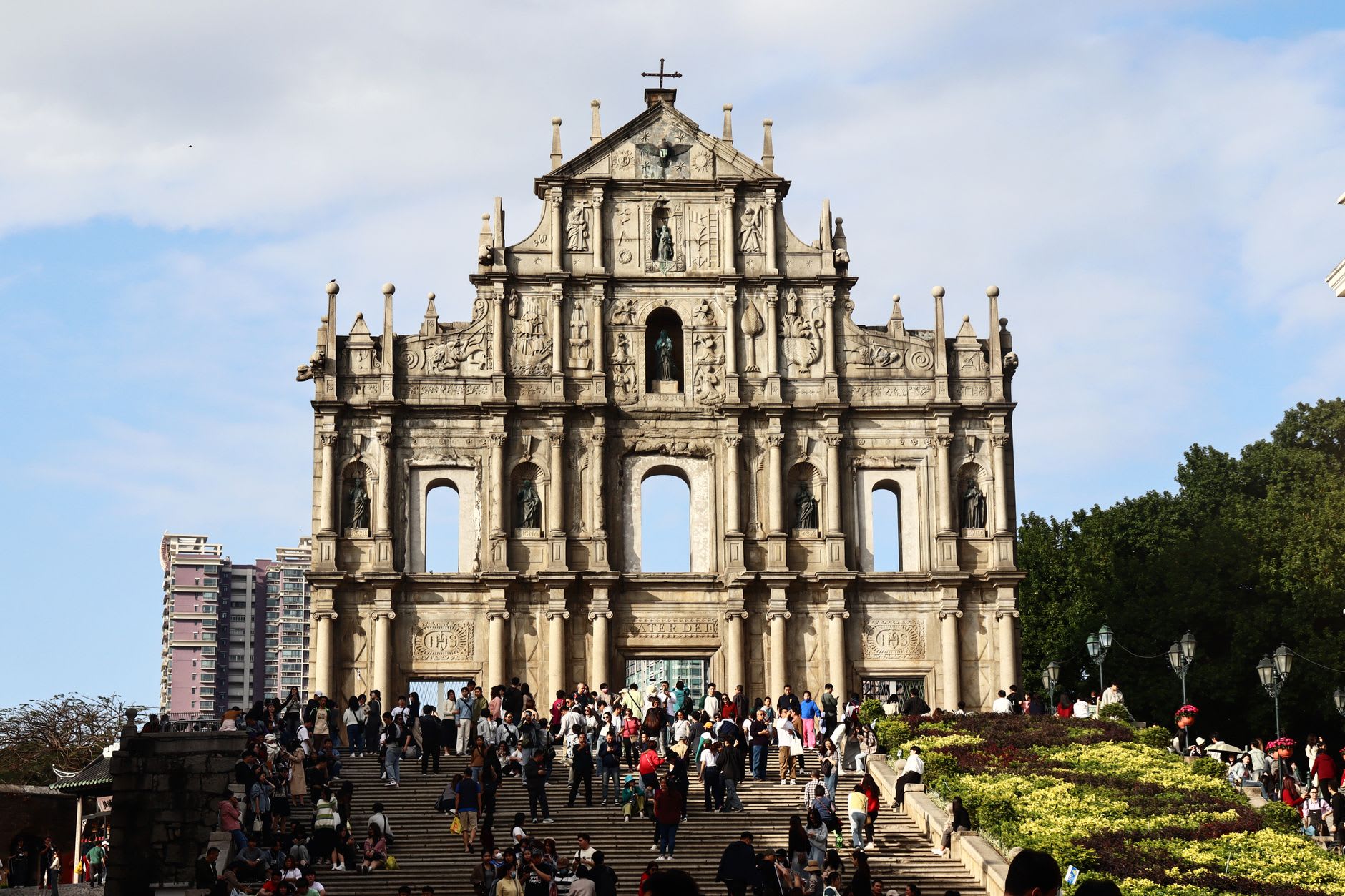
The steps leading up to the Ruins of St. Paul’s are long and wide and packed at almost every hour of the day with people taking photographs. This is unavoidable, so I stopped fighting it. The crowd, in its way, is part of the experience — because the ruins were always a public monument, always a place where the city came to orient itself, and the fact that people still climb these steps to document the facade is not so different from what people have been doing here since 1602, when the church was first completed by Japanese Christian exiles and Jesuit priests.
What the facade is — technically, architecturally — is a five-tier stone screen carved in a blend of European baroque and Chinese decorative motifs, topped by a dove representing the Holy Spirit surrounded by stars and instruments of the Passion. Look closely and you’ll find a Portuguese caravel sailing through stone waves, a multi-headed hydra being trampled underfoot, Chinese chrysanthemums mixed with European lilies. The syncretism is not accidental. The Jesuits were pragmatists, and this building — the largest Christian church in Asia when it stood — was designed to make sense to multiple audiences simultaneously. The fire of 1835 destroyed the wooden interior and left only this extraordinary stone front. The wall became, by accident, the most honest monument in Macau: a facade with nothing behind it, a structure whose entire point is its exterior.
I walked through the arch at the facade’s base and stood inside what was once the nave. There is a bronze underground museum here now — the foundations of the original church, a small crypt, relics behind glass — but mostly what you stand in is open air. The stone frame rises around you against the sky. On the afternoon I visited, clouds were moving fast over the hill, and the light shifted every few minutes, turning the stone from pale gold to deep amber. From this reverse angle — standing where the altar once was, looking out through the arch toward the street — you see Macau differently. The historic district spreads below. The pastel buildings of the neighborhood cascade down the hillside. And somewhere behind you, invisible from this angle but always present, the casino towers of the Cotai Strip rise above everything else. The ruins hold their ground.
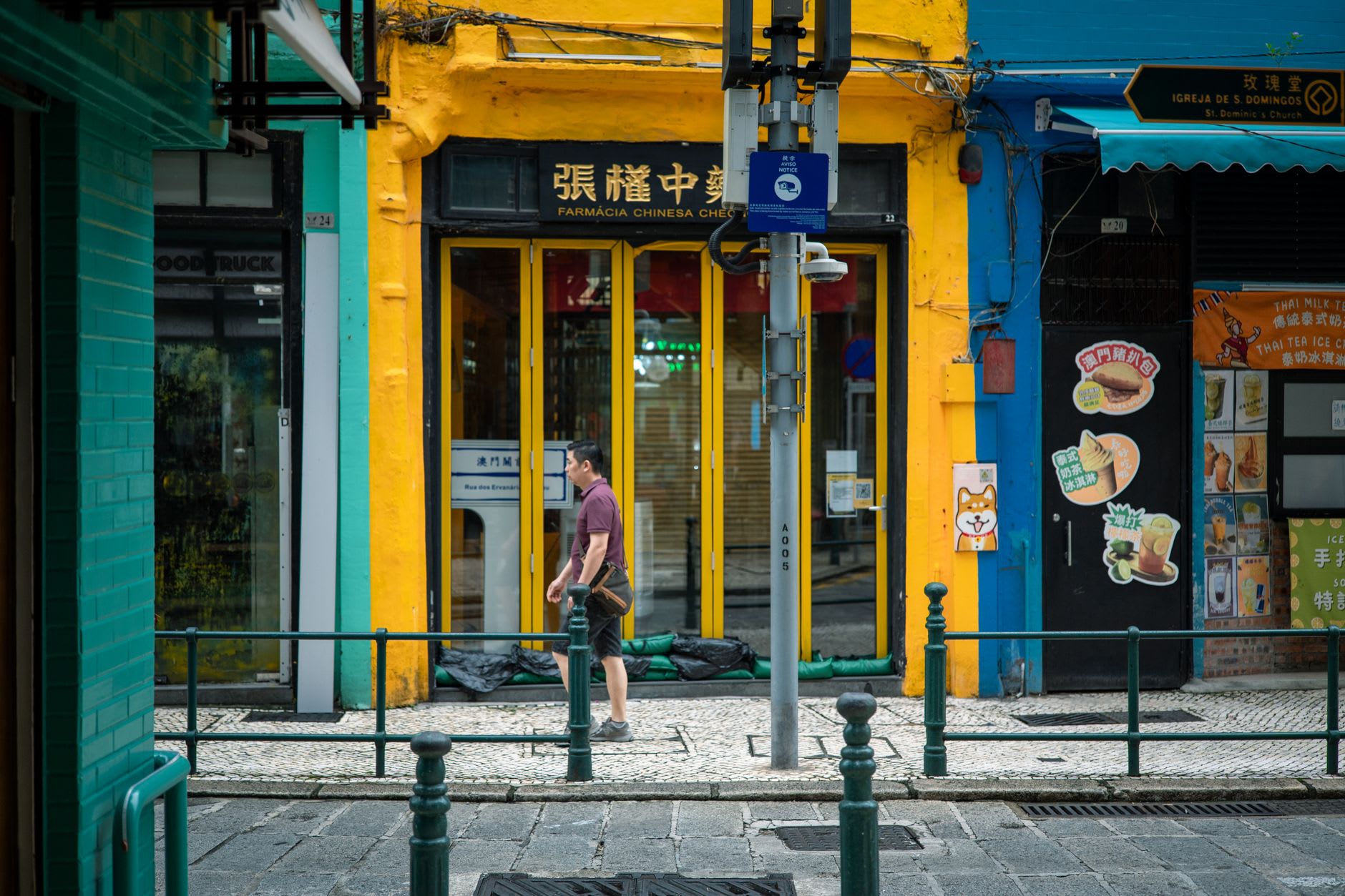
The neighborhood immediately surrounding the facade rewards slow walking. The streets that fan out from the foot of the steps are lined with shops selling almond cakes, beef jerky, and Portuguese wine — tourist commerce, yes, but also genuinely local products that people actually eat. I bought a box of almond biscuits from a woman who had been selling them from the same counter for twenty years, she told me, in the same breath as she offered a sample. The biscuits were dry and faintly sweet and tasted like something you’d find in a monastery, which is approximately where the recipe came from.
When to go: Late afternoon, when the light falls directly on the facade and the stone warms to amber. Evening is beautiful for the illuminated facade. Early morning is quieter but the light is behind the stone and the effect less dramatic. Weekday mornings see the smallest crowds.