Mullerthal
"Every turn in the gorge revealed another boulder the size of a house that the forest had quietly decided to swallow."
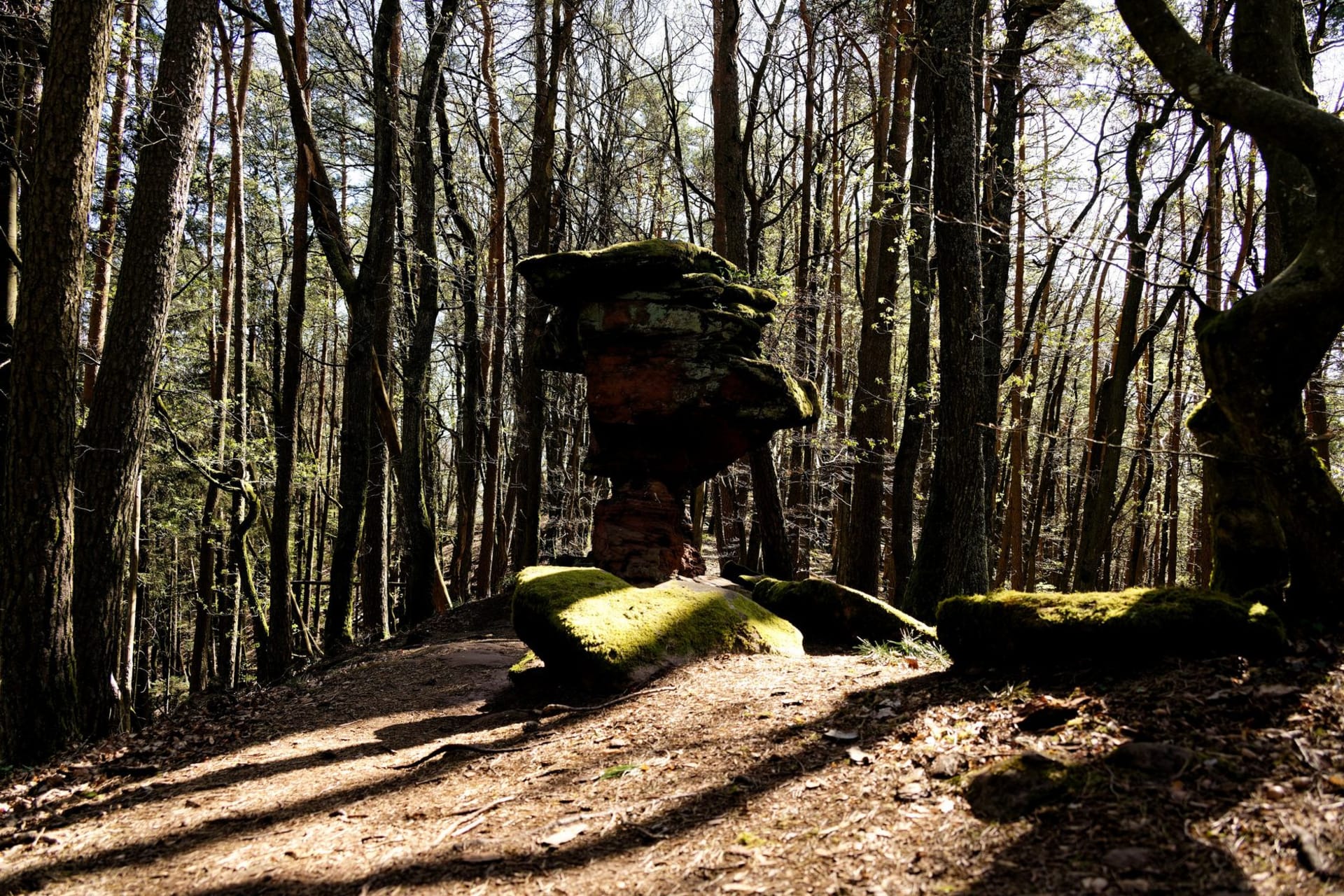
The name sounds like something you’d order at a bakery, but Mullerthal turns out to be a place of genuinely dramatic geology — Triassic sandstone eroded into corridors and crevices and free-standing towers that the surrounding beech forest has been slowly digesting for centuries. I arrived expecting scenic and found strange. That’s a good trade.
The Gorges
The Mullerthal Trail runs 112 kilometers in total, broken into three loops that can each be walked in a day. I did the second route — the one that passes through the Schiessentümpel waterfall and the Wolfsschlucht gorge — and spent most of it with my hands on rock, not because the terrain was dangerous but because the sandstone is so textured and close that you can’t help touching it. The Wolfsschlucht is barely a meter wide in places, and the walls rise four or five meters above you, dripping with seeping water and completely covered in moss the color of old limes. In that narrow dark, with the creek running below the stepping stones, you stop thinking about Luxembourg’s size and just think about the rock.
Water and Light
The Schiessentümpel — three tiered waterfalls over an arched stone bridge — appears on every Luxembourg tourism poster, and justifiably so. It’s a place that knows it’s beautiful and doesn’t bother being modest about it. I arrived in early morning when the light was still low and sideways, and the spray from the falls caught it in a way that made the whole scene briefly golden. Lia took about forty photographs. I watched a family of ducks navigate the plunge pool with the casual confidence of regulars. By ten o’clock there were tour groups and the spell broke, so: go early.
The Village of Mullerthal
The village itself is a cluster of houses along the Black Ernz river with a campsite, one restaurant, and the quiet self-possession of a place that knows people come for the landscape, not the town. I ate trout from the local streams — pan-fried, with butter and dill, entirely unfussy — at a restaurant where the owner brought out bread without being asked and refilled the water carafe twice without being asked either. That kind of hospitality feels like its own form of local character.
Beyond the Gorges
The wider Mullerthal region includes the ruins of Beaufort Castle, the valley of the Sure river near Berdorf, and a series of plateau viewpoints above the gorges where the forest opens up and you can see across into Germany on clear days. Berdorf itself sits on a sandstone shelf above the trees and has a clutch of trails that radiate out toward the gorges from the village. It’s quieter than the main Mullerthal entry points and the marked paths are less worn, which means you occasionally have a boulder field entirely to yourself.
When to go: Late April through June for forest greenery without the summer crowds, or October for amber light and near-empty gorges. Avoid the Schiessentümpel between 10am and 3pm on summer weekends — it gets genuinely congested. The trails are hikeable year-round but can be icy in January and February; gaiters and poles are worth it.