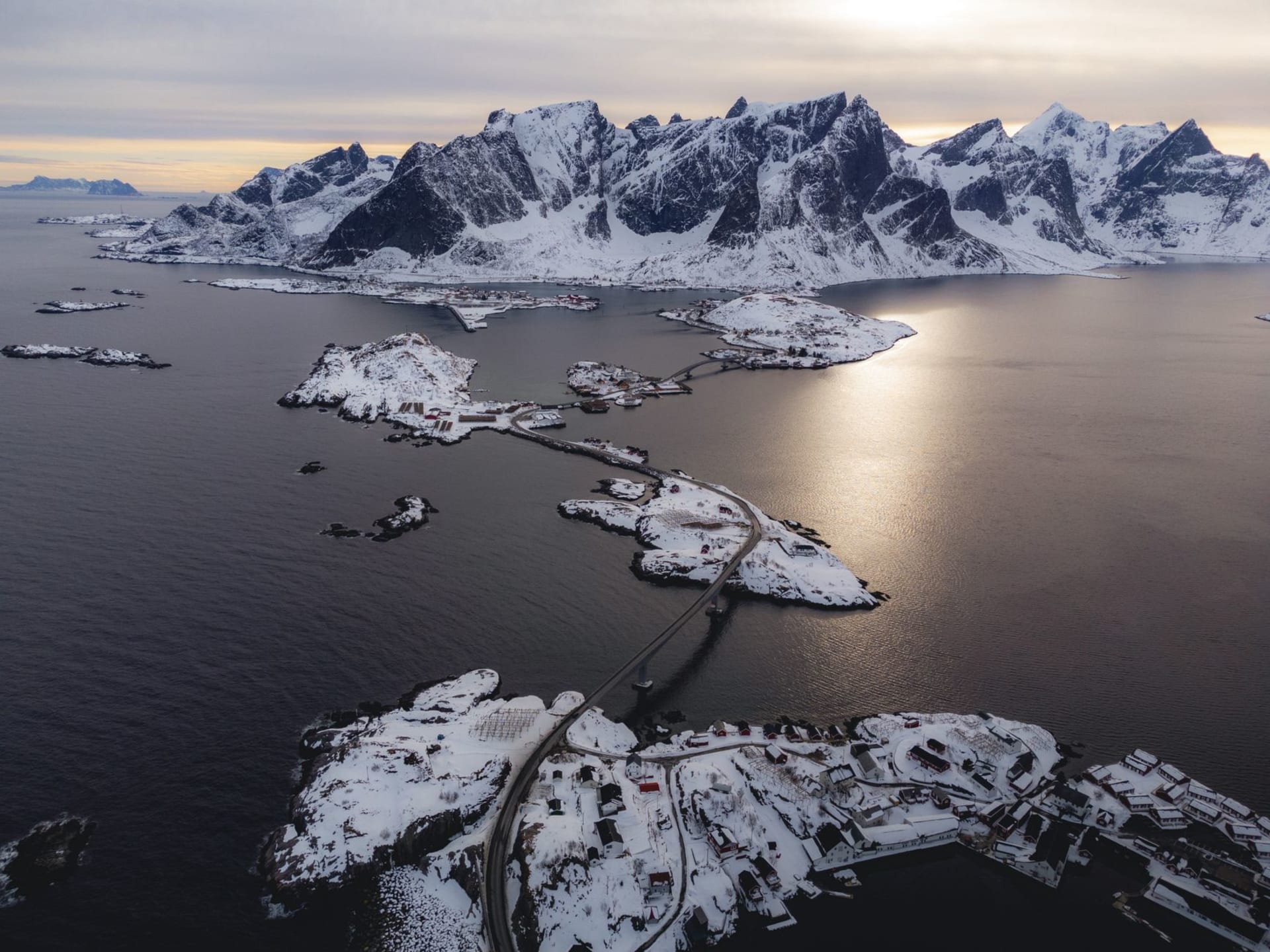
Ramberg
"The sand at Ramberg is so white and so cold that you stand there genuinely questioning whether you have the right country."
Nobody warned me about Ramberg. I had driven through the village without stopping, heading south toward Nusfjord, when I caught a glimpse of white through the car window that did not belong. I turned around at the first opportunity, drove back, parked, and walked down to the beach with the distinct feeling of having accidentally arrived somewhere else.
Rambergstranda is a long arc of white sand — genuinely white, not the grey or ochre you associate with northern beaches — backed by grass and small dunes, framed by the inevitable Lofoten peaks and opening onto the Flakstadfjorden. The water is turquoise in the way that tropical water is turquoise: a colour created by depth and sand and clarity, without any warmth to explain it. The temperature, when I waded in up to my ankles in early April, suggested the sea had not received the memo about what the colour implied. My feet went numb in approximately thirty seconds.

The village of Ramberg itself is small and functional, the main settlement of Flakstadøya island — a church, some houses, a petrol station, a small shop that closes at five. But in a landscape dominated by fishing villages clinging to fjord edges, Ramberg’s beach gives the place a completely different character. In summer, Norwegians come here specifically for the swimming — not long swims, because the water temperature never gets much above twelve or thirteen degrees, but the kind of Nordic relationship with cold water that involves running in quickly, surfacing with a shout, and coming out pink and extraordinarily awake.
The walk along the beach at low tide takes about twenty minutes. In the autumn, with the grasses behind the dunes turning rust and gold and a cold wind coming off the water, it has a quality that I can only describe as melancholy in the best sense — the kind of beauty that is improved rather than compromised by being slightly uncomfortable. I walked it twice, in opposite directions, and both times came back to the car feeling clearer than before.

South of Ramberg, the road continues to Nusfjord and eventually to Sund, a village with a small but excellent blacksmith museum in a converted workshop — the smith still works there — and a view of stacks and skerries offshore that is worth stopping for. The two make a good afternoon: beach, then smithy, then coffee somewhere before the light goes.
When to go: The beach is most surreal in winter and early spring, when the sand is dusted with snow and the turquoise water contrasts with frozen ground. Summer brings proper Scandinavian beach days and the highest chance of a swim that doesn’t cause immediate regret. September and October are excellent for solitude and the autumn color behind the dunes.