
Nusfjord
"Walking into Nusfjord on a foggy morning, I had the distinct feeling I had interrupted something that had been happening continuously since 1890."
Nusfjord sits at the end of a single-track road off the E10, which means most people on the islands never turn down it. This is Nusfjord’s first gift: the journey itself filters out a significant fraction of casual visitors before they even arrive. By the time you navigate the last few kilometres through birch forest and emerge at the fjord edge, you feel you have earned the place a little.
The village is one of the best-preserved nineteenth-century fishing communities in Norway — a designation that does not quite capture what it actually feels like to walk into it. The rorbu here are painted in the traditional red and ochre, their wooden planks weathered to silver in the gaps between coats of paint. The boathouses are still functional. The general store, operating since 1878, sells dried fish, coffee, and the kind of provisions that have been sold here for a hundred and forty years. When I arrived on a grey October morning with a light drizzle coming off the fjord, there were no other visitors and the only sound was water dripping from the roof of the nearest boathouse.
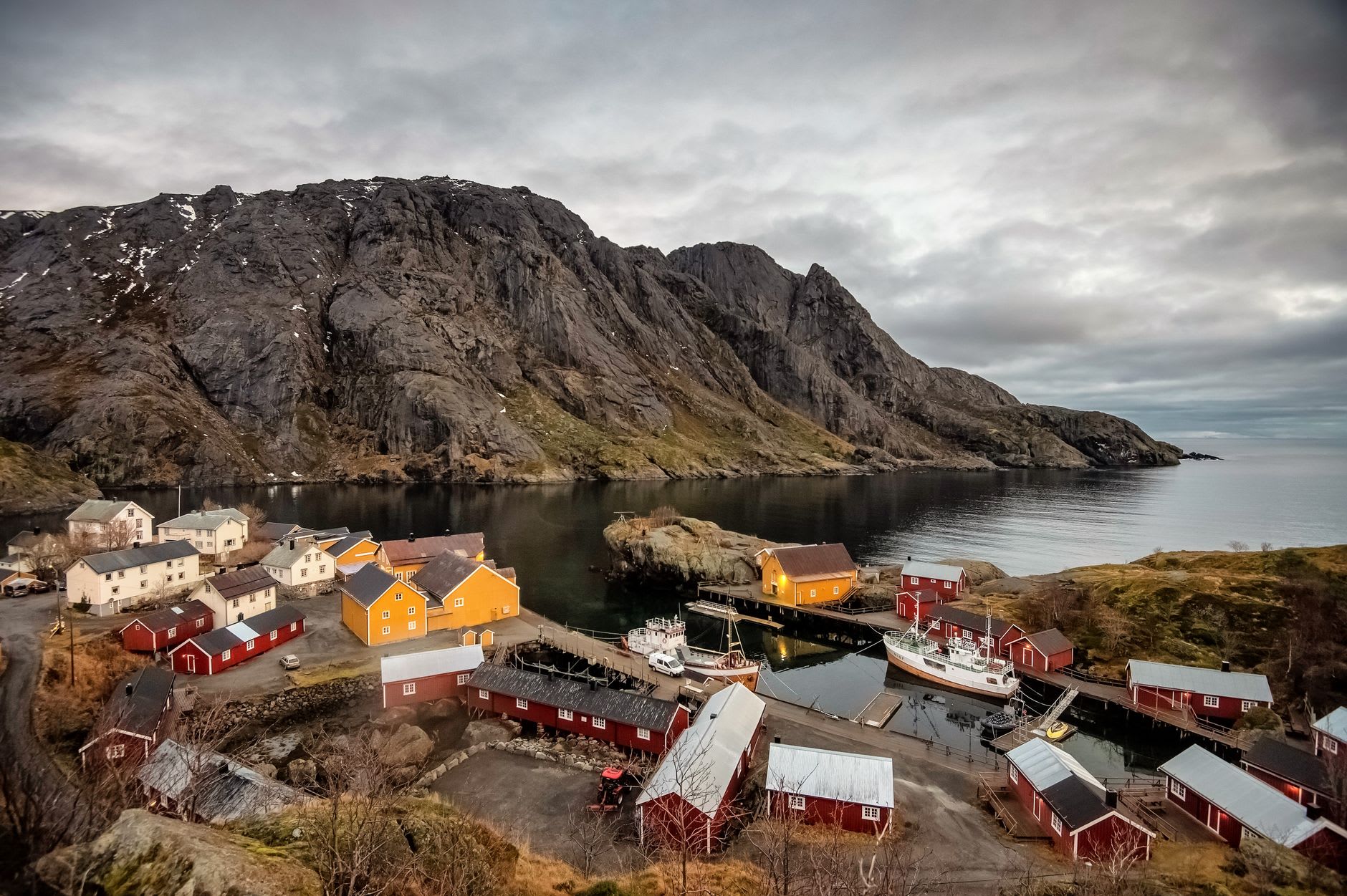
The stockfish operation here is smaller than the industrial operations elsewhere on the islands, but more comprehensible. You can see the wooden drying racks — the hjell — from the water, the split cod hanging in their thousands through the winter months, the smell occupying a radius around the village that varies with the wind. I stood downwind one morning and thought about how this smell — rich, deeply saline, not unpleasant if you are prepared for it — was the smell of medieval trade, of Hanseatic merchant ships, of a commerce that funded these islands for six centuries before tourism arrived.
The Norwegian government designated Nusfjord a protected heritage site in the 1970s, which means the buildings cannot be significantly altered. The result is a village where a 2020s visitor and an 1890s visitor would recognise most of the same structures. This sounds like a charming tourist fact. Standing in the village in the rain, it feels like something weightier — a genuine commitment to a form of continuity that most places quietly abandoned decades ago.
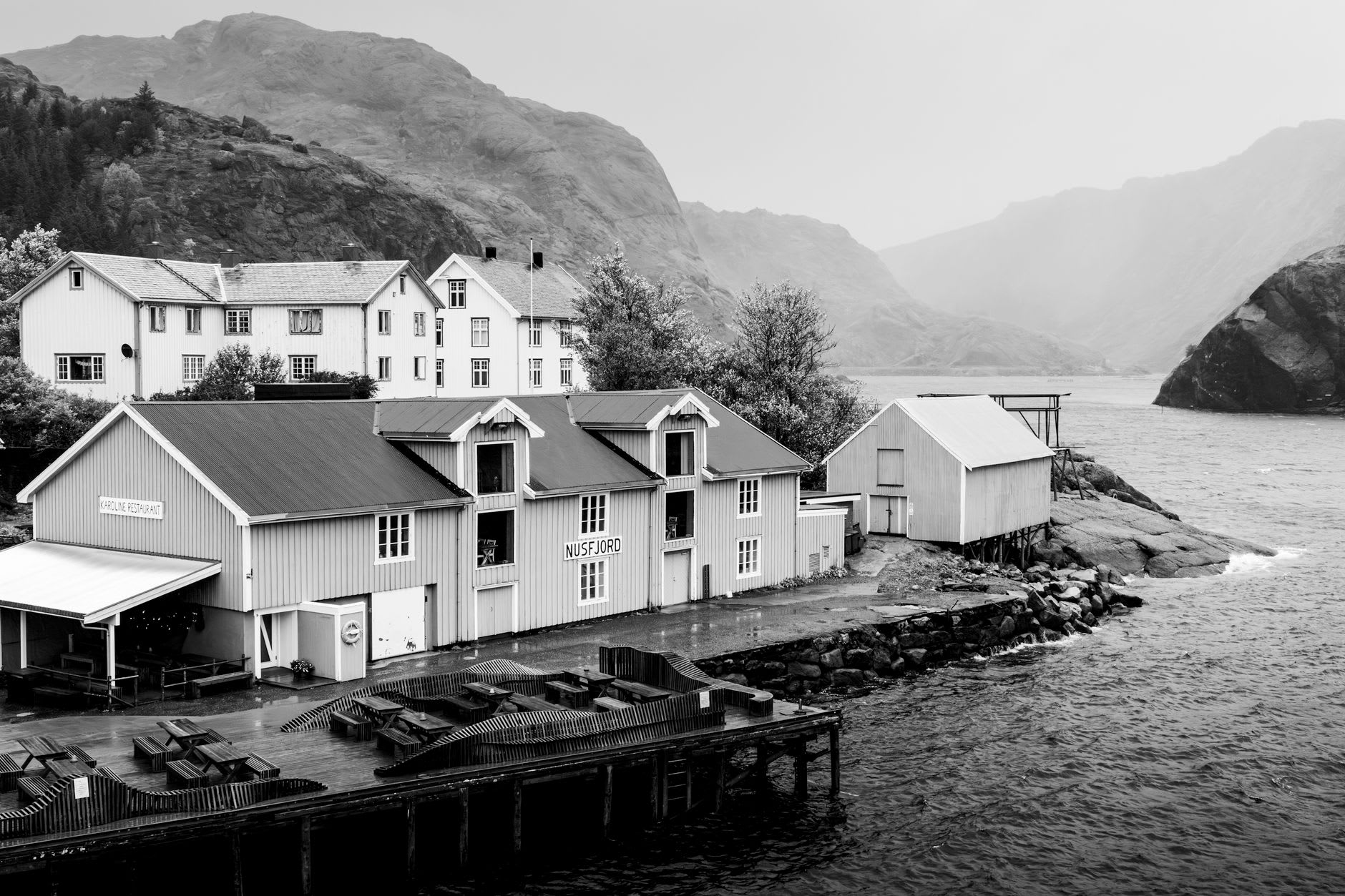
Several of the rorbu are now available as accommodation, which means you can sleep in a building that was designed for fishermen who had come down from northern Norway with the cod fleet in the nineteenth century. The rooms are simple, the walls are thick, and the sounds at night are the fjord moving and nothing else. I slept more deeply in Nusfjord than I have almost anywhere.
When to go: October through April for the genuine village atmosphere without the summer crowds — the heritage designation means the village doesn’t change but the visitor numbers do. January and February bring stockfish season and the highest concentration of dried cod on the racks. Summer is fine but book accommodation months in advance; the rorbu fill completely.