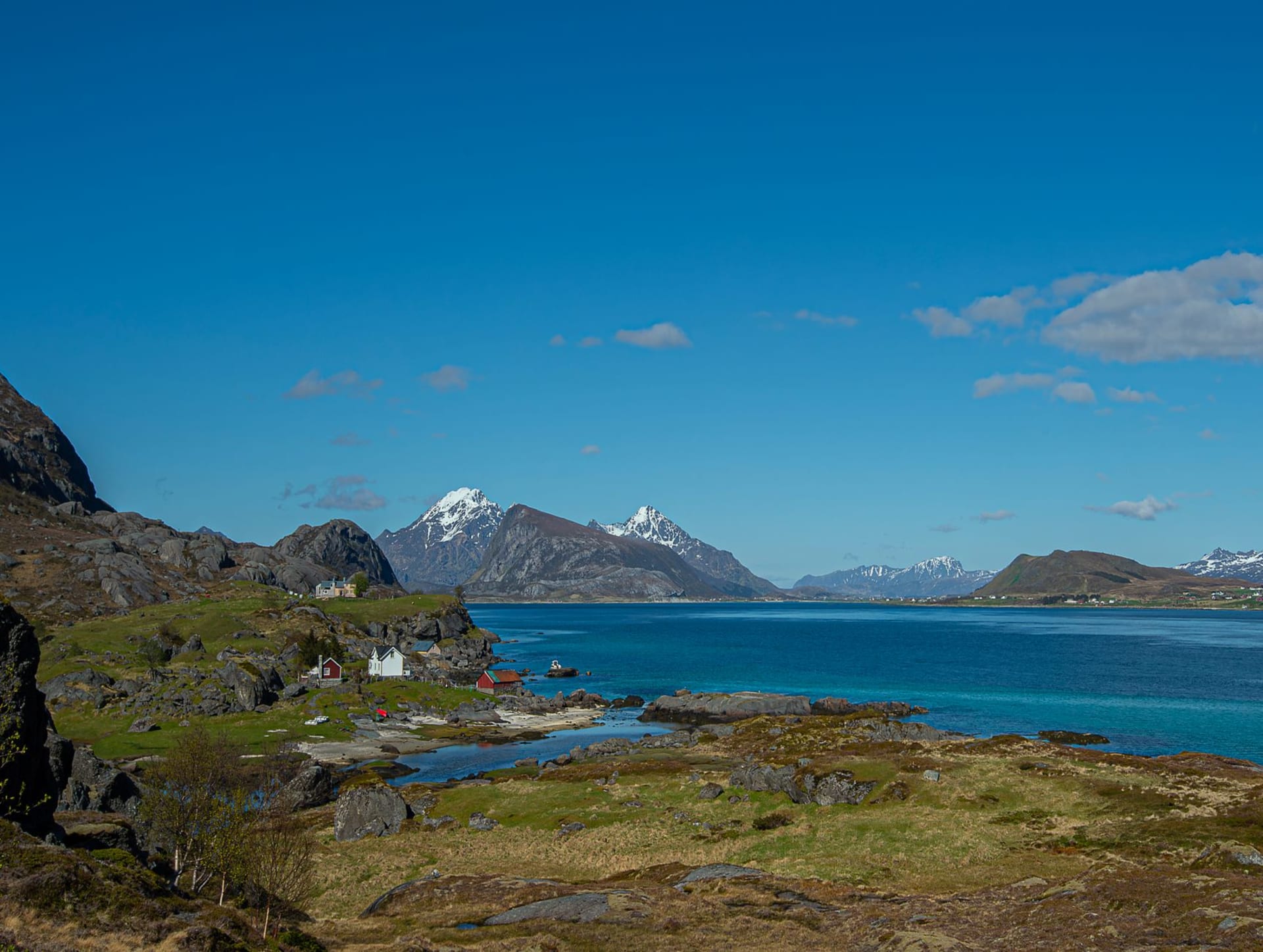
Kabelvåg
"Kabelvåg is what Svolvær might be if it had stopped growing in 1920 — which turns out to be exactly the right size."
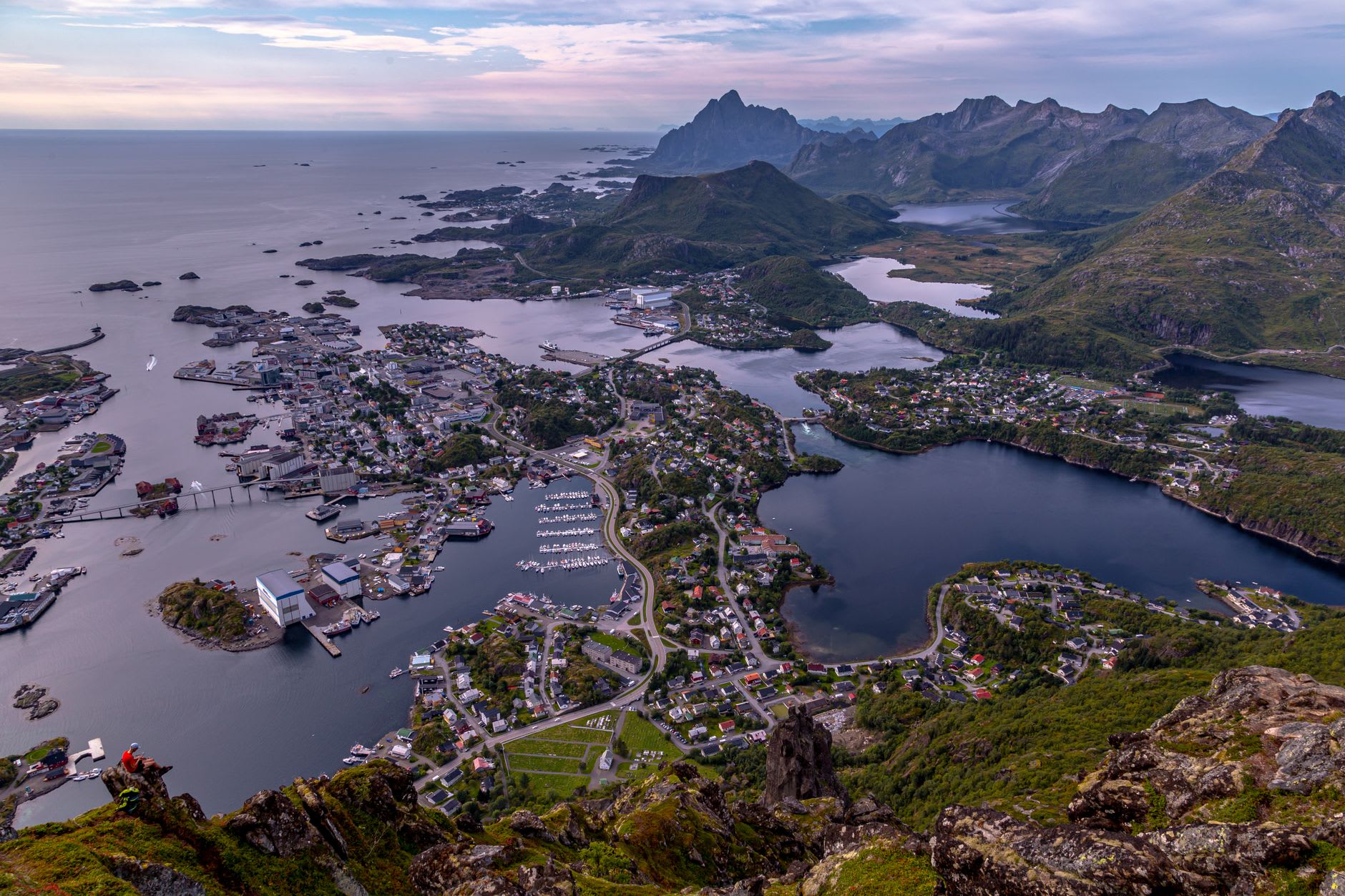
Kabelvåg sits ten minutes by car from Svolvær, which means it exists in the permanent shadow of its larger neighbour and benefits enormously from that shadow. The tourists go to Svolvær. A certain kind of traveller continues another few kilometres to Kabelvåg and finds a town that moves at a different pace, has a harbour with fishing boats that are still actually used for fishing, and contains one of the most improbable buildings in northern Norway.
The Lofoten Cathedral — Vågan Church — is made of wood and seats 1,200 people, making it the largest wooden church in Nordland county and one of the largest in Norway outside the cities. It sits on a hill above the harbour, painted ochre-white, its spire visible from the water well before the town itself comes into view. Inside, it is spare and luminous, the pale wood of the pews and walls catching the particular northern light that comes through tall windows in winter and turns everything the colour of honey. I went in on a Tuesday afternoon when the building was empty and sat for half an hour in the kind of silence that old timber produces: not absolute, but absorptive.
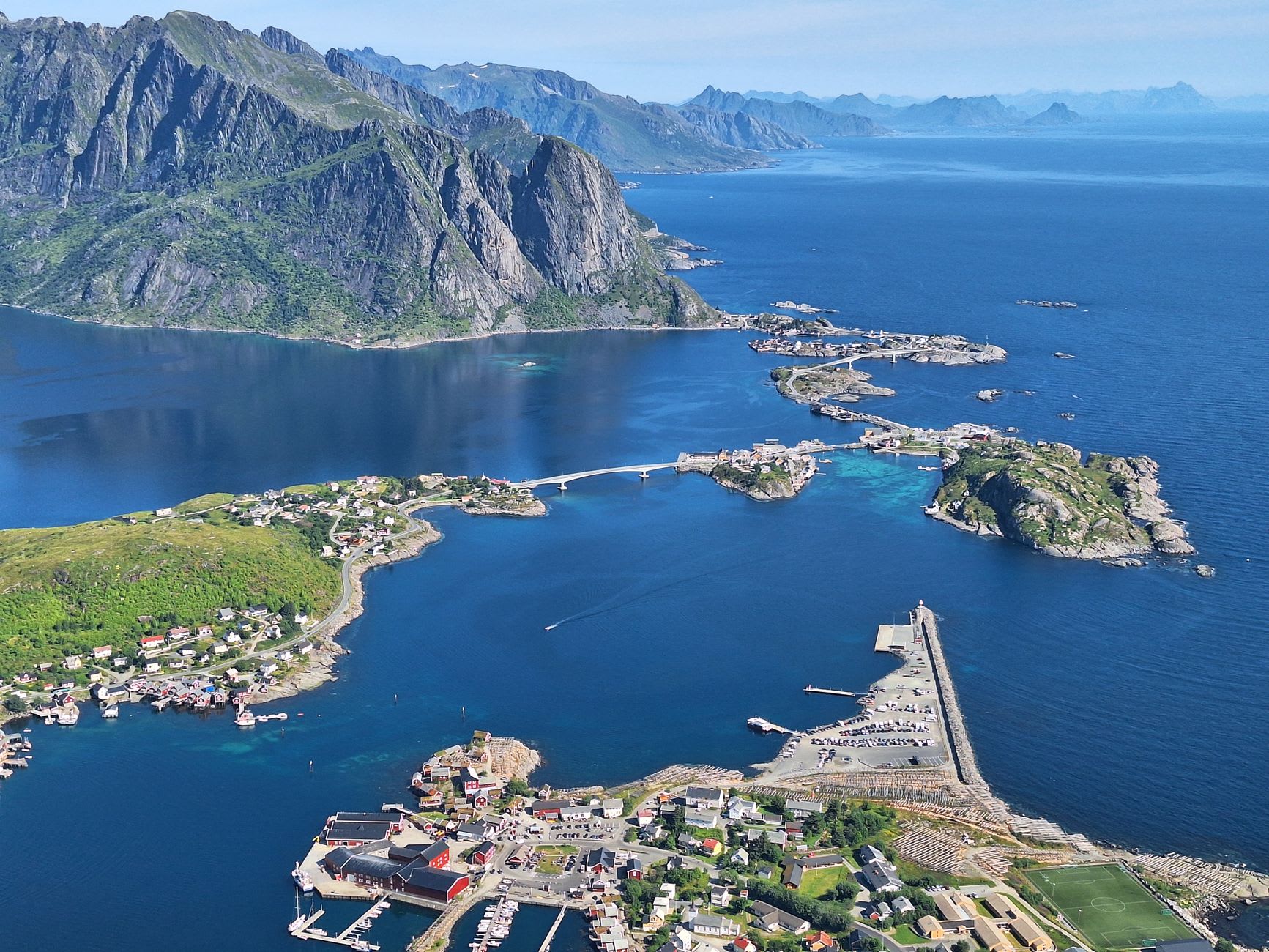
Kabelvåg is, historically, the oldest town in Lofoten — a trading and fishing hub since at least the twelfth century, when King Øystein built the first rorbu here to provide shelter for fishermen during the winter cod season. That original function — a place that fills up with people during the winter fishing months and empties out the rest of the year — still leaves traces in the town’s character. In February and March, the harbour fills with fishing vessels and the streets have a purposeful, working quality. In July, it is a pleasant tourist town with a good café and views. But February Kabelvåg is the real thing.
The Lofoten Aquarium, housed in a building shaped like a cod on the harbour, is better than it has any right to be. The tanks are large and well-maintained, the species represented include everything that actually lives in these waters — wolffish, skate, Atlantic cod in their pre-dried state — and there is a seal pool outside where the residents have developed opinions about feeding time that they express with some urgency. I spent two hours there with a map that had clearly been designed for children and found it entirely adequate.
The Lofoten Museum — Lofotmuseet — occupies a collection of historic buildings on the water’s edge and tells the history of the islands through the stockfish trade. It is the oldest open-air museum in northern Norway and does what good local museums do: it makes you care about something you had no particular reason to care about before you arrived. I left knowing significantly more about the economics of dried cod than I had any expectation of learning that morning.
When to go: February and March for the working-harbour atmosphere of skrei season and the church at its most luminous in low winter light. The aquarium is excellent year-round. Summer is pleasant and Kabelvåg handles crowds better than smaller villages, but the town’s character is most distinctive in winter when the fishing fleet is in.