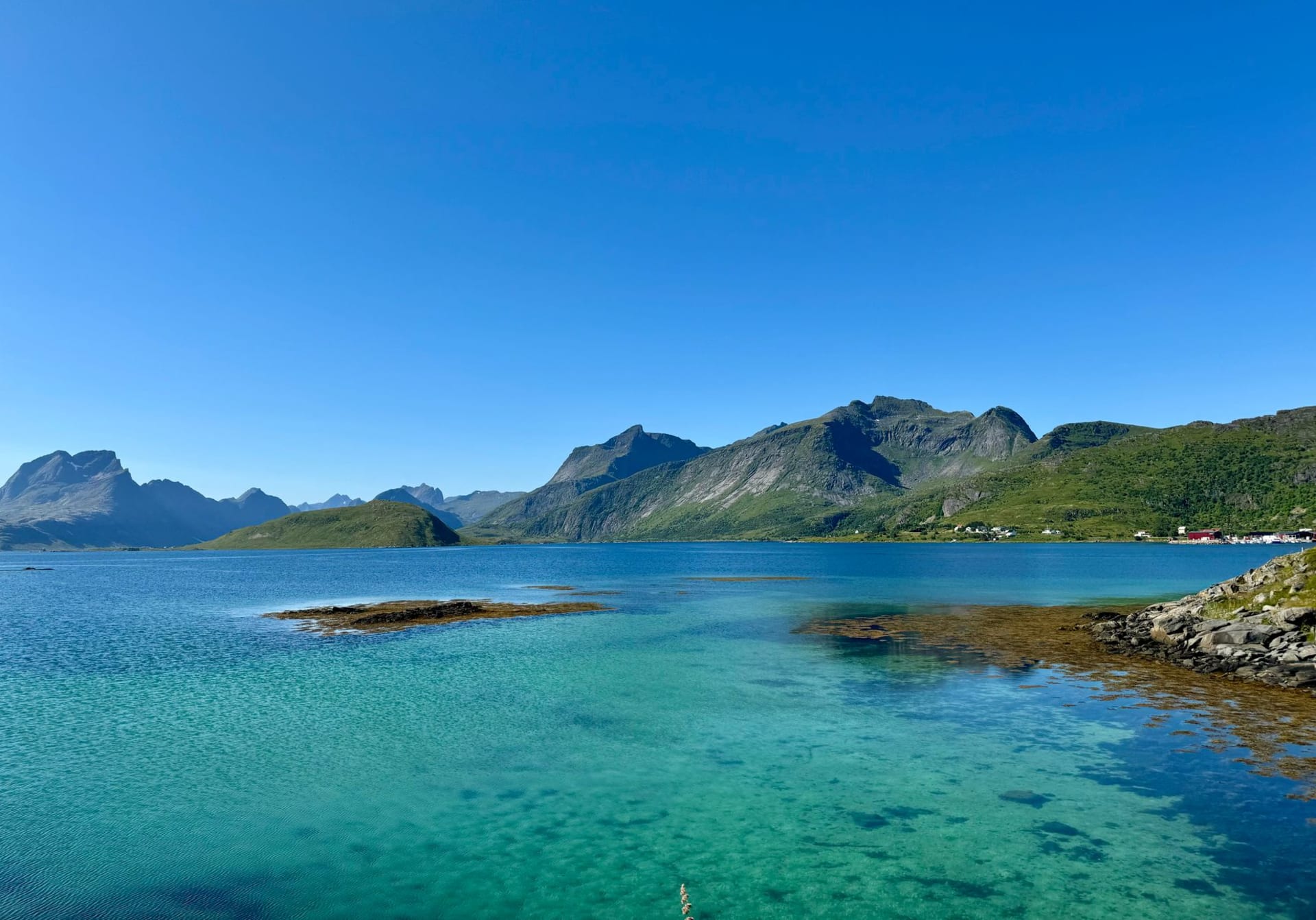
Hamnøy
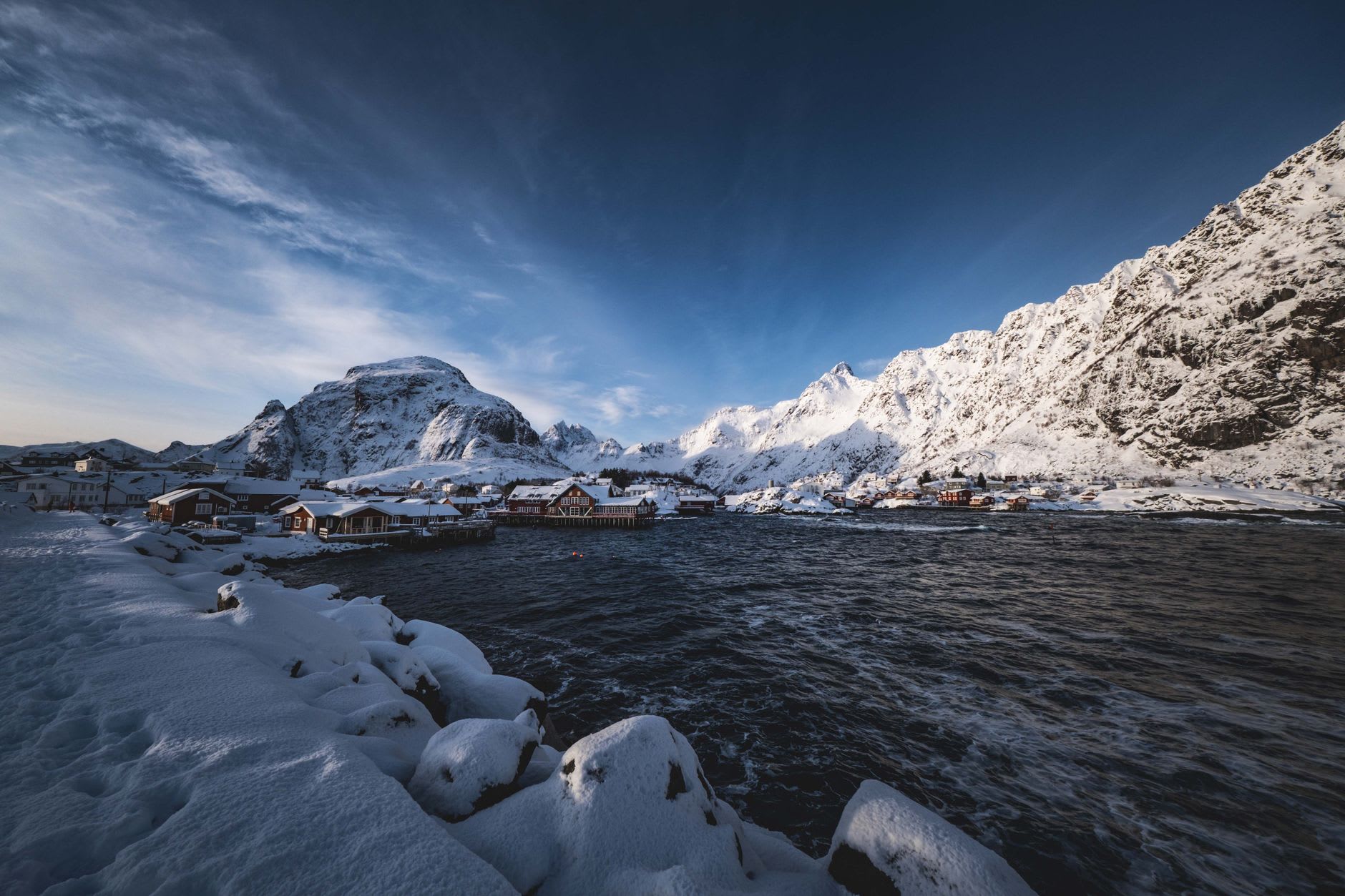
"Hamnøy is a single frame — but standing inside that frame at dawn in winter, you understand why people keep coming back to make it."
There is a spot on the bridge between Hamnøy and the main road where photographers set up tripods before dawn and shoot the same composition: red rorbu on the right, water below, mountains straight ahead. I know this because on two mornings I was one of them, shivering in gloves that weren’t quite warm enough, waiting for the light to shift. What I did not expect was how different the same view could be from one morning to the next. The first morning was clear, the mountains hard-edged and snow-white, the water a perfect mirror. The second was half-cloud, the peaks smudged and mysterious, the rorbu glowing against a grey that moved and changed as I watched.
Hamnøy is small enough that you can walk its entire length in three minutes. It sits on a small island connected to the larger island of Moskenesøya by a bridge, and its permanent population is somewhere in the single digits. What it has — beyond the photogenic waterfront — is a quality of intimacy that larger places cannot manufacture. The rorbu along the water are real fishing huts converted into accommodation, and staying in one means sleeping above the fjord, waking to the sound of water against pilings, and having the famous view to yourself before the day-trippers arrive from Reine.
I ate dinner one evening at a small restaurant in the village and sat next to a Norwegian fisherman in his sixties who had come down from Tromsø for the skrei season and was staying in the same rorbu complex as me. He ordered the same thing I did — the fish of the day, which was cod — and we shared a bottle of local beer and talked for two hours in a mixture of his English and my phone’s translation app. He had been making this journey for thirty years. He told me the rorbu used to be free for fishermen; now the fishermen pay the same rate as the tourists. He said this without bitterness, just as a fact about how things had changed.
The sea kayaking out of Hamnøy is excellent if you have any experience. The fjord between the islands opens into a series of passages and inlets, and the perspective from water level — looking up at the rorbu walls and the mountains beyond — is completely different from anything you see from land. In calm weather, which is not guaranteed, the reflections are exact enough to disorient you about which way is up.

When to go: November through March is peak photography season here — low sun, snow on the mountains, calm fjord conditions that produce perfect reflections. If the aurora is your goal, Hamnøy’s open northern exposure makes it one of the better viewing spots in southern Lofoten. Summer is lovely for kayaking and hiking but the rorbu book out months in advance.