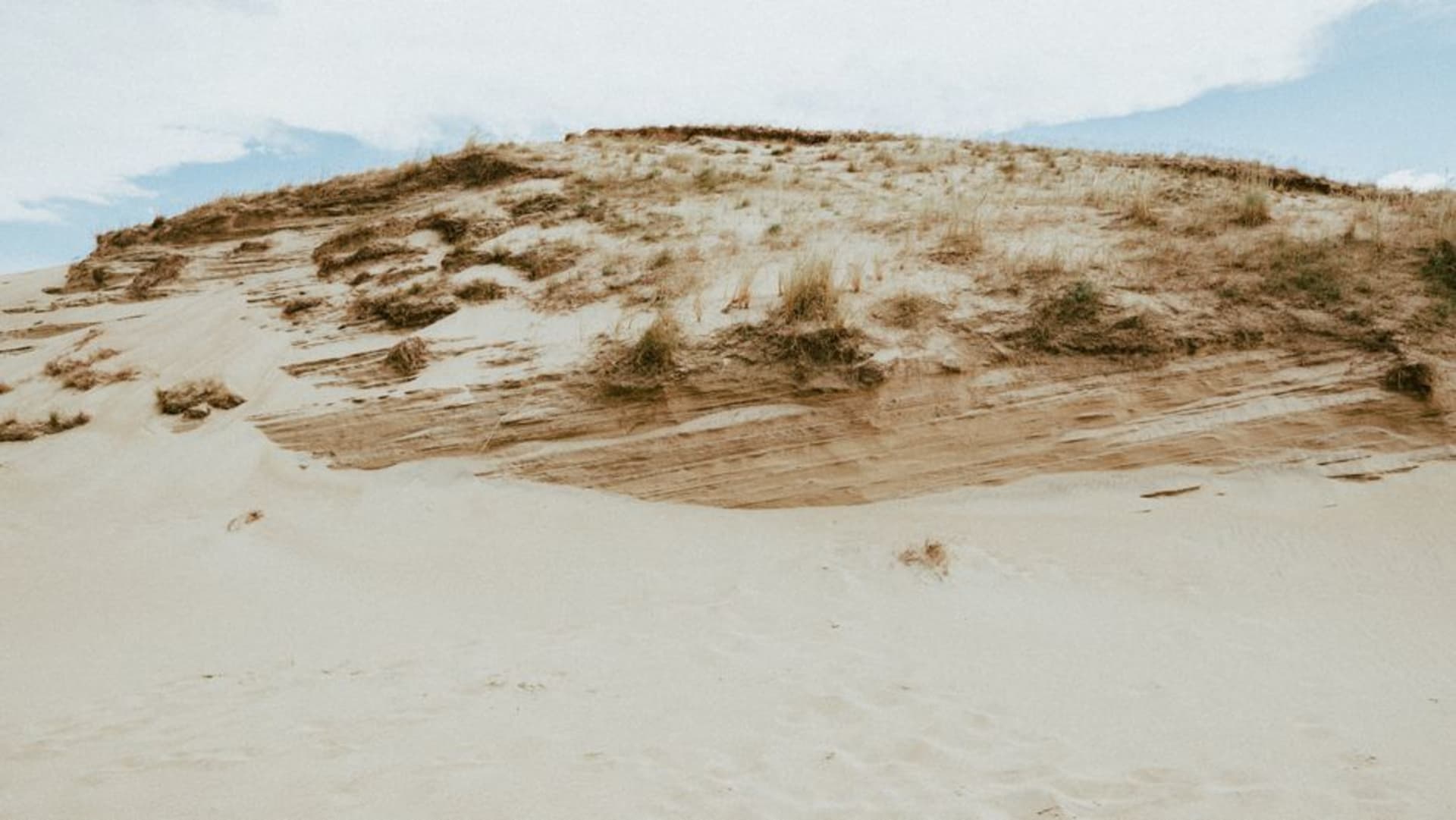
Curonian Spit National Park
"I've never stood somewhere that felt so much like it was still deciding whether to be land or sea."
A 98km ribbon of shifting sand dunes between lagoon and sea, where pine forests hold back a landscape that once swallowed whole villages.
Lia and I almost skipped Nida. We’d been island-hopping the Baltic coast in our heads for months, but a sand-dune peninsula wedged between Lithuania and a Russian exclave sounded like a footnote, not a destination. Then we climbed Parnidis Dune at golden hour, our shoes filling with fine, cool sand, and I stopped mid-sentence. The dune just kept going — pale gold, wind-rippled, dropping away toward the Curonian Lagoon on one side and the Baltic Sea on the other. Ninety-eight kilometers of this spit exist because of an obsession with keeping sand in its place, and standing up there, you finally understand why that mattered so much.
The obsession has history behind it. For centuries, the dunes here weren’t fixed — they drifted, and drifted right over villages. Locals told me about settlements that simply vanished under the sand, swallowed slowly enough that people had time to watch it happen and not enough to stop it. It wasn’t until the 19th century that foresters figured out how to hold the dunes still, planting pine after pine in patient rows until the wind lost its grip on the sand. We walked through those same forests on the way back down from Parnidis, the light going soft and green under the canopy, and it felt less like a park and more like a very old, very stubborn engineering project that happened to become beautiful.
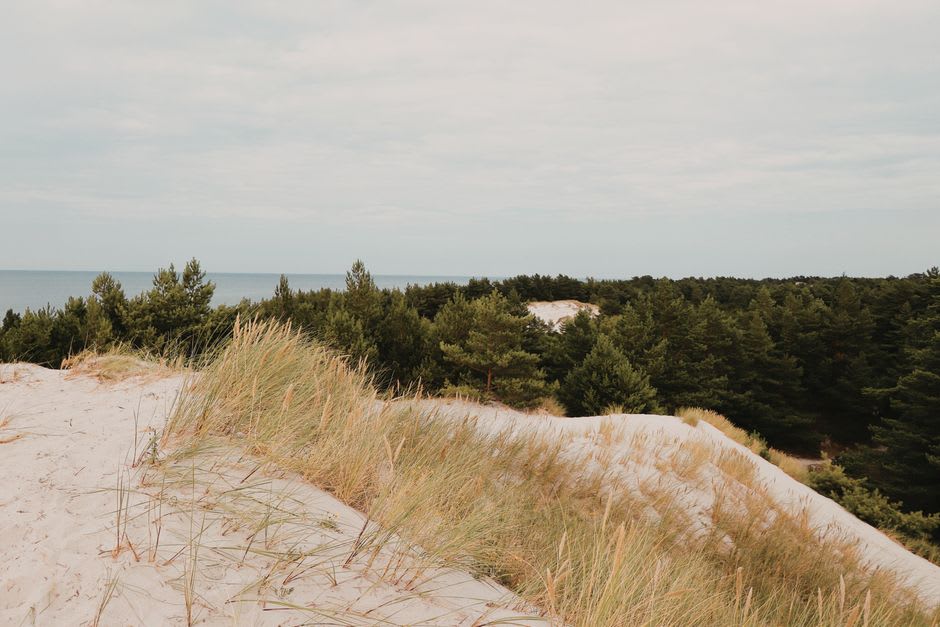
We stayed three nights in Nida, in a small guesthouse with a garden that backed onto the lagoon, and every morning I’d take my coffee out and watch fishing boats pull in with the night’s catch — smoked flounder became something of an obsession for me by day two. In the afternoons we’d bike the flat forest paths toward the dunes, stopping wherever the trees opened up to reveal that impossible expanse of sand again. Lia kept saying it reminded her of the Sahara, and then we’d turn around and there was the Baltic, grey-blue and cold, close enough to smell.
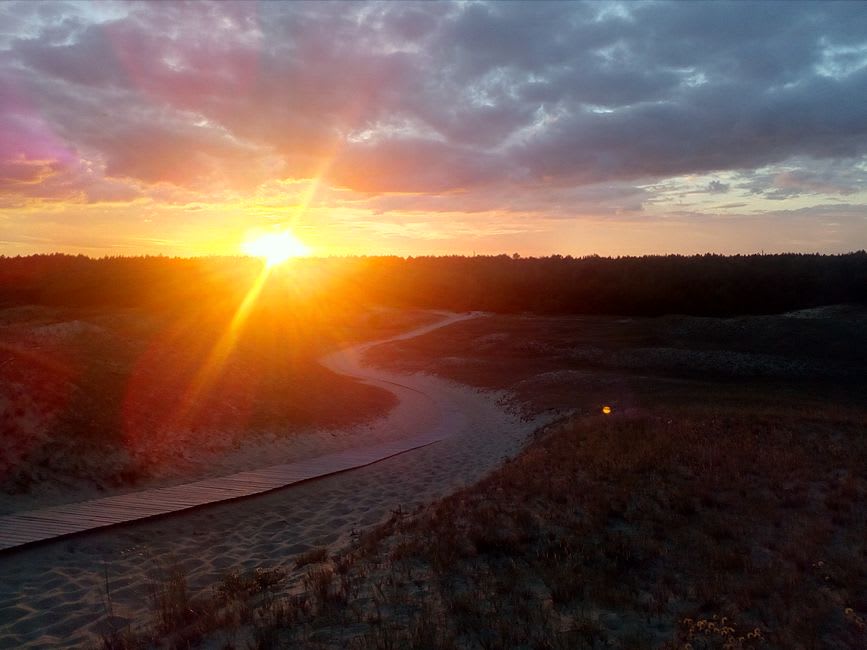
Knowing this whole cultural landscape earned UNESCO recognition in 2000 changed how I looked at it — not as untouched wilderness, but as centuries of human effort holding a fragile place together. It made the quiet feel earned rather than accidental.
When to go: aim for May to September, when the dunes are warm underfoot and the lagoon beaches are actually swimmable — outside that window, the wind off the Baltic turns the whole spit into a much colder proposition.