Monrovia
"Monrovia doesn't ask you to like it. It just gets on with being itself, which turns out to be more than enough."
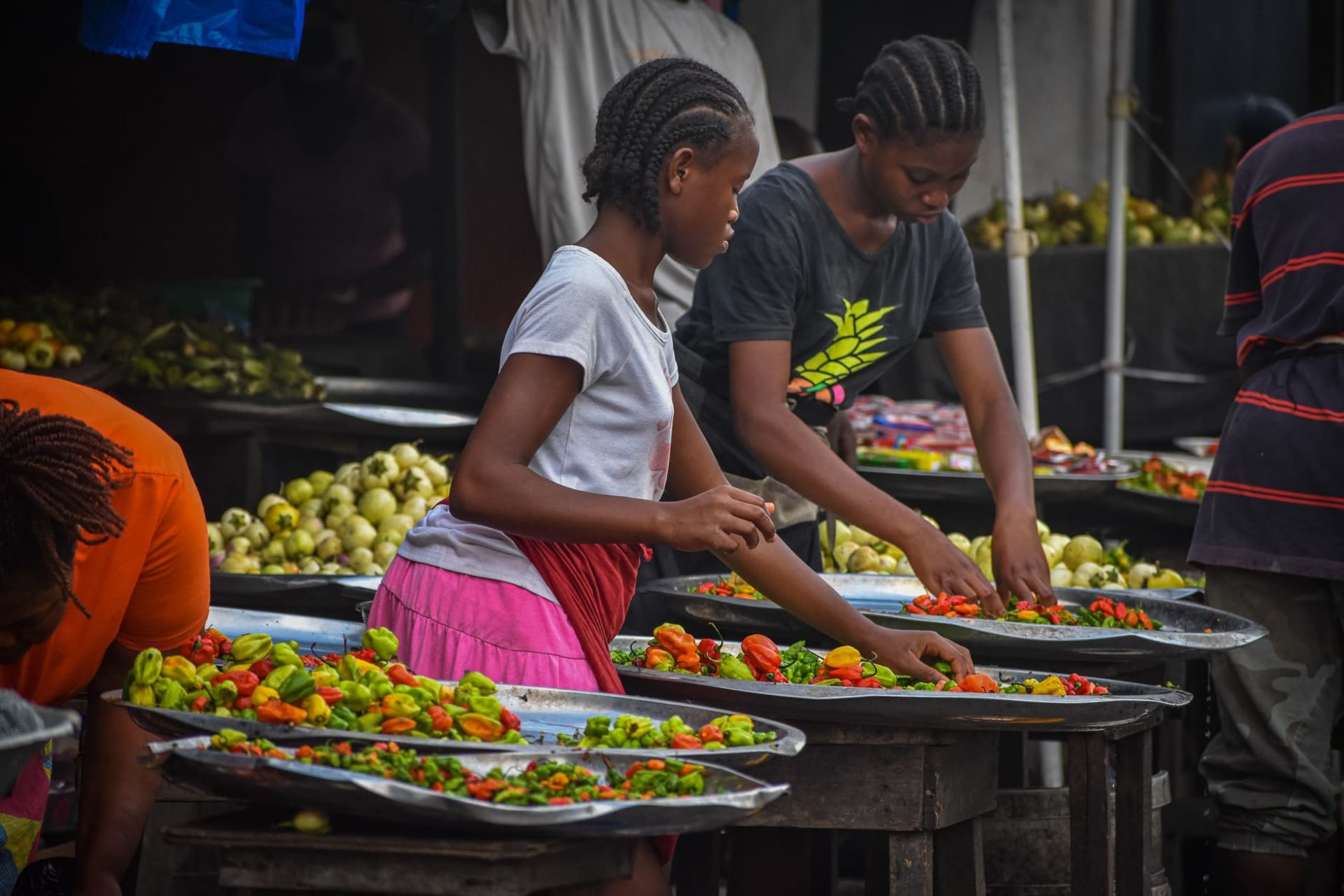
The motorbike taxi dropped me at Waterside Market around seven in the morning, and the smell hit before anything else — a dense compound of smoked fish, raw palm oil, woodsmoke, and the salt breath of the Atlantic coming off the water somewhere behind the stalls. The market was already full, already loud, already negotiating. Women in lappa cloth and headscarves moved with the particular authority of people who have been selling things in this exact spot since before the city around them changed into something unrecognizable and then changed back again. I stood there for a full minute before I could make myself walk in.
Monrovia sits on a finger of land — Cape Mesurado — where the Mesurado River opens into the Atlantic, and the geography gives it a quality of being perpetually cornered by water. The old city clusters along the waterfront, where the Executive Mansion, riddled with history and bullet marks, surveys the harbor from its bluff. Mamba Point has the embassies and the hotel patios where NGO workers decompress with Club beer at sundown. But the real city is the market, the streets radiating out from the waterfront, the motorbike taxis negotiating through donkey carts and UN vehicles and women balancing improbable loads with absolute calm.

I ate at a roadside spot near the Old Bridge — pepper soup with fish, served in a plastic bowl with a hunk of bread that absorbed the broth. The broth was the color of rust and tasted of Scotch bonnet and something leafy I couldn’t identify. The woman who ran the stall spoke no English and I spoke no Liberian English well enough to ask, so we communicated through gestures and the universal language of a second bowl being pushed toward me. I ate that too. Liberian pepper soup is the kind of food that recalibrates your sense of what food can do — it warms you from the inside in a climate where you don’t need warming, and somehow that’s the point.
The waterfront itself repays an evening walk. Past the fish market at the point, where the catch comes in from the Atlantic in wooden dugouts and is sorted on the sand while pelicans circle with total shamelessness, the path opens onto a strip of beach where Monrovians come on weekend afternoons to swim and sit and watch the sun drop into the ocean. Silver Beach, a short moto-ride north of the city center, is where families set up under umbrellas and teenagers play football in the surf. It doesn’t look like a postwar capital. It looks like a city that has decided it’s going to go swimming, and no amount of history is going to stop it.

What Monrovia carries that other West African capitals don’t is a particular weight of American history layered beneath everything — the streets of Sinkor have names like Tubman Boulevard and Broad Street, and the architecture of the old settler families still marks certain neighborhoods with something resembling antebellum Louisiana filtered through tropical decay. It is a strange inheritance and Liberians carry it with a complicated pride. The freed American slaves who founded this republic in 1847 were themselves a colonizing force, and the country has been working through what that means ever since. These are conversations that happen around evening fires and over palm wine, if you find yourself in the right company at the right time.
When to go: Monrovia is accessible year-round, though November through April makes for the most comfortable visit — the harmattan brings some dryness to a city that otherwise steams. The fish market and Waterside are best early morning, before the heat peaks. Avoid arriving during heavy rains in September and October when flooding can close low-lying areas.