Luosto
"Minus twenty-four, a towel, the aurora faint at the horizon. I stayed longer than was sensible."
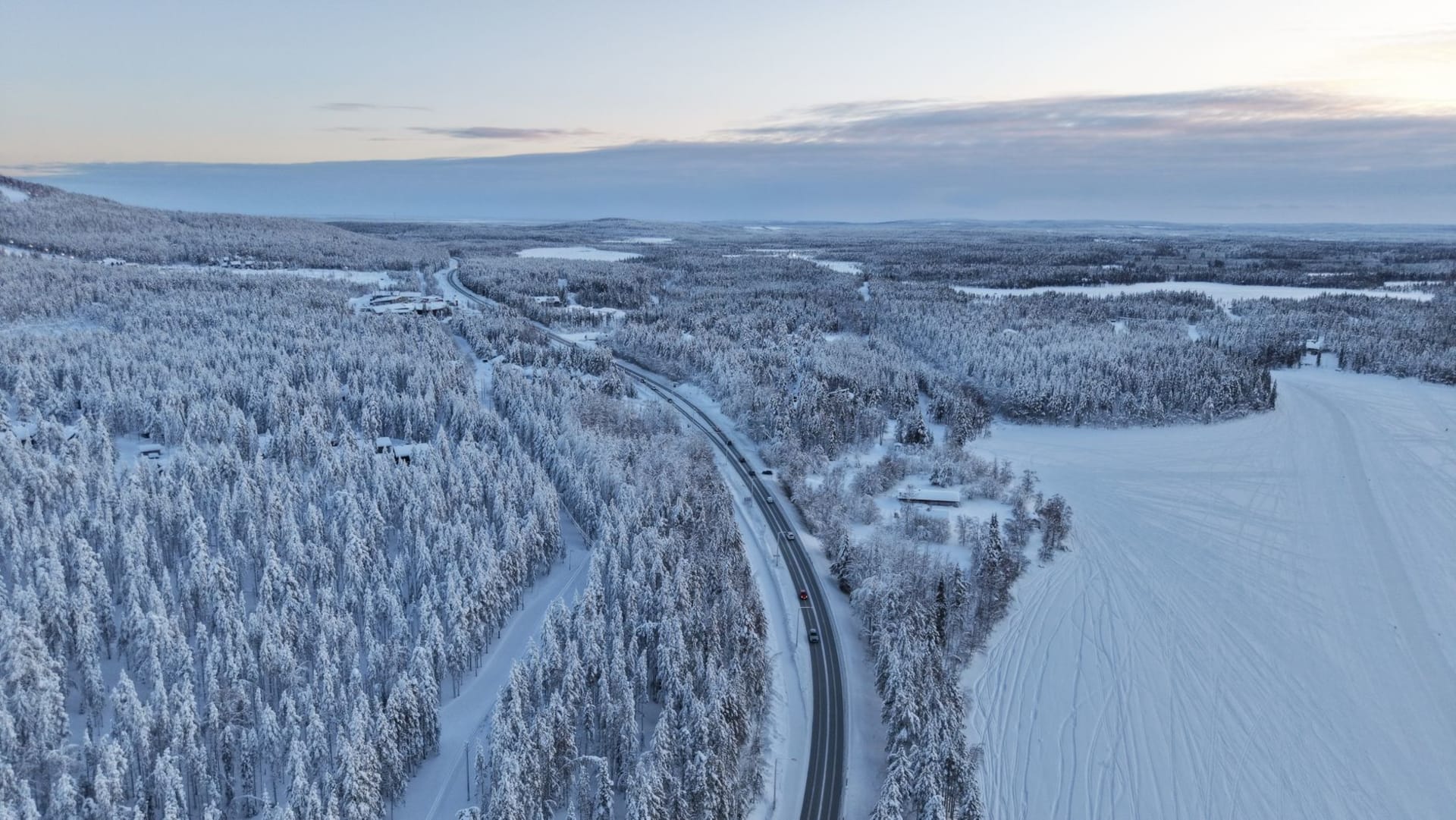
Luosto is where I went when I needed quiet. Not the silence of the open fell — that is something different, exposed and vast — but the specific quiet of a small fell resort that has not grown faster than its capacity to remain itself. The village sits beneath the forested flanks of Luostotunturi fell, two hours south of Inari and north of Sodankylä, and it consists of a handful of hotels, some self-catering cottages scattered through birch and pine, and not much else. In December, with the polar night at its deepest, it is as dark and still as anywhere I found in Finnish Lapland.
The amethyst mine below the fell is the singular local curiosity: an open pit where visitors are handed a sieve and invited to dig through loose gravel for purple crystals. This sounds gimmicky and turns out to be genuinely absorbing. I spent forty minutes on my knees in the snow, sieving frozen gravel, cold seeping through the knees of my trousers, finding nothing and then finding one small crystal — pale purple, rough-edged, translucent when I held it to the grey sky. I carried it in my jacket pocket for the rest of the trip. It seemed important that I had found it myself.

The skiing at Luosto is modest — several short runs through the forested fell slope, a cross-country trail network that extends into the surrounding national park — but the snowshoeing trails are excellent. I spent an afternoon on snowshoes pushing into the old-growth pine forest above the fell base and found the kind of trees that take centuries to reach that size in the Arctic climate: massive, gnarled, their bark deeply furrowed and their branches swept wide with decades of snow load. The forest floor between them was completely unmarked. Nobody had been there before me that day, at least, and that feeling is rarer than it should be.
The sauna culture at Luosto is taken seriously. My cottage had a wood-burning sauna that I heated each evening — a thirty-minute process involving birch logs, adjusted ventilation, and patience while the stones reached temperature — and then I would sit in it for an hour before walking outside in only a towel to stand in the snow in the dark. The temperature was minus twenty-four. The aurora was faint that night, a smear of pale green at the horizon, but the stars above the fell were extraordinary, and I stood there longer than was sensible, longer than the cold permitted, until the snow started to feel warm in the particular way that means you need to go inside immediately.

When to go: November through March for full winter conditions, wood-burning sauna, and aurora. February is particularly good for the combination of aurora activity and the first hints of returning light. The amethyst mine runs tours all year, but digging for crystals in the snow adds something that a summer visit would not.