Luang Prabang
"Luang Prabang's alms-giving ceremony is the most peaceful alarm clock you will ever set."
Saffron-robed monks collect alms at dawn in a UNESCO town where French villas meet gilded temples.
I set my alarm for five in the morning and still arrived late. The monks were already moving — dozens of them, barefoot on the cool stone of Sakkaline Road, saffron robes catching the first thin light off the Mekong. The ceremony is called tak bat, and it has been happening every morning here for centuries. Standing on the edge of it, I felt like I had slipped through some invisible seam in time.
The Slowest Hours of the Day
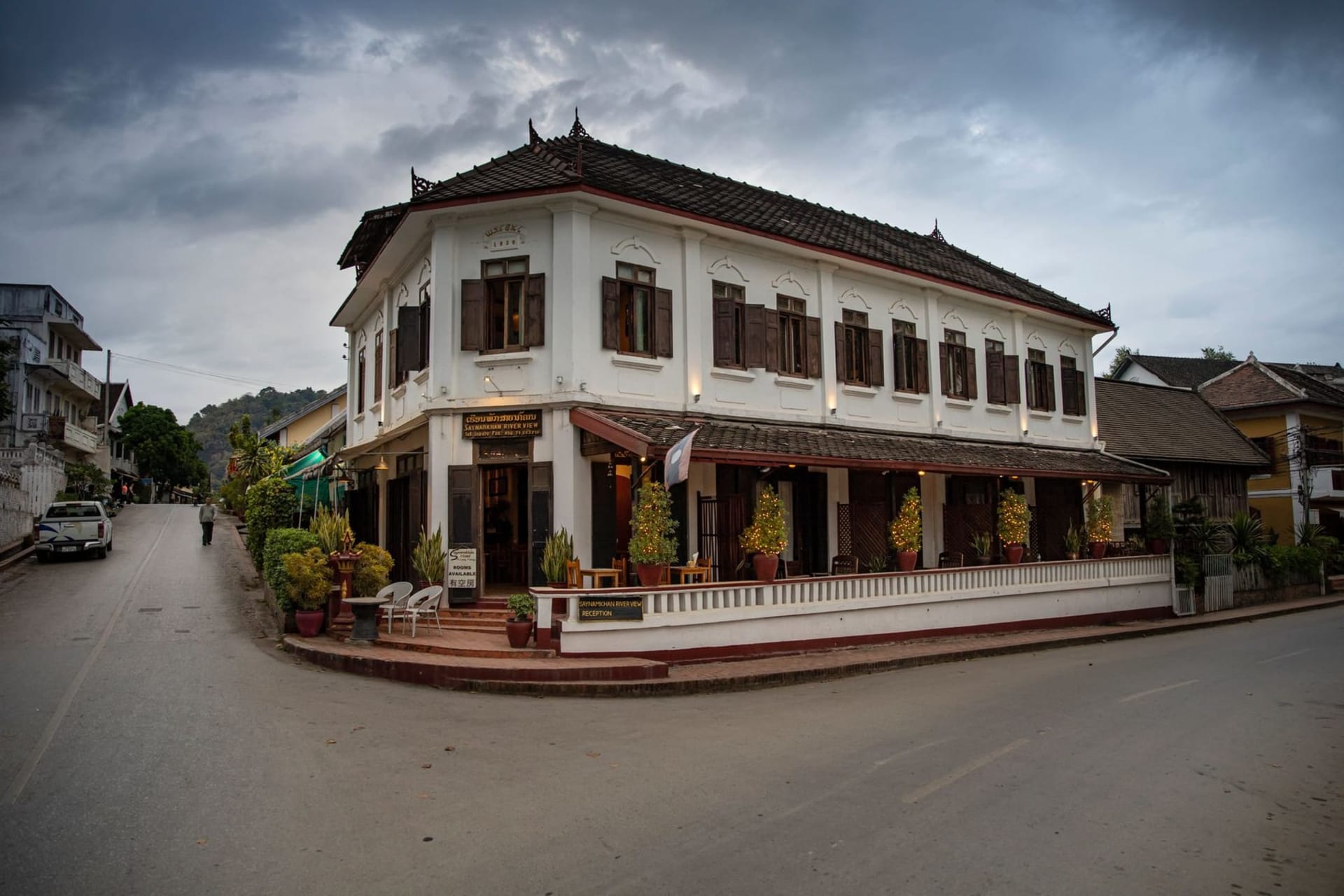
Luang Prabang does not rush. The old quarter sits on a narrow peninsula where the Nam Khan river slides into the Mekong, and the whole place seems held in suspension by that confluence — temples on one bank, bougainvillea-draped French colonial villas on the other, and between them a main street, Sisavangvong Road, where the pace of life is dictated by monks, not motorbikes. Lia and I spent our mornings walking it in no particular direction, stopping whenever something caught us: a carved lintel over a crumbling doorway, the smell of lemongrass from a kitchen we could not see, a cat asleep on a temple wall as though the whole of Buddhism had simply arranged itself around its nap.
The food market on Khem Khong fills before sunrise. I ate khao piak sen — a thick rice noodle soup with shredded chicken and a broth that tasted of galangal and something I could not name but kept chasing — standing at a folding table while the river went orange across the road.
What the Guidebooks Do Not Mention
The surprise came on the third day, climbing Phou Si Hill at dusk. Everyone goes for the view of the Mekong, and the view is real and worth it. But what I did not expect was the smell: incense burning at the small shrines tucked into the hillside, mixing with woodsmoke drifting up from the night market assembling below, and underneath all of it, the river itself — that particular green-brown mineral cold that large rivers carry. I stood at the top longer than I had planned, not looking at anything in particular, just breathing it in.
The night market on Sisavangvong Road spreads itself out every evening like an unhurried proposition — silk scarves, saa paper notebooks, silver jewellery — and the food stalls behind it sell Luang Prabang sausage, fermented and herb-heavy, eaten with sticky rice you carry in a small woven basket. We ate standing up. We did not miss a single night.
When to go: The dry season, November through March, brings cool mornings ideal for tak bat and clear light on the rivers. Avoid the monsoon months of July and August when flooding can close mountain roads into the region.