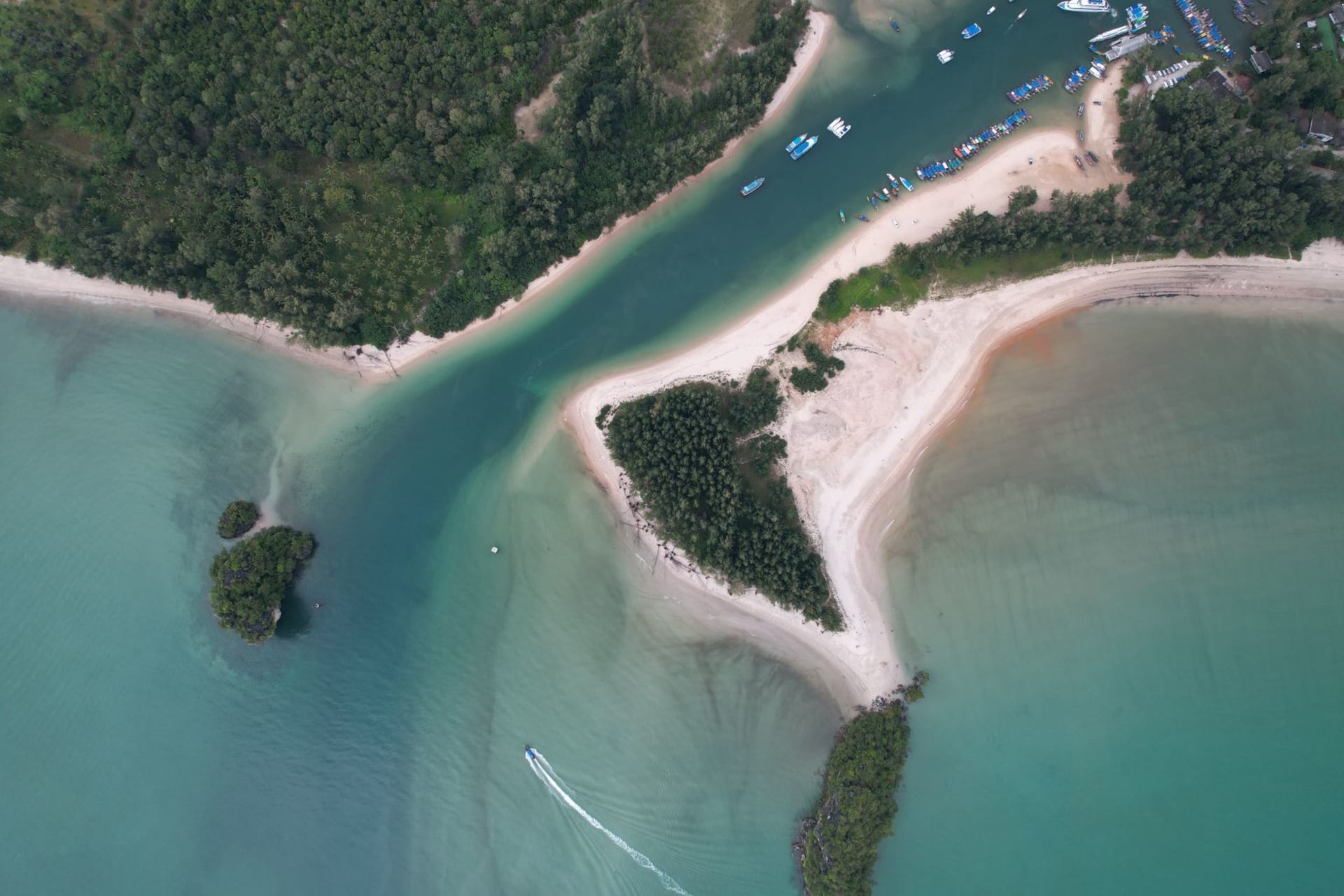
I arrived at Tanjung Rhu with the light already turning. It was late afternoon — later than I meant to be — and the road north from Datai had narrowed twice, passed through a village where chickens crossed with the unhurried confidence of animals that know the traffic laws are on their side, and eventually deposited me at a small car park where the trees thinned and I could suddenly smell open ocean. The beach itself appeared around a bend in the path, and I stood there for a moment doing the thing you do when something is better than expected.
Tanjung Rhu is Langkawi’s northern tip, and it has a quality I don’t often encounter — it is genuinely remote without being inaccessible. The beach stretches for what feels like two kilometers, fine white sand, the occasional boat pulled up above the tide line. To the east, the mangrove forest meets the shore in a tangled green wall that extends into the water, the roots visible at low tide, the whole system breathing with the movement of the sea. There are a handful of luxury resorts somewhere behind the treeline, but from the beach you’d never know. The dominant sound is wind, the ambient texture is sand, and the horizon is the Straits of Malacca going blue-gray toward Thailand.
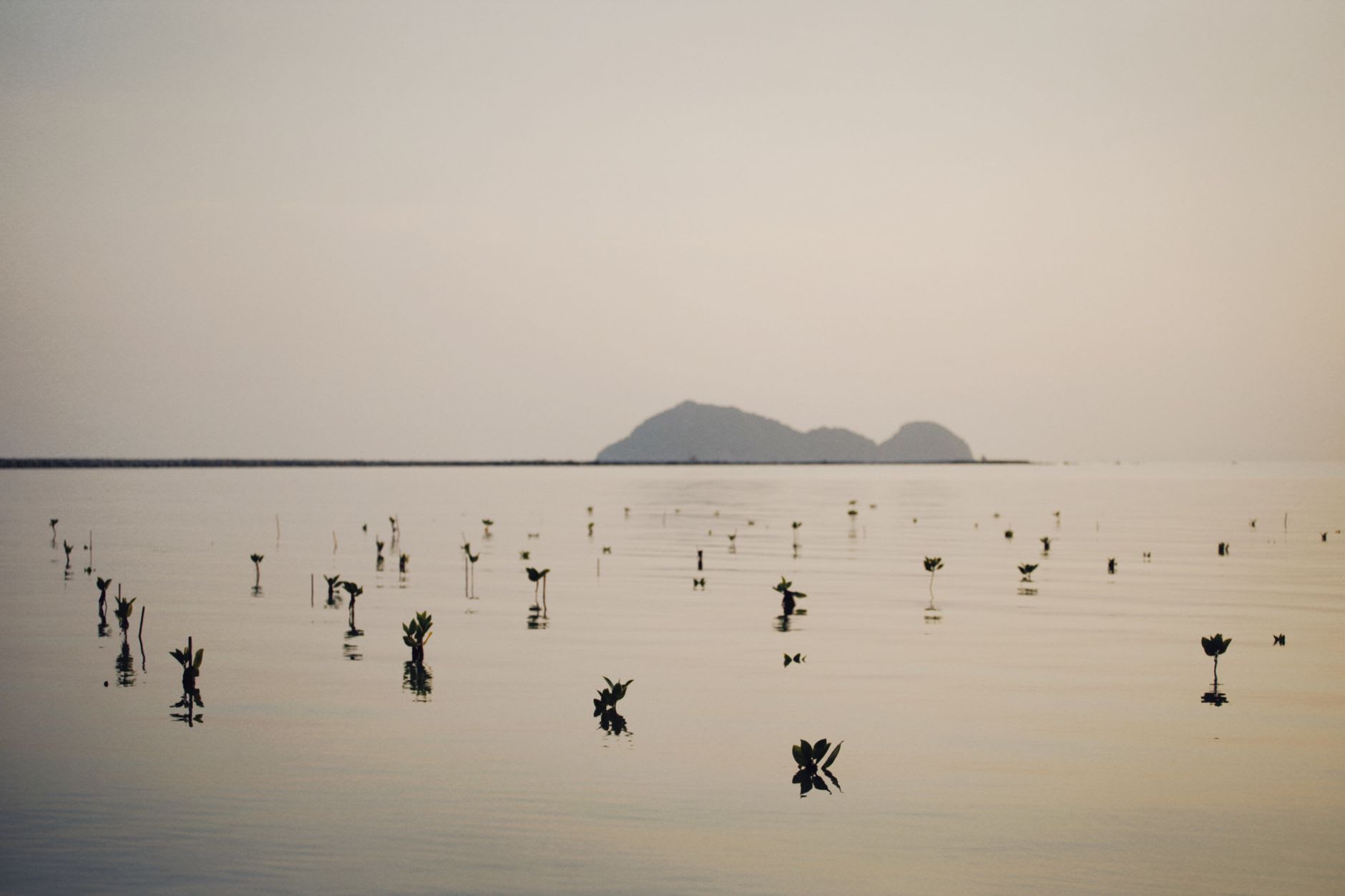
What makes this stretch particular is the transition zone — the precise, almost architectural line where mangrove forest becomes beach, fresh water meets salt, roots become sand. I sat there at the edge of it for a long time, watching the way the water moved through the root systems with the ebb, carrying small fish in and out with each pulse. The light was doing something extraordinary: that particular gold-orange of a Malaysian late afternoon, hitting the karst islands out in the water and turning them briefly luminous before the color shifted toward rose and the first bats emerged from the trees behind me.
I hadn’t brought food. This was a miscalculation. The only restaurant nearby is the one attached to the Four Seasons property, which requires either staying there or making a reservation and wearing shoes that aren’t sandals — both conditions I failed to meet that evening. The lesson is: bring a roti canai or two from the roadside stall in the village, eat it on the beach before sunset, and you will have assembled something close to perfection without spending much of anything.
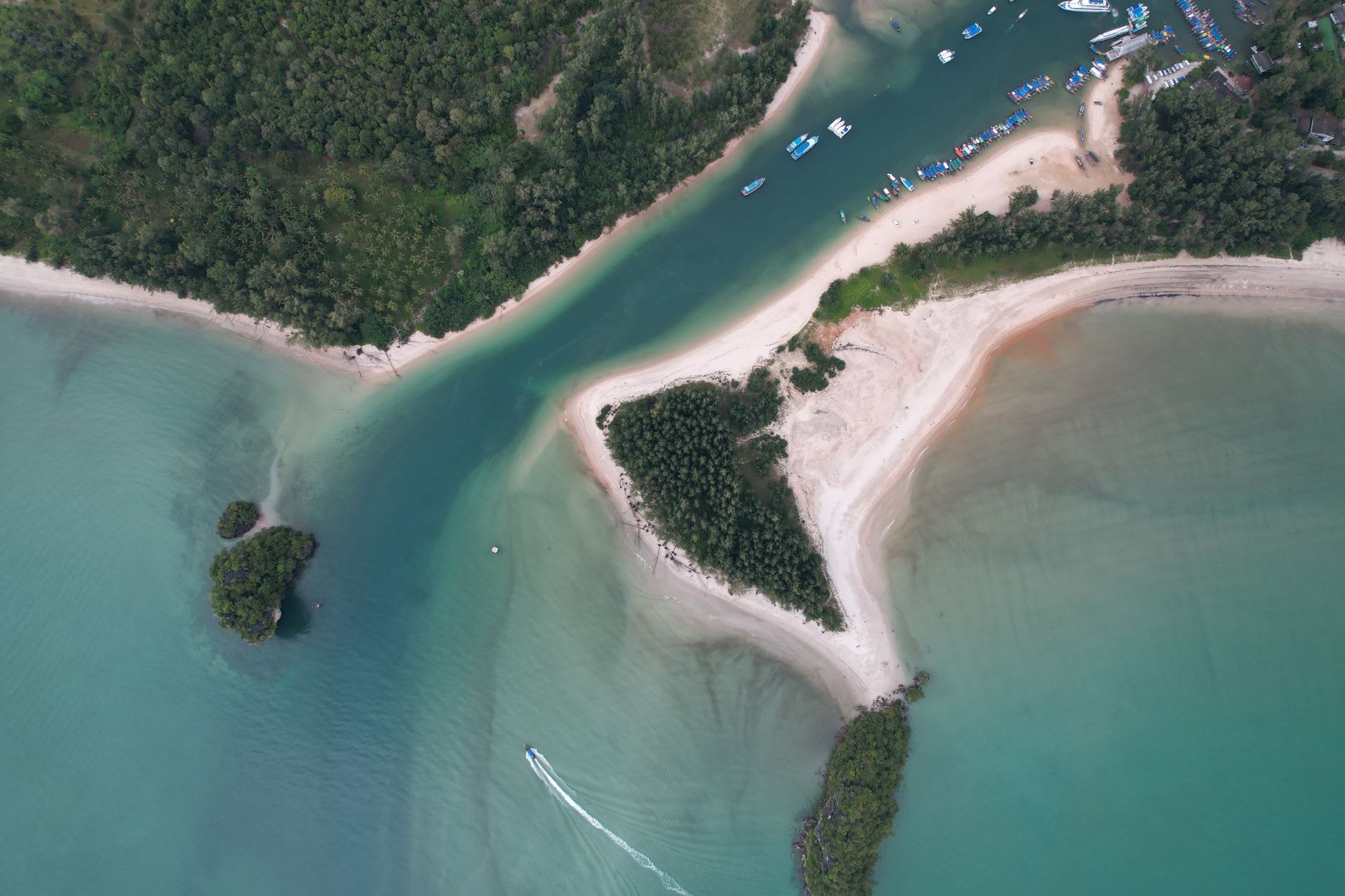
The early mornings here have a different quality. I came back the next day before seven, when the mist was still on the water and the mangroves were active — kingfishers moving between branches, the occasional egret standing in the shallows with the focused patience of a serious professional. A fisherman was working the water near the mangrove edge with a cast net, the net opening in a perfect circle above him before settling, and he moved with the kind of practiced economy that makes ordinary gestures look like choreography. Nobody acknowledged my presence. I was simply there too, which is the best possible relationship between a traveler and a place.
When to go: November through March gives you calm water and the mangroves at their most navigable. The sunsets here are best in December and January when the atmosphere is clear and the light arrives at a low angle that lights up the karst islands offshore. Avoid June through September — the north-facing beach catches the southwest monsoon and the water turns choppy, the sand blows, and the whole atmosphere of suspended tranquility evaporates.