Tash Rabat
"Inside, the domed corridors hold a coolness that has nothing to do with altitude. History, maybe."
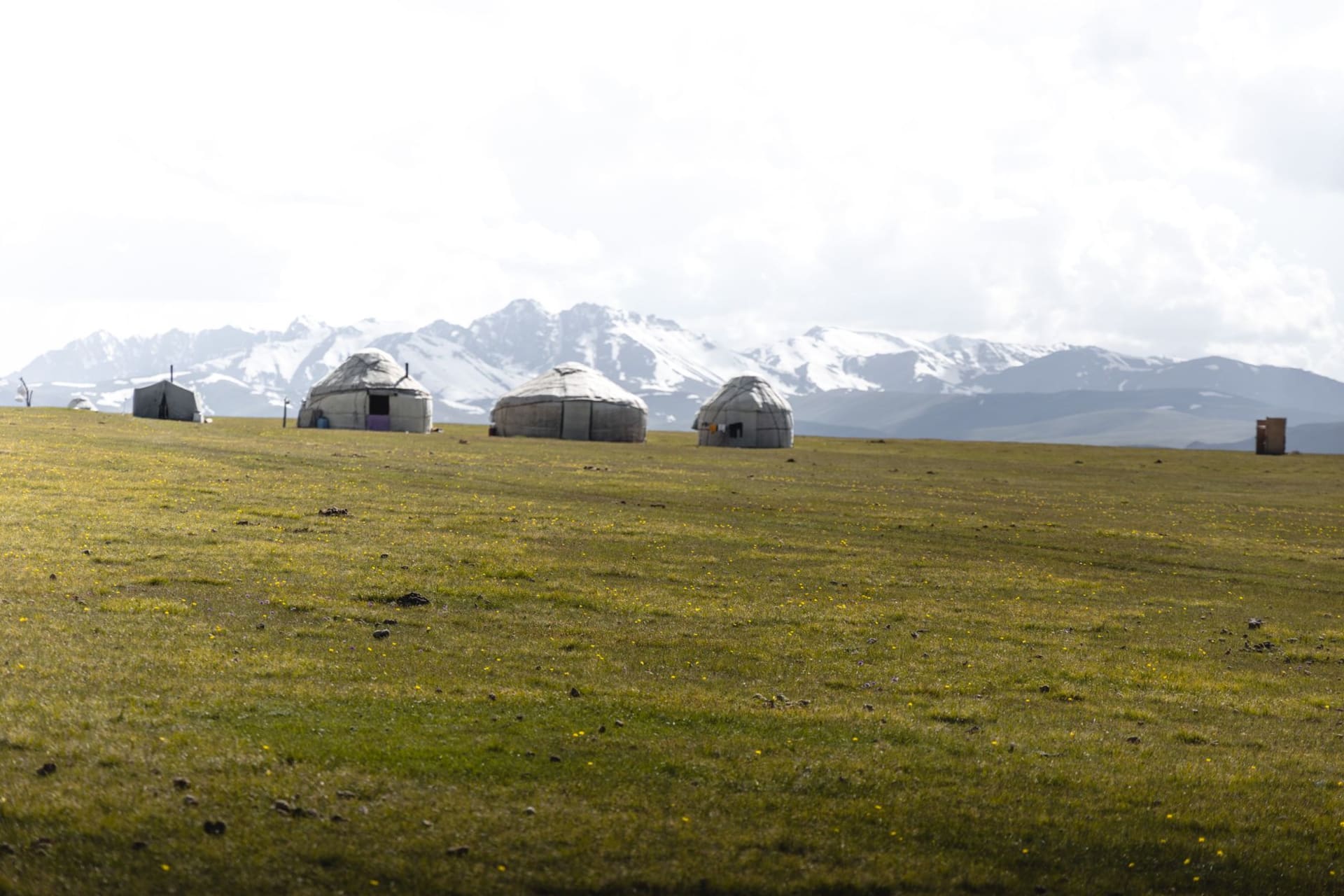
The valley that leads to Tash Rabat is the kind of landscape that makes you drive more slowly than you need to. The road climbs from the main At-Bashy valley through a series of broad green upland meadows where horses graze untended and the only structures visible are the occasional yurt, smoke rising from the felt roof. The Tian Shan presses in from all sides. The sky is the particular deep blue that happens above 3,000 meters when there is no humidity to soften it. And then, around a long bend, you see the building.
Tash Rabat is a caravanserai — a rest house for Silk Road travelers — built in the fifteenth century from fitted local stone on a site that may have been used as far back as the tenth century. It is remarkably intact. The exterior walls are two meters thick and the doorway is low, forcing a slight bow on entry that may have been deliberate or may simply be the result of building materials settling over six hundred years. Inside, the central hall rises to a domed ceiling that concentrates the light from a single oculus into a bright column that moves across the floor with the sun. Off this central space, a series of small side rooms radiate outward — lodging cells, what may have been a prayer room, what may have been stabling for the animals that arrived with the caravans. The whole structure is made from the same grey stone as the valley floor, which means that from the hills above it is almost invisible.
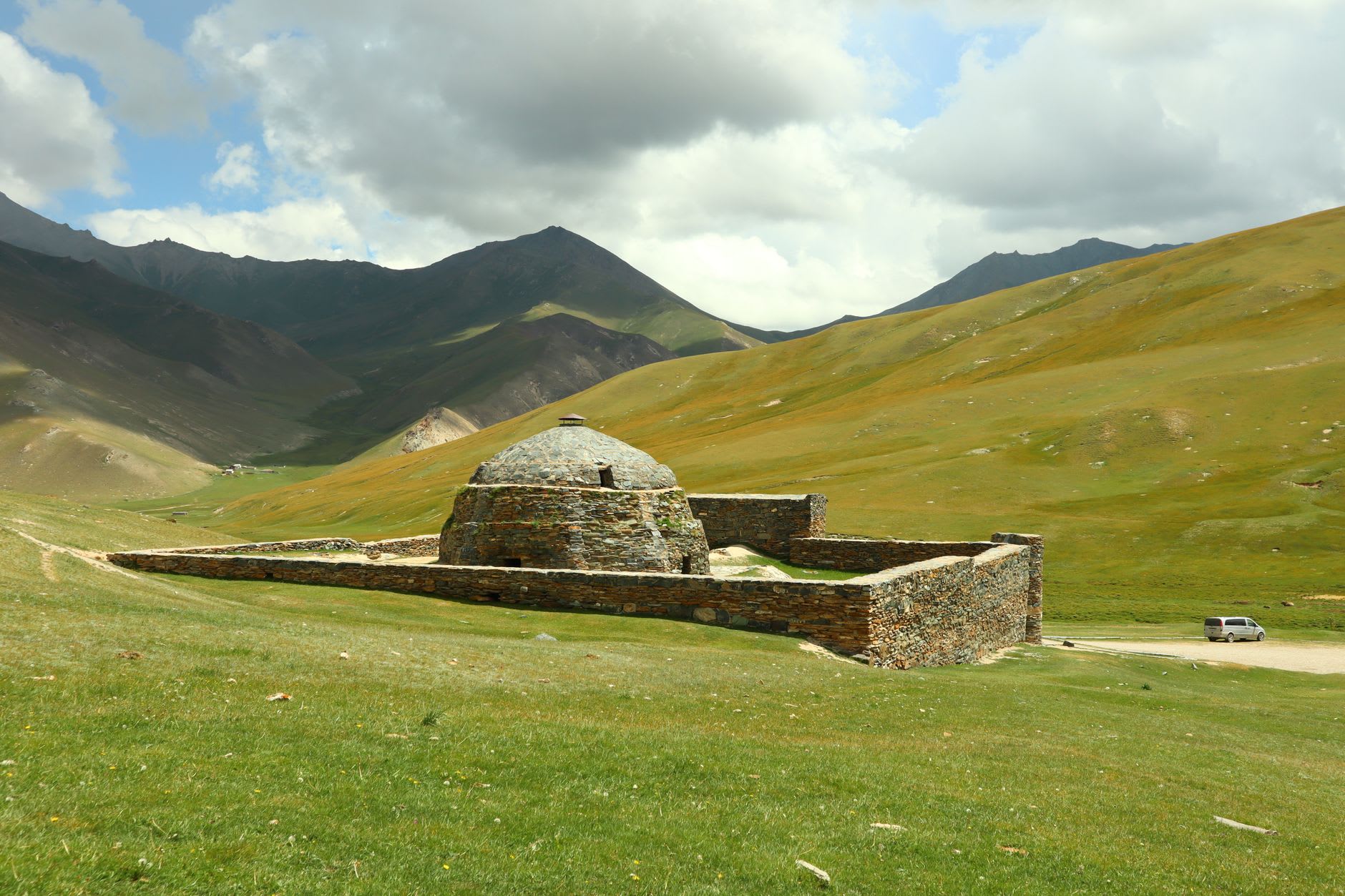
I arrived in the late afternoon, when the light was low and the building cast a long shadow across the valley. There were two other visitors leaving as I arrived, and for the next hour I had the place entirely to myself. Inside, the temperature drops immediately — the stone holds a cold that has nothing to do with the outside air and everything to do with accumulated centuries. I walked the side corridors, pressing my hand to the walls, feeling where previous hands had smoothed the stone to a faint polish. In the main hall, if you stand still long enough, you hear the wind through the oculus: a soft turbine sound that is the only music the building has ever needed.
The valley around Tash Rabat is excellent walking country in its own right. Yurt camps operate nearby in summer, and the route toward the Torugart Pass — the high crossing into China that was used by Silk Road merchants for centuries — begins not far from here. In the morning, if the weather is clear, the peaks to the south catch the sun before anything else does, and the building catches it next, and for about twenty minutes the stone turns from grey to amber and you understand, briefly, why merchants considered this valley worth the altitude and the effort of the crossing.

A small museum next to the caravanserai is run by the local park authority alongside a family who lives nearby. The family will brew tea without being asked. The museum will provide context for what you have just stood inside. Neither is strictly necessary but both are worth the time, because the building alone holds questions the museum at least attempts to answer, even if the tea answers them more completely.
When to go: June through September — the access road is passable from early summer and the surrounding meadows are green and full of wildflowers. July and August are warmest. September is my preference: the meadows take on a bronze tinge, the crowds are thin, and the building itself seems more itself in the cooler and quieter air. Do not attempt the road after October without local advice on snow conditions.