I walked into a Filipino restaurant on the Gulf Road in Salmiya at half past one in the morning because the lights were bright and there were families inside and that meant the food was real. The restaurant had no English signage and the menu was laminated and enormous and I pointed at something with pork in the photograph because I was hungry and because in this particular corner of Kuwait, that was apparently fine. The cook came out and corrected my order — something about the fish being better tonight — and he was right. We ate sinigang that tasted exactly as sour and restorative as I needed it to be, and outside on the Gulf Road the traffic kept moving.

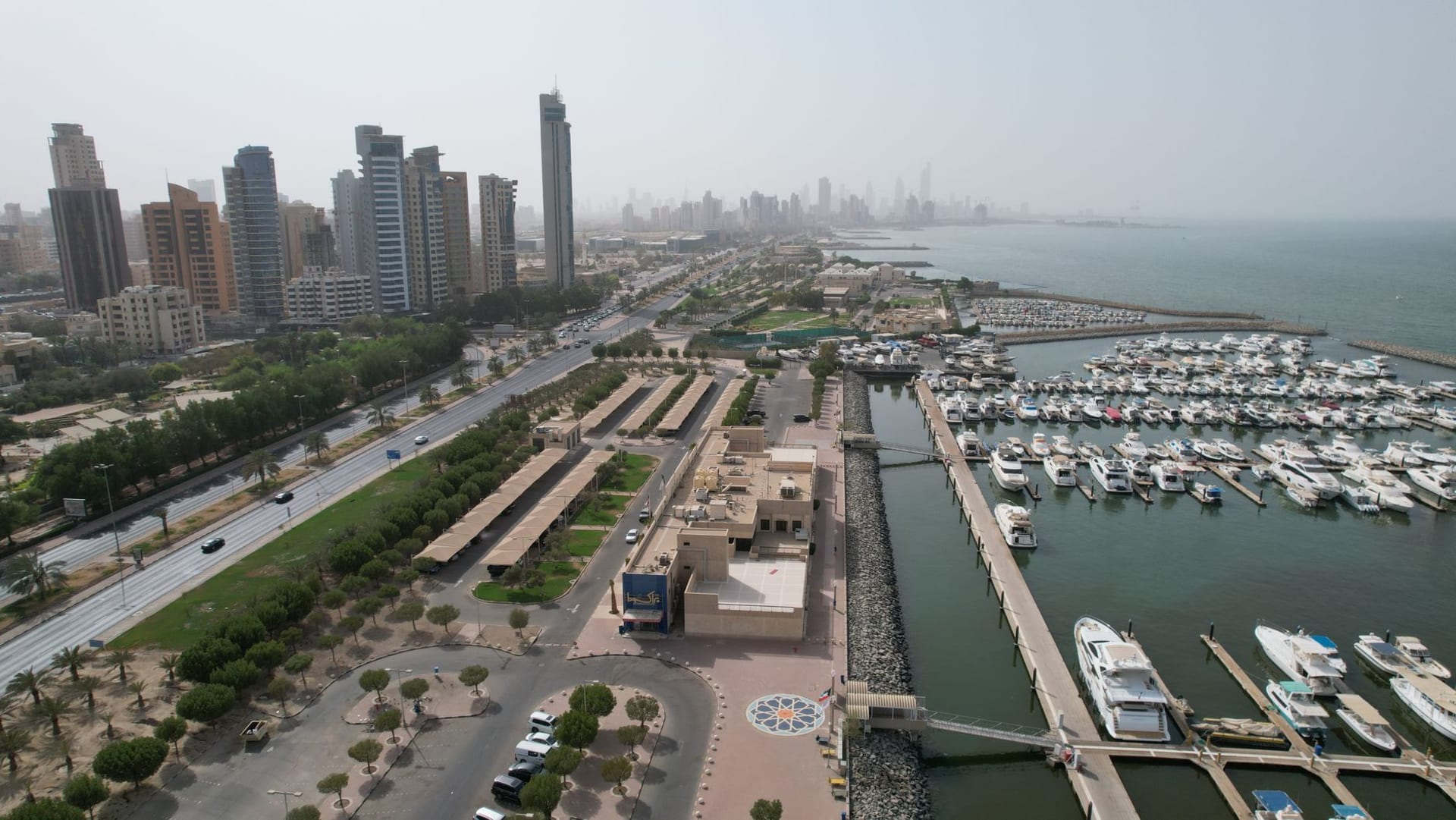
Salmiya is Kuwait’s immigrant city within a city, and it operates on a schedule that has nothing to do with the corporate Kuwait of towers and ministries. The South Asian tailors open at ten in the morning and close when the last customer leaves. The Lebanese pastry shops are full at midnight with people buying knafeh and maamoul to take home. The Indian chai places never really close at all. The Gulf Road itself — the Corniche strip that runs along the water — is the organizing spine of the neighborhood, and on weekend nights it becomes a slow parade of families and couples and groups of young men driving with the windows down and music up. The sea is always visible on one side, and the stacked lights of the residential towers on the other. I spent three evenings walking this strip and never ran out of things to look at.
What strikes you about Salmiya is the negotiation it represents — the way an enormous population of migrant workers from the Philippines, India, Egypt, Pakistan, Bangladesh has built a genuinely livable neighborhood inside a country where they are technically guests. The restaurants here serve food that people actually want to eat, not food designed for a Gulf clientele that doesn’t come. The Indian grocery stores stock things I hadn’t seen since Mexico City’s Spice Market. The Filipino bakeries have ensaymada and pandesal sitting under glass cases next to Arabic sweets. The co-existence is not without tension, but it is real and it is functioning and the food it produces is, taken across the range of places available, some of the best eating in Kuwait.

In the mornings, Salmiya shows its other face. The Gulf Road empties out. The Corniche promenade is taken over by South Asian men walking in groups before the heat comes in, joggers doing laps, a handful of older Kuwaiti men sitting on benches watching the water. The marina nearby has fishing boats going out early. The neighborhood feels genuinely quiet, almost domestic, before the heat picks up and drives everyone back inside until sunset. It is worth seeing both versions — the Salmiya that never sleeps and the Salmiya that briefly catches its breath.
When to go: November through March for the Gulf Road evenings, when the air is cool enough to walk for hours. Ramadan evenings bring a different kind of energy — the restaurants fill after iftar and the street becomes genuinely festive. Avoid July and August when the Gulf humidity turns the Corniche walk into an endurance test.