
Mitrovica
"You can walk across the bridge in under a minute. It takes much longer to understand what you've crossed."
A city cut in two by the Ibar River, where the bridge between the Albanian south and the Serbian north is the most loaded thirty-metre walk in the western Balkans.

I stood on the Main Bridge in Mitrovica for a long time, trying to understand what I was looking at. The Ibar River is not wide here — perhaps thirty metres of water, grey-green and moving steadily. On the south bank, Kosovo Albanian flags hung from apartment balconies, the cafés had Albanian names, and the soundtrack was a mix of pop music and the particular ambient noise of a busy Kosovar street. On the north bank, Serbian flags, Cyrillic script on the shop signs, a different quality of light — or perhaps the same light falling on different things. KFOR vehicles idled near the bridge ends. An Italian soldier in full kit leaned against a concrete barrier and watched me watch the river.
Mitrovica’s division dates from the end of the 1999 war, when Albanian and Serbian communities found themselves on opposite banks of the Ibar with little capacity for cohabitation and a great deal of recent history between them. The city has remained divided since, with the bridge operating as either a connection or a boundary depending on whom you ask and which bank they live on. The south functions as a normal Kosovo city — loud, caffeinated, under construction. The north operates under a parallel administration aligned with Belgrade, uses the Serbian dinar alongside the euro, and maintains its own separate everything.

I crossed to the north in the late morning. Nobody stopped me — the crossing is not formally controlled — but I was aware of having passed through something. The streets of North Mitrovica are quieter than the south, the apartment buildings older and less renovated, the café terraces nearly empty on a Tuesday. I had a coffee in a place where a television was showing Serbian news and the sugar came in a small glass of water, the way it is served in Serbia. The owner was polite and entirely uninterested in my presence, which felt appropriate.
What Mitrovica offers is not comfort or beauty or historic charm, exactly. What it offers is reality — the reality of what a disputed history does to a geography, the way political lines become physical spaces become lived experience. The tension is not dramatic in the way a thriller would represent it. It is quiet and pervasive and structural, embedded in which language appears on which street sign, who crosses which bridge, and at what hour.

The south has good restaurants along the main pedestrian boulevard, and the Miners’ Monument — a giant sculpture on the north bank commemorating Trepça mine workers, visible from the south — watches over everything with an abstracted socialist grandeur that belongs to a different era and a different kind of state. Standing underneath it makes you aware of how many layers this small city is carrying, and how patiently it carries them.
When to go: Spring and autumn are ideal for the outdoor spaces and a certain clarity of atmosphere. Summer brings more visitors and more energy to the south bank. Cross to the north during daylight and with reasonable awareness of the local situation — it is safe but not predictable in the way that ordinary tourism destinations are. Go with curiosity and without assumptions.
Keep exploring
More from Kosovo
 kosovo
Novo Brdo Fortress
A crumbling hilltop fortress in eastern Kosovo that once guarded the silver mines financing a medieval empire.
Explore kosovo
Peja
Gateway to Kosovo's wildest mountains, where a UNESCO-listed medieval monastery and a still-functioning Ottoman bazaar share the same dusty crossroads.
Explore kosovo
Pristina
Europe's youngest capital: loud, unfinished, fiercely proud, and running on an espresso-fueled urgency that is genuinely contagious.
Explore kosovo
Prizren
Kosovo's Ottoman crown jewel — a river town where minarets, a hilltop fortress, and the smell of fresh burek define every morning.
Explore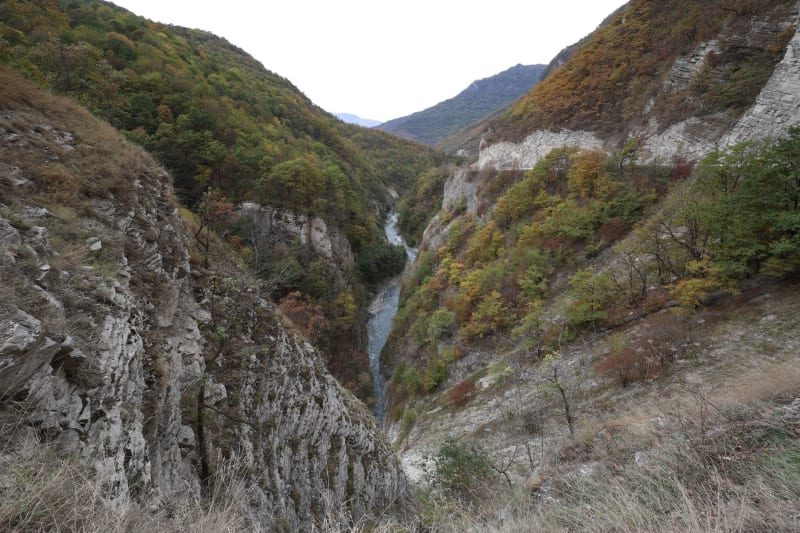 kosovo
Rugova Canyon
A dramatic limestone gorge west of Peja where the mountains close in, the road becomes a thread, and Kosovo reveals its most spectacular scenery.
Explore kosovo
Sharr Mountains
A wild, shepherd-haunted national park in Kosovo's south, where glacial lakes sit under bare peaks and the cheese is worth the climb.
Explore