Tabiteuea
"North and south Tabiteuea have a channel between them and, some say, a cultural divide that runs deeper than the water."
Tabiteuea means “forbidden to be a king” in I-Kiribati, and the name comes from an episode in the island’s history that locals will explain with a particular satisfaction: the community collectively rejected the institution of chieftainship centuries ago in a defiance that still defines the island’s character. Tabiteueans have a reputation throughout Kiribati as fiercely independent people who make decisions by consensus and resist hierarchy with an energy that can read, to outsiders, as argumentativeness. When I mentioned I was going to Tabiteuea to a shopkeeper in Tarawa, she said, with what seemed like affectionate exasperation, “Those people always think they know better.” I took that as a recommendation.
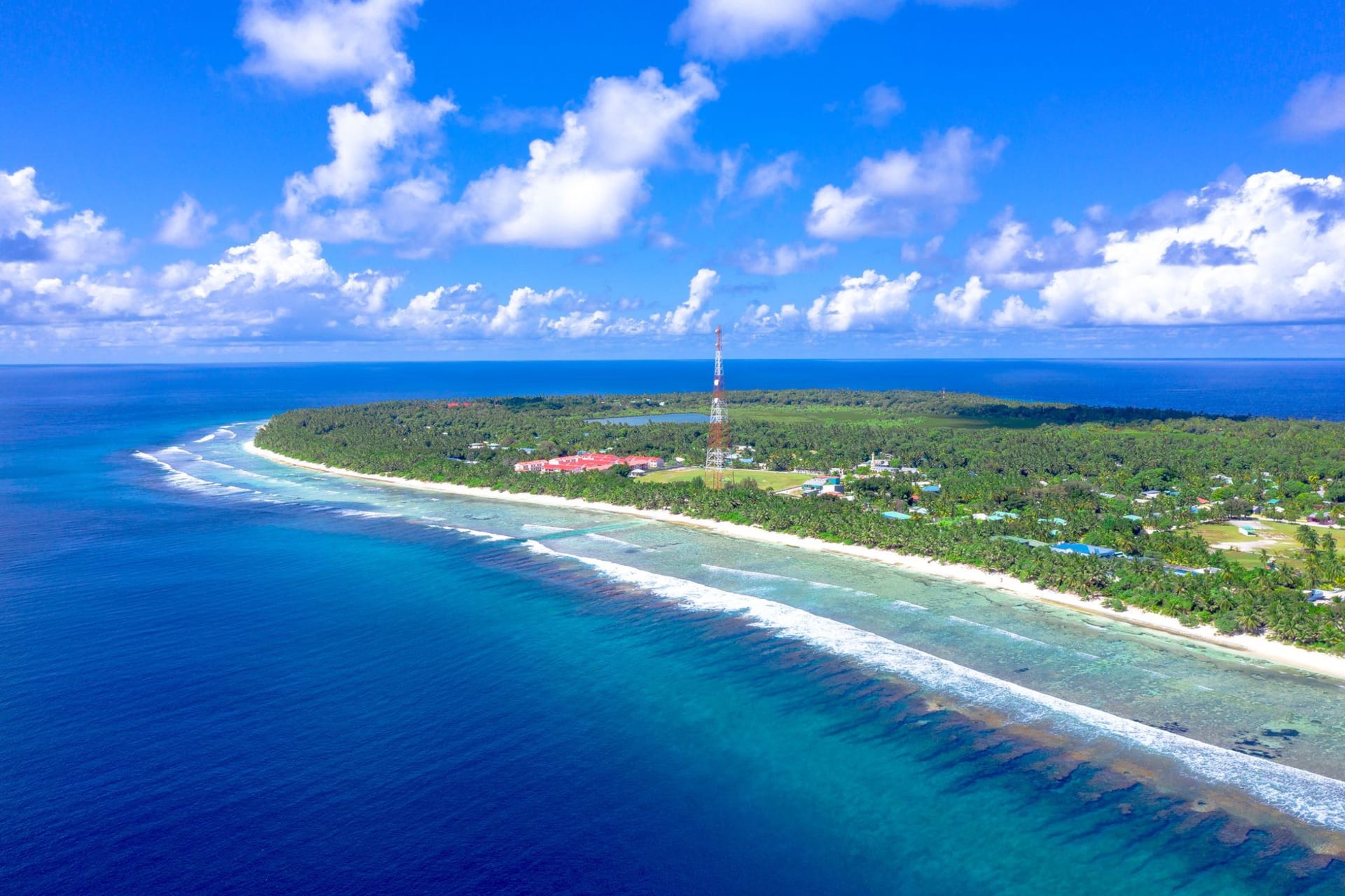
The island — actually two islands separated by a channel, divided into Tabiteuea North and Tabiteuea South — stretches for roughly forty kilometers and is one of the longest atolls in the Gilbert group. The two communities have distinct characters: the north is more populous and maintains a Presbyterian church tradition that shapes daily life in visible ways — less toddy drinking, stricter Sunday observance, more formal community gatherings. The south is smaller and, by the reports I received before visiting, more relaxed in ways that I could not fully verify because I spent most of my time in the north. The channel between them is crossable by small boat, and the act of crossing it carries a social weight that locals calibrate carefully.

What I found in the north was a community of considerable formal seriousness. The maneaba is large and ceremonially important, and there is a protocol around entering it and sitting in it that is communicated clearly and enforced gently — visitors are expected to follow it, and the expectation is explained rather than assumed. I was told by my host, a teacher named Torerei who had learned English from a New Zealand missionary’s textbooks and had an accent that was somehow simultaneously I-Kiribati and faintly of Auckland, that the maneaba’s seating arrangement encodes the island’s clan history in a system that takes years to fully learn. I sat where I was shown to sit and spent two hours in a community meeting that I could not follow linguistically but which had a dramatic arc I could feel: something contentious, then something resolved, then the particular quality of silence that comes after a group of people have reached an agreement together.

The reef at Tabiteuea is less visited than Abemama or Abaiang, and the fish life on the outer slope reflects it. I swam along the ocean-facing reef in the morning — having confirmed with Torerei that the currents made it safe at that hour — and found coral formations that had the quality of old growth, the kind of density that comes from decades of undisturbed accumulation. Sharks moved in the deeper water with the casual territorial authority of animals that have not been pressured, and I found them more reassuring than alarming, which surprised me. The island feels, in the water and on the land, like a place that is maintaining its own terms.
When to go: April through October. Domestic flights from Tarawa serve Tabiteuea North; the schedule is limited and advance booking is essential. Visitors should understand the community’s conservative social customs and follow them — the welcome is warm but not permissive of casual disregard for local protocol.