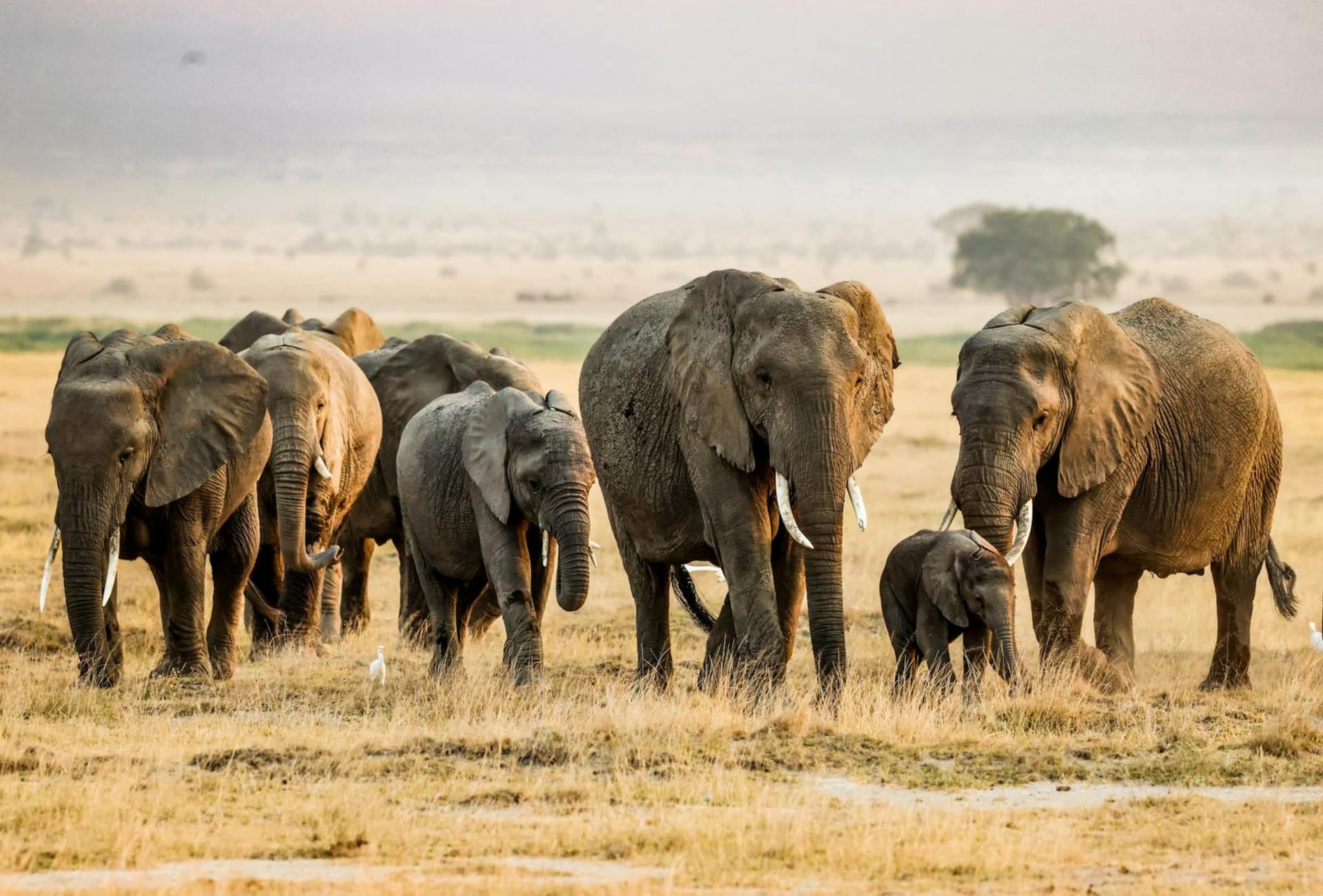
Elephants parade before Kilimanjaro's snow-capped peak in Kenya's most cinematic national park.
There is a particular stillness to Amboseli at six in the morning — the kind that makes sound feel like a rupture. The Land Cruiser engine cut out near Observation Hill and we sat there, Lia and I, watching a family of elephants move through the yellow grass with a patience that made our own silence feel clumsy by comparison.
The Mountain That Withholds Itself
Kilimanjaro dominates the southern horizon, yet it is rarely present. That contradiction took me a day to understand. The summit sits at 5,895 meters and generates its own weather — cloud systems that shroud the peak for hours, sometimes days at a time. The locals at Ol Tukai Lodge speak about it the way people speak about a temperamental elder: with deference, without expectations.
On our second morning, I was up before Lia, coffee in hand on the banda porch, when the cloud pulled back. Just for forty minutes. The mountain appeared in full — glaciers catching the first horizontal light, the crater rim outlined against a sky still dark at its edges. I didn’t call for Lia. There wasn’t time, and some things have to be witnessed alone to stay true.
Elephants in the Dust
Amboseli holds one of Africa’s most studied elephant populations. Researcher Cynthia Moss worked here for decades, and the lineages she documented still move through the park in extended family units. We watched a matriarch lead her group across the dry lake bed of Lake Amboseli — cracked white earth, alkaline dust rising around their feet in slow puffs, Kilimanjaro framed behind them without any effort on our part, as if the scene had been composited deliberately.
What surprised me was the smell. I’d expected dust and grass. Instead, near the swamps fed by Kilimanjaro’s snowmelt, the air carried something green and almost cool — papyrus, standing water, the mineral edge of volcanic soil. The elephants wade into these swamps belly-deep. So do the hippos, mostly invisible until a snort breaks the surface.
Meals and the End of the Day
Evenings at Ol Tukai, the kitchen sent out a red lentil soup I kept ordering twice. Lia found a Maasai bead seller near the camp entrance on the third day — a young man named Leitiko who explained each color’s meaning without rushing. We bought a bracelet. She still wears it.
Sundowners happened on a flat boulder above the swamp edge, gin in hand, watching yellow-billed storks fold themselves into the fever trees as the light turned amber, then gone.
When to go: The dry seasons — January through March and June through October — offer the clearest Kilimanjaro views and the densest wildlife concentrations around the swamps. Avoid the long rains in April and May when tracks become impassable.